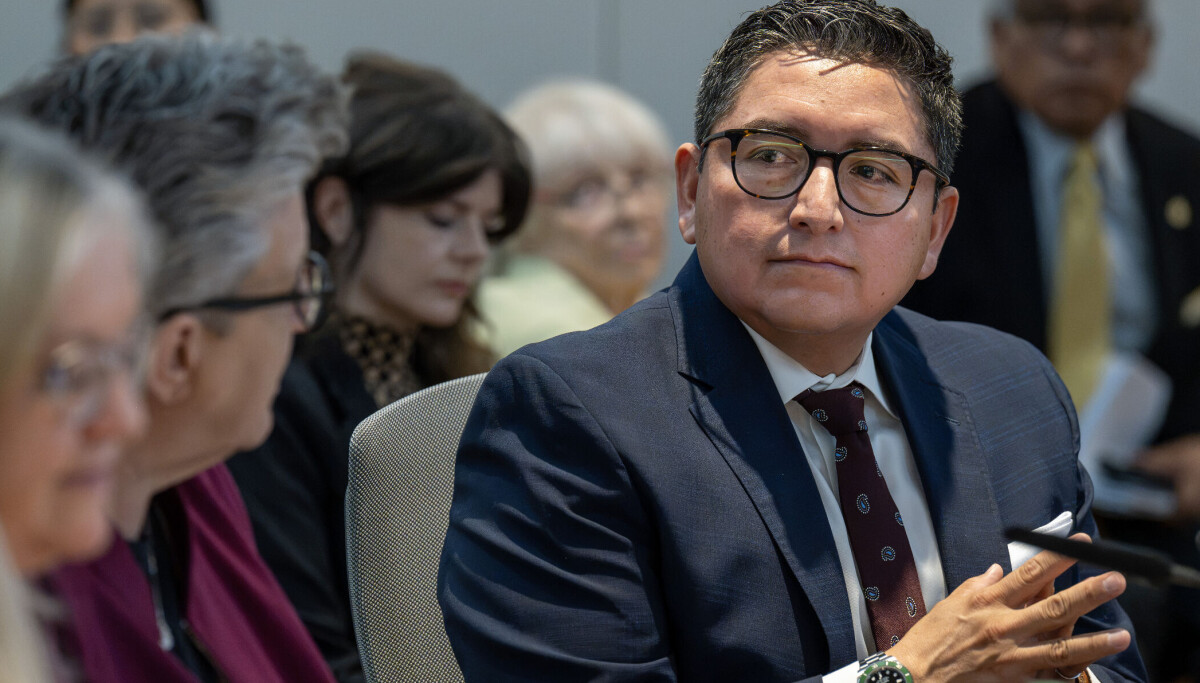
Rep. Derrick Lente unveiled a plan collapsing state income brackets into a 4.7% flat rate with a refundable credit that shrinks as income rises.
Rep. Derrick Lente, D-Sandia Pueblo, chairman of the House Taxation and Revenue Committee, unveiled the plan Friday during a hearing at the Roundhouse, saying it would wipe out income tax liability for roughly 266,000 returns — nearly a quarter of all filers — and leave “nearly every single New Mexican” paying less than they do today, Lente told the Journal.
The Legislative Finance Committee analysis projects the overhaul would cost $729 million in foregone revenue during the 2029 budget year, its first full year in effect, consuming most of the new money driven by record oil production in the Permian Basin.
A flat rate with a progressive twist
New Mexico currently uses six brackets ranging from 1.5% on the first $5,500 of taxable income for single filers to a top rate of 5.9%, according to the state Taxation and Revenue Department. Lente’s bill would collapse those into one 4.7% rate while layering on a refundable credit that shrinks as income rises, effectively preserving progressivity at the bottom and middle while simplifying the mechanics.
“It’s a permanent investment to address the affordability crisis year-over-year,” Lente said during the committee hearing, contrasting the plan with outgoing Gov. Michelle Lujan Grisham’s proposed one-time $250 rebate checks.
Oil money, structural risk
The $729 million price tag represents nearly 79% of the projected new revenue, raising familiar questions about volatility. Severance taxes and royalties from the southeast Permian Basin now underwrite a growing share of the general fund, and a sustained price drop could turn the tax cut into a structural deficit.
Sen. Peter Wirth, D-Santa Fe, called the moment “about time” for large-scale tax reform but stopped short of endorsing Lente’s specific architecture, noting senators have drafted their own income tax bill for the 60-day session that convenes Jan. 19. “We’ve done an OK job, but we’ve kind of been nibbling around the edges on tax policy,” Wirth said at the hearing.
Governor-elect in the mix
Gov.-elect Deb Haaland campaigned on expanding existing credits and raising the $12 minimum wage rather than restructuring the rate schedule. Lente said Monday he has held preliminary talks with Haaland’s transition team and plans deeper discussions this week, the Journal reported.
Republican gubernatorial nominee Gregg Hull had proposed a multi-year phaseout of the personal income tax altogether — a full repeal the Legislative Finance Committee estimates would cost roughly $2 billion annually. Some Democratic leaders have signaled openness to that direction, though others warn of the budgetary cliff.
Session opens Jan. 19 with competing bills
The session opens Jan. 19. Competing bills from the Senate and the governor’s office will land in the same committees, and the final shape of any tax package will depend on revenue estimates updated in the weeks before the gaveled start.
Worth a look

President Uchtdorf Teaches Peace, Joy Beyond Grief at Volkstraurtag
White headstones stretched across Fort Douglas Post Cemetery on Sunday as President Dieter F. Uchtdorf stood before hundreds...

Tony Buzbee Files $200M Suit for Houston Mom Who Threw Daughters From Window to Escape Kia Telluride Fire
Attorney Tony Buzbee filed a $200 million lawsuit Tuesday on behalf of a Houston family who lost their...

GreenLight Fund Fellow: Nashville Listening Tour Shows Philanthropy Must Cede Power to Locals
In a first-person account for GreenLight Fund, Sophie Huttner details how a summer of listening tours across Nashville...

Sioux Falls Opens 23rd Winter Wonderland With Tree Move to Jacobson Plaza
Sioux Falls flips the switch on its 23rd Winter Wonderland Friday, moving the city's 50-foot holiday tree to...