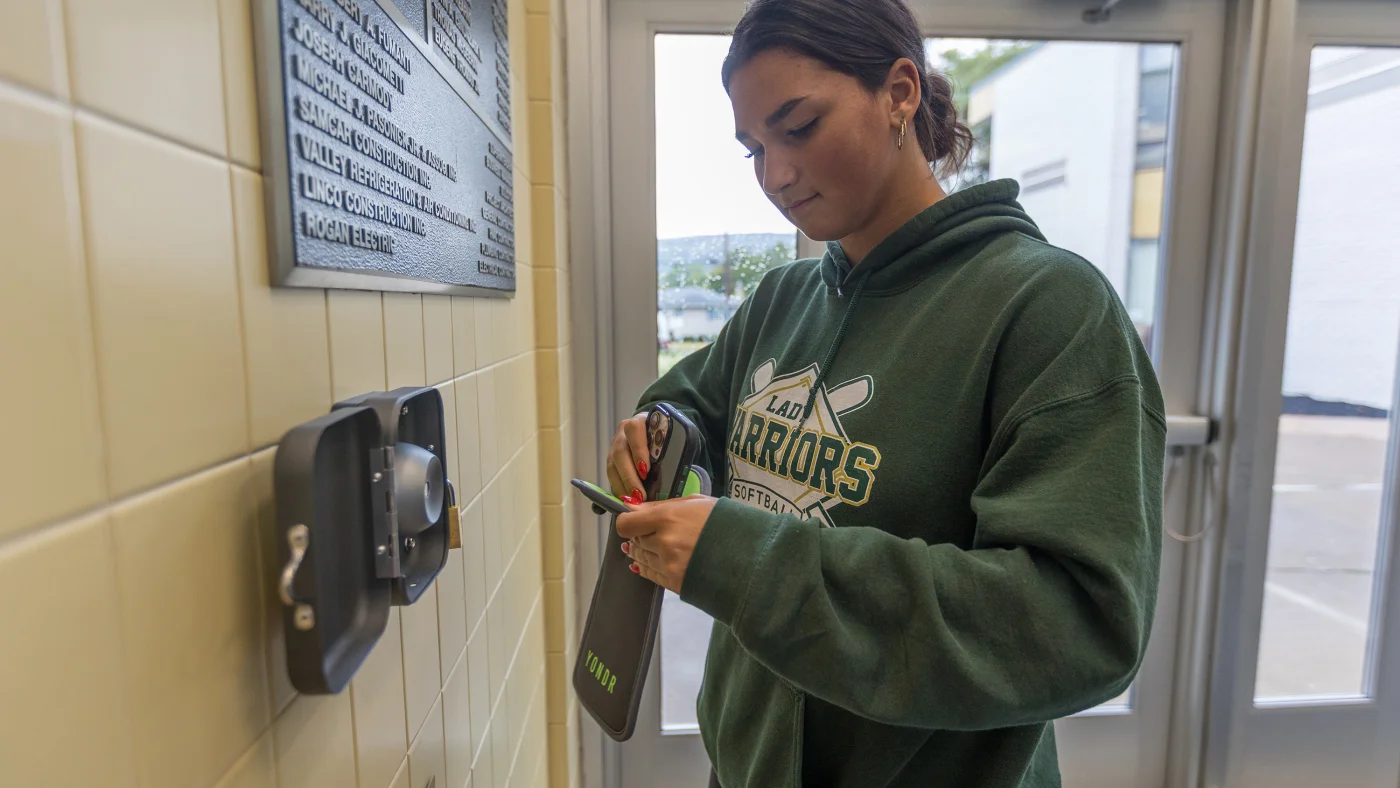
Strict school cellphone bans using locked pouches may help reverse long-term declines in student math and reading scores, according to a new nationwide study. Researchers found that these restrictions can plug a “slow leak” in learning that has caused U.S. 8th graders to fall nearly a year behind since 2013.
The connection between rising smartphone ownership and falling academic achievement is becoming increasingly clear. While many blamed the COVID-19 pandemic for recent dips in performance, data suggests a steady decline in reading and math scores had already been underway for years before the world shut down.
A new joint study from Harvard University’s Center for Education Policy Research, Dartmouth College, and NWEA suggests that removing the distraction of mobile devices can provide a measurable boost. By analyzing more than 3 million students over the last five school years, the research team found that schools using locked pouches saw small but statistically significant improvements in test scores.
The slow leak in American learning
For much of the early 2000s, student achievement in the United States was on an upward trajectory. However, that trend broke around 2013. Since then, students have been losing roughly two to three weeks of learning every year.
The timing of this decline aligns closely with the mass adoption of mobile technology. In 2011, fewer than 25% of teen students had access to smartphones, but by 2018, that number had climbed to 95%. Researchers said that similar achievement declines have occurred in other industrialized nations where smartphone use spiked.
The new study focused on schools that implemented strict bans using Yondr pouches. These pouches require students to lock their phones at the start of the day and retrieve them only when an administrator uses a magnetic device at dismissal.
Unlike some previous findings, the gains observed in this study did not seem to fade; instead, they appeared to accumulate for up to three years after a school adopted the policy.
“Around 2013, U.S. students started losing 2-3 weeks of learning each year,” said Tom Kane, a Harvard University professor and co-author of the study. “It’s been a slow leak that, over time, has put U.S. 8th graders almost a year behind. Strict cellphone bans seem to plug about half of that leak.”
Differences in data granularity explain varying study findings
The differences between the two studies may come down to how the data was sliced. The April study, which was peer-reviewed, looked at the average scores of thousands of schools. The more recent study utilized more granular, student-level data from 844 schools that used both the pouches and NWEA testing. This allowed researchers to track individual progress more closely, though it covered a smaller total number of institutions.
| Feature | April Study (University of Michigan) | Tuesday Study (Harvard/Dartmouth) |
|---|---|---|
| Primary Finding | Close to zero meaningful impact | Small, significant learning gains |
| Data Granularity | School-level mean scores | Individual student-level scores |
| Sample Size | Several thousand schools | 844 schools |
| Peer-Reviewed | Yes | No |
The economic cost of distraction
Implementing a phone ban is not just a matter of policy; it is a budgetary decision. For many school districts, the cost of purchasing and maintaining lockable pouches is a major expense. The pouches cost approximately $25 per student.
“That’s still a lot less than having to pay teachers for an extra week or two of instruction,” said Tom Kane.
Tom Dee, a professor at Stanford University’s Graduate School of Education and a co-author of the April study, expressed hesitation regarding the long-term implications of the new data. He described the early results as “largely disappointing” and argued that the current estimates are too small and sensitive to draw definitive conclusions about the future of American education.
As school districts weigh the costs of physical pouches, researchers are looking toward the digital lives of students. Tom Kane indicated that his next phase of research will focus on how smartphone and social media use outside of school hours contributes to the ongoing academic struggle.
As a K-12 testing and research organization, NWEA partnered with researchers from Harvard and Dartmouth on a nationwide study analyzing student-level test scores in math and reading.
Keep reading

Leah Stewart Aims to Provide Dental Care in Rural Alabama
Leah Stewart is currently working toward a dental degree at the University of Alabama at Birmingham School of...

Why the Madison Mayor Race Drew April Kigeya, and What She Wants to Change
April Kigeya is running for mayor of Madison to transform how the city approaches housing, public transit, and...

Commanders News: Washington Needs Jacory Croskey-Merritt Back Soon | Hogs Haven
Second-year running back Jacory Croskey-Merritt is eligible to return from injured reserve this week following a spell out...

Virginia Kay Wheeler – Jewell-Rittman Funeral Service & Crematory
Virginia Kay Wheeler, known to her family and friends as both Virginia and Kay, passed away peacefully on...