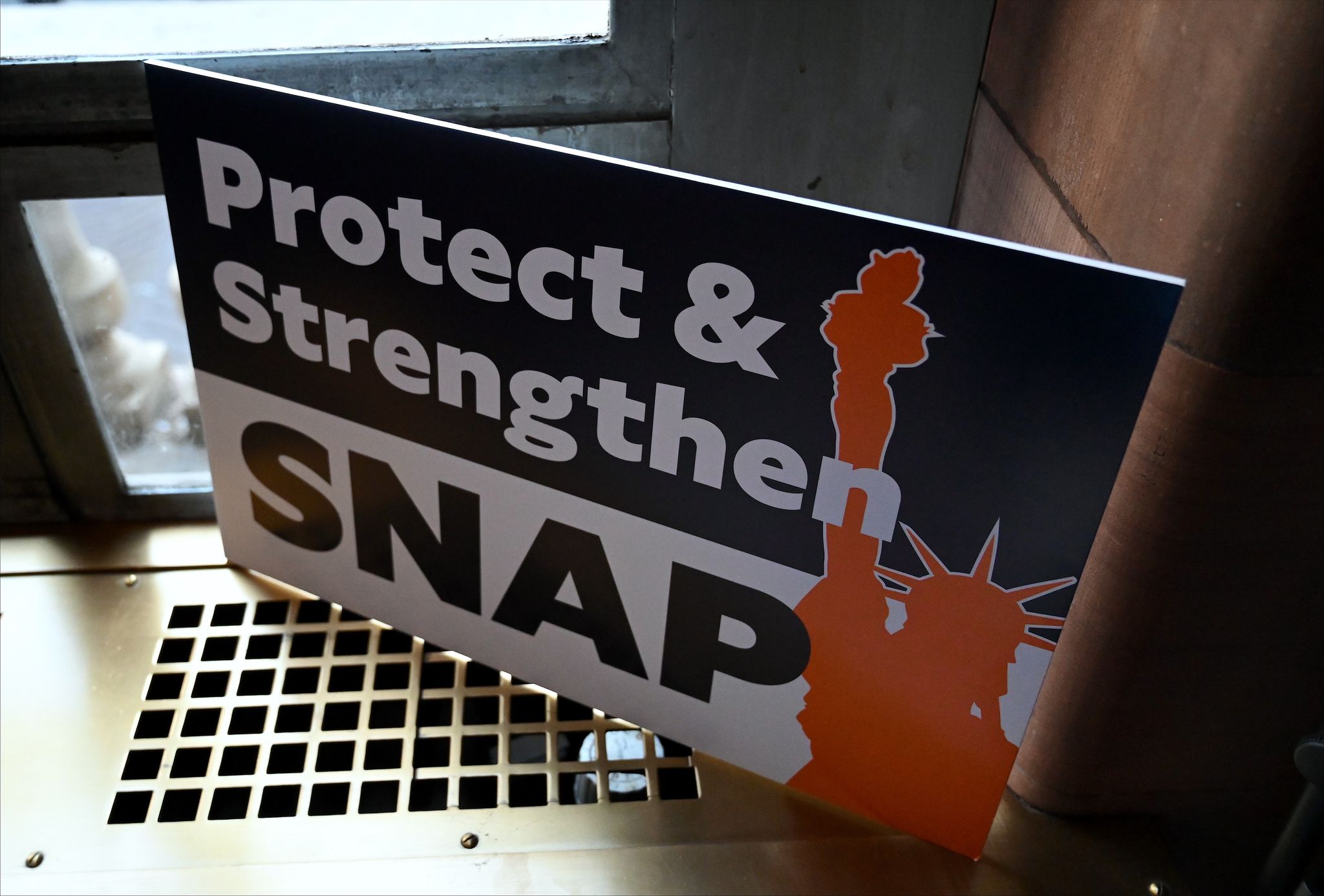
New York officials and advocacy groups are pressing Congress to delay a looming change to the Supplemental Nutrition Assistance Program (SNAP) as the federal government prepares to shift significant financial burdens onto states.
With Democrats poised to take control of Congress, local lawmakers are utilizing the current lame-duck session to lobby for a two-year pause on new rules that could fundamentally alter how the state funds food aid for nearly 3 million residents.
The core of the dispute centers on a directive from the U.S. Department of Agriculture that would require states to contribute to benefit payouts if their program “error rates” exceed a specific threshold. According to the Times Union, this shift could leave New York responsible for an estimated $1.2 billion in annual food aid expenses beginning in October 2027.
The policy stems from the “One Big Beautiful Bill” Act, a legislative priority of President Donald J. Trump. Republicans have championed these changes as a necessary mechanism to curb federal spending, minimize program fraud, and incentivize workforce participation among beneficiaries. During the legislative push in May 2025, U.S. House Speaker Mike Johnson characterized the shift as a matter of systemic integrity.
U.S. House Speaker Mike Johnson said in May 2025, prior to the bill’s passage, “If you are able to work and you refuse to do so, you are defrauding the system. You’re cheating the system. And no one in the country believes that that’s right.”
That argument is met with sharp resistance from state-level officials who contend the policy will destabilize local budgets. State Sen. Patricia Fahy, an Albany Democrat, spoke at a rally at the State Capitol on Wednesday, arguing that the financial pressure placed on counties—which already shoulder a significant portion of the program’s administrative costs—is unsustainable.
“You don’t find savings on the back of food for the poor,” Fahy told the Times Union. “That is not how you address affordability.”

The budgetary stakes are compounded by New York’s unique administrative structure. Unlike many other states, New York requires counties to manage the program locally. Recent federal actions have already increased the local share of administrative expenses from 50% to 75%, placing an additional strain on county-level resources.
It remains unclear exactly how much of the projected $1.2 billion in new costs might be pushed down to these local municipalities, potentially forcing cuts to benefits or services.
Advocacy groups are warning that the combination of increased state costs and stricter federal work requirements could create a “perfect storm” for community food providers. Elizabeth Cooper, executive director of Feeding New York State, emphasized that the ripple effects would be felt immediately by non-profits and food pantries that are already operating at capacity.
“Shifting the cost onto the state will only exacerbate these ongoing crises, harming state and local budgets, overburdening nonprofits who are working hard to feed our communities and ultimately forcing our neighbors to go without food.”
While the USDA maintains that New York has historically expanded its welfare rolls for decades without facing the full financial consequences of those decisions, the state's political delegation is betting on their increased influence following the recent midterm elections.
With government funding set to expire next month, Democrats are attempting to use the lame-duck session to secure concessions, framing the delay as a critical measure to protect vulnerable New Yorkers from the financial fallout of the federal mandate.
The tension between federal cost-cutting measures and local social safety nets highlights a widening gap in how the program’s success is measured. For federal proponents, success is defined by reduced expenditures and higher labor force participation. For state officials and advocates, success is measured by the stability of food access for millions of citizens.
Worth a look

UT Martin Volleyball Completes Series Sweep Over Tennessee State in Regular Season Finale
The University of Tennessee at Martin volleyball team finished its 2026 regular season on a high note, defeating...

Austin FC Declines Option on Ilie Sanchez; USL Final Features ex-KC Players
The roster churn that defines the Major League Soccer offseason has officially claimed one of its most recognizable...

AI Child Porn Suspect Arrested Again for Alleged Bail Violation
Joseph Mello III, a former dance and gymnastics instructor currently facing federal charges for allegedly producing AI-generated child...

Goldey-Beacom Beats UDC 106-68 Behind Dominant Rebounding
The University of the District of Columbia men’s basketball team faced a difficult road loss on Wednesday night,...