
- Final count gives the right bloc 65 seats in a 130-seat Parliament, one short of a majority.
- The Opportunity Party, entering Parliament for the first time, holds seven seats and the balance of power.
- Labour-led opposition holds 58 seats, not enough to govern even with Opportunity’s support.
- Nearly 485,000 special votes, including overseas ballots, shifted three electorates and erased the coalition’s election-night lead.
The Electoral Commission released the official tally on November 27 after counting nearly 485,000 special votes — ballots cast from overseas or outside a voter’s registered electorate — which amounted to 16.5% of all ballots, The Conversation reported.
On election night, November 7, the three-party coalition of National, ACT and New Zealand First appeared to hold a two-seat majority. The final count stripped National of two seats, leaving the right bloc with 65 seats, one short of the 66 needed. Labour gained one seat to reach 58.
“These negotiations may be challenging, and they could take some time,” Luxon told journalists on Friday. “But getting it right matters far more than getting it done quickly. New Zealanders need a government that is stable, that works together, and will last for the full term.”
Opportunity Party holds the balance
Wong has said she will negotiate first with the party holding the most seats — National, with 40 — but insists on five bottom lines: stronger climate action, ending bottom-trawling fisheries, a 10-year cross-party health plan, capping political donations and action on the supermarket duopoly.
Opportunity Party leader Qiulae Wong ruled out joining any government in which New Zealand First leader Winston Peters serves as Foreign Minister, citing past remarks about Asian people, and said negotiations may be challenging and take some time.
Policy differences and seat counts complicate coalition talks
National’s traditional partners, the libertarian ACT Party and the nationalist New Zealand First, hold 13 and 12 seats respectively. The left bloc — Labour (36), the Greens (17) and Te Pāti Māori (5) — totals 58 seats, meaning even a deal with Opportunity would not reach a majority, the BBC confirmed.
Negotiations must bridge sharp policy differences: Opportunity’s climate and fisheries positions clash directly with ACT and New Zealand First, while Wong’s refusal to serve alongside Peters as Foreign Minister creates a personnel demand Luxon has not yet addressed. The Guardian reported that New Zealand could face its first-ever four-party coalition; in 2023, three-party talks took 40 days.
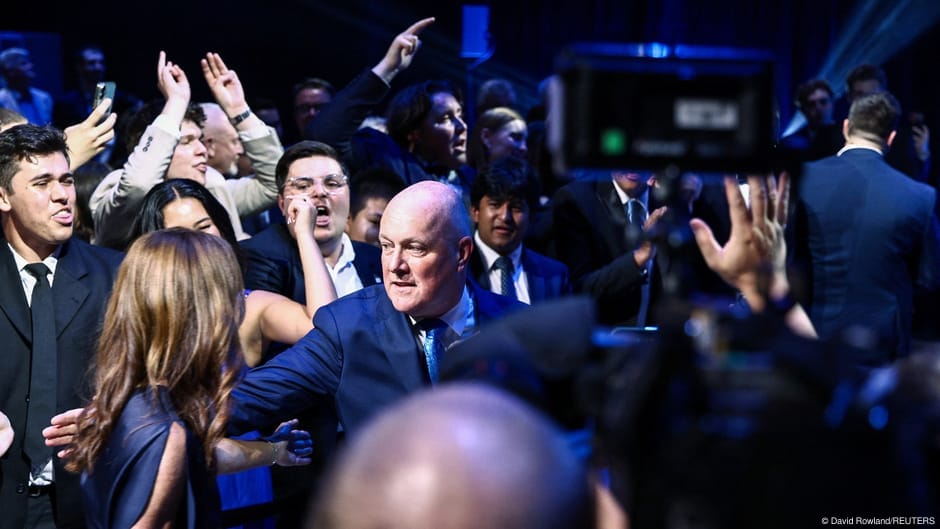
Major parties secure low vote shares
At the final count, National won 28.35% of the party vote and Labour 29.88%, with both major parties securing less than 30% of the preferred party vote. National nevertheless secured more seats because more of its candidates won local electorate races.
If a government cannot be formed, New Zealand could face a fresh vote, as elections are typically held every three years. Wong has said making a deal will be a grueling task and she will not budge on her bottom lines.
Special votes total exceeded initial estimates
A total of 2.8 million votes were cast in the election, according to Click2Houston.
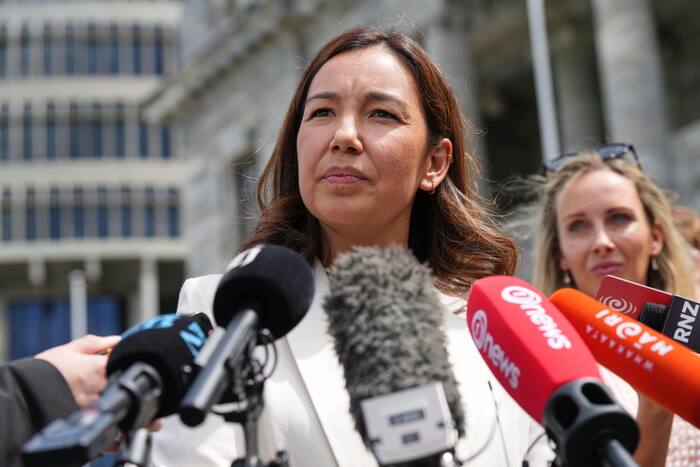
Wong expects challenging negotiations
“I want to be upfront with New Zealanders,” Wong told reporters Friday. “These negotiations may be challenging and they could take some time.”
Caretaker conventions and market reaction detailed
Luxon’s caretaker government remains in office until a new administration is formed.
The Electoral Commission’s official tally on November 27 confirmed the Opportunity Party enters Parliament for the first time with seven seats after winning 6.1% of the party vote in the 2026 general election, a sharp rise from the 2.2% it secured in 2023.
Founded in 2016 by Gareth Morgan as the Opportunities Party on a platform of evidence-based policy, the party rebranded in November 2025 under new leader Qiulae Wong with updated priorities including stronger climate action, ending bottom-trawling fisheries, a 10-year cross-party health plan, capping political donations and addressing the supermarket duopoly.
Markets react, caretaker government continues
The New Zealand dollar strengthened to around 0.5491 against the US dollar by early Friday afternoon, up 0.39% on the day, Action Forex reported. The S&P/NZX 50 slipped 0.5% to 13,911.36 as investors weighed the prospect of prolonged talks, Finimize noted.
Meanwhile, ANZ-Roy Morgan consumer confidence rose to 100.2 in November from 96.2 in October, its highest level since January. Luxon’s caretaker government remains in office until a new administration is formed. If no agreement is reached, the Governor-General would be expected to dissolve Parliament and call a fresh election.
Keep reading

Save The Manor House Group Presses Owner Zahid Iqbal to Act
A campaign group in Cleobury Mortimer is pressing the owner of the Grade II* listed Manor House to...

BBC: MoD Launches Largest Reserve Outreach Since Cold War, Lacks Emails for Half
"I want the country to be alert, not alarmed," Defence Secretary Wes Streeting told BBC Radio 4's Today...

Hong Kong Ferry Hits Dock Off Tsing Yi, Injuring 22 With Four Serious
A high-speed ferry carrying 60 people slammed into a floating dry dock near Hong Kong's Tsing Yi oil...
Morocco King Reaffirms Palestinian State Support, Cites Gaza Deployment
Morocco's King Mohammed VI reaffirmed his country's commitment to Palestinian statehood during commemorations for the International Day of...