Newark homeowners face a $458 property-tax increase in 2026 while the city operates without an adopted budget a month before the fiscal year ends.
The City Council deferred the $900.5 million spending plan for a third time on Monday, leaving the administration and the state Division of Local Government Services still negotiating over revenue assumptions and line-item details that have gone unanswered for months.
If the budget passes as introduced, the average residential tax bill would climb to $8,099.71 from $7,641.50 this year, driven by the gap between assessed values and actual market prices. The increase lands on taxpayers even as the city has already authorized $472 million in emergency appropriations — more than half the proposed annual budget — to keep departments running since January.
State law set a March 31 introduction deadline and an April 30 adoption deadline for 2026 municipal budgets. Newark did not introduce its plan until June 3 and read it by title only in July. The Division of Local Government Services issued “several pages of comments” in September, according to Business Administrator Eric Pennington, and the city responded, but the state said this week the plan remains under review pending additional documentation.
Last year the division warned of a $25-per-day penalty for late introduction. This year the city met the introduction timeline the division established, so no penalties have been issued, spokesperson Lisa Ryan said.
Monday’s deferral was triggered in part by the postponement of a $13 million city-owned land sale in the North Ward to a redeveloper planning an industrial outdoor-storage operation. The sale is booked as a revenue item needed to balance the budget.

“Much of this is needed, by the mayor’s directive, for us to keep the tax rate as low as possible,” Pennington told the council.
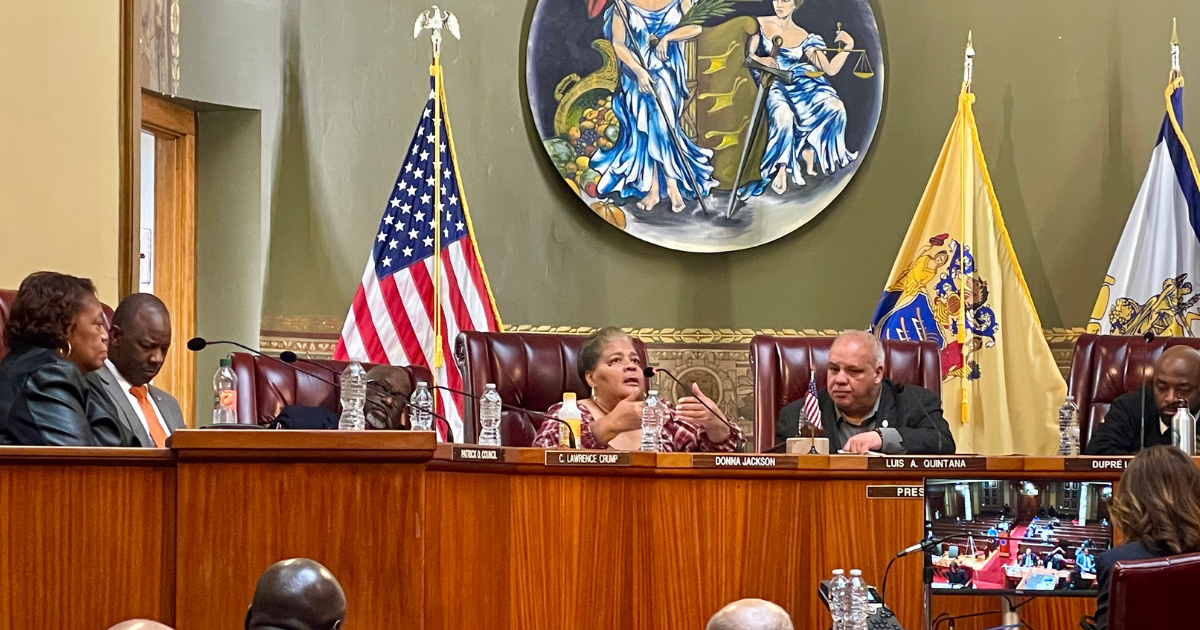
Council members have pressed for months on police overtime, executive protection staffing, per-diem contracts and $75.3 million in unclassified appropriations. At-Large Councilwoman Donna Jackson said the administration has not explained “tens of millions of dollars” in unidentified funds.
“We are not going to push this through just to make a few people happy,” Jackson said. “There are some salaries that are not explained and there are some positions that are unexplained.”
North Ward Councilman Anibal Ramos called the moment “literally the 11th hour.”
“Even if there were changes, it’s pretty much null and void since there’s no way you can get savings out of this year’s budget with only 30 days left,” Ramos said.
TAPinto Newark filed Open Public Records Act requests in August for police overtime records, executive protection salaries and organizational charts for several departments. By law, agencies must respond within seven business days. After three months of follow-ups, Deputy City Clerk Abraham Negron denied the requests Monday, writing that “the applicable budget information has not been finalized and adopted.”
At-Large Councilwoman Louise Scott-Rountree acknowledged she can get answers from the administration but said the public “doesn’t have those answers.”
“They don’t know why we’re in November still trying to push through a budget,” Scott-Rountree said. “It’s bad.”
Newark, New Jersey’s largest city with a 2020 population of 311,549, is divided into five political wards including the North Ward where the contested $13 million land sale is located. Settled in 1666 by Puritans from New Haven Colony, it is one of the nation’s oldest cities and home to Newark Liberty International Airport, the first municipal commercial airport in the United States.
A public hearing listed on the Nov. 16 agenda for Nov. 24 will not happen, City Clerk Kecia Daniels said. No new adoption date has been scheduled.
Keep reading

University of Northern Colorado Names Texas Tech Provost Ronald Hendrick Sole Presidential Finalist
Ronald L. Hendrick will visit the University of Northern Colorado campus on Nov. 30 and Dec. 1 as...

No. 17 TCU Volleyball Hosts No. 8 Arizona State, Iowa State to Close Regular Season Home Slate
No. 17 TCU volleyball closes the regular season at home on Friday and Sunday against No. 8 Arizona...

Montana Legislature Splits 50-50 in Cat-Griz Poll of 113 Lawmakers
Montana lawmakers split exactly 50 to 50 between the University of Montana Grizzlies and Montana State University Bobcats...

Greater Manchester Production Fund Backs Seven Projects Including Bentham, Winterbottom Films
Manchester just landed its first £3 million down payment on a plan to become the UK's largest screen...