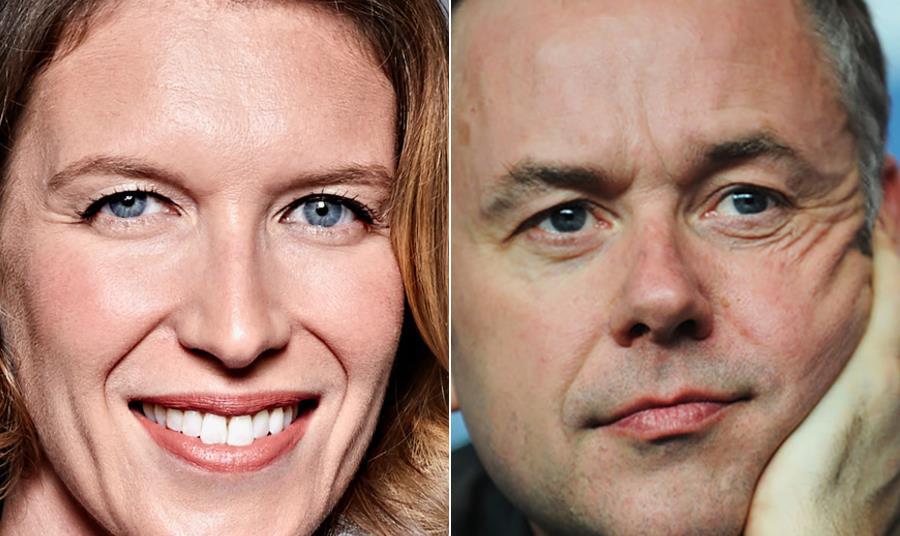
Manchester just landed its first £3 million down payment on a plan to become the UK’s largest screen hub outside London by 2028, and the projects reveal exactly where the region is betting its money — on a deaf percussionist’s life story, a Michael Winterbottom thriller, and a second home for The Repair Shop.
Seven films and TV series will split the opening tranche from the £10.5 million Greater Manchester Production Fund, which runs through 2029 and is designed to lever up to 20 percent of a production budget or a maximum £750,000 per title. The fund itself sits inside a wider £25 million allocation the Department for Digital, Culture, Media and Sport earmarked for six mayoral combined authorities judged to have existing creative-industry strength.
“From the legendary Granada Studios to 24 Hour Party People, Greater Manchester has a proud history of showcasing our people and places on screens right around the world,” Mayor Bev Craig said.
“Our film and TV industry is growing fast, and we want it to be the biggest of its kind outside London by 2028. We can only do that by attracting more major productions, and creating opportunities that keep young, creative talent in our city region.”
The single biggest award — £750,000 — goes to Manchester-based Quay Street Productions for a new drama series, while the BBC daytime staple The Repair Shop, produced by Skydance-owned Ricochet, takes £400,000 to open a second workshop in the city alongside its West Sussex base.
On the film side, Hope Dickson Leach’s Making Noise — the true story of Scottish percussionist Evelyn Glennie, who lost her hearing as a child and became a multi-Grammy winner — secured £450,000 for Manchester’s The Fold, with London’s Nicky Bentham also producing. Michael Winterbottom’s Revolution Films picked up £200,000 for Small Boat Crossing, and Ali Cook’s horror The Grimoire, produced by Zephyr Films’ Chris Curling, landed £650,000.
Two further TV awards round out the slate: £370,075 for a factual observational documentary from London and Cardiff-based Curve Media, and £210,060 for China: Hidden Land Of The Dragon With Hazen Audel from London’s A-OK Media House. The combined £3 million is already projected to trigger roughly £15 million in local spend across Greater Manchester, according to Combined Authority figures.
“The money is structured as recoupable investment. In some cases where a project delivers strong value for Greater Manchester, the funding may come partly as a grant,” Marie-Clarie Daly, the Combined Authority’s head of culture and creative industries, told Screen Daily.
That recoupable model distinguishes the Manchester fund from pure grant schemes elsewhere in Europe; it means the public purse gets a return if a project succeeds, which officials argue stretches the £10.5 million further over the four-year window. The next funding round is expected to be announced next year.
Bev Craig was born in Belfast in 1985 and moved to Manchester in 2003 to study at the Victoria University of Manchester, graduating in 2007 with a degree in politics and modern history. She worked in local government, higher education and for the public-service trade union UNISON before winning election to Manchester City Council in 2011.
In December 2021 she became the first woman and first openly LGBTQ+ person to lead the council, holding the Economy, Business and Inclusive Growth portfolio on the Greater Manchester Combined Authority.
Following Andy Burnham’s disqualification as mayor after his election to Parliament, Craig won the July 2026 by-election with 47 per cent of first-preference votes, becoming the first woman elected to lead the Combined Authority and Britain’s second openly gay directly elected metro mayor.
The Greater Manchester Production Fund mirrors the approach of using modest public capital to de-risk private finance, with Mayor Bev Craig setting a political deadline to make the region’s film and TV industry the biggest outside London by 2028.
Keep reading

IHSAA Commissioner in The Spectator: Education-Based Athletics Are Life-Altering ‘Second Classroom
In the fall edition of The Spectator, Indiana High School Athletic Association Commissioner Paul Neidig argues that education-based...

Baltimore Mayor Rejects Marlon Humphrey Apology Over ‘Criminals’ Podcast Remark
Baltimore Mayor Brandon Scott rejected Ravens cornerback Marlon Humphrey’s apology Wednesday, saying a verbal mea culpa does not...

Brett McKay Argues Oklahoma Drill’s End Mirrors Loss of Male Rites of Passage
In a column for The Art of Manliness, Brett McKay argues that the disappearance of the Oklahoma Drill...
Atmospheric River Parade Hammers West Coast With Flooding, Blizzards Into Thanksgiving Week
Atmospheric rivers are lining up across the northern Pacific like freight cars, and the first one slammed into...