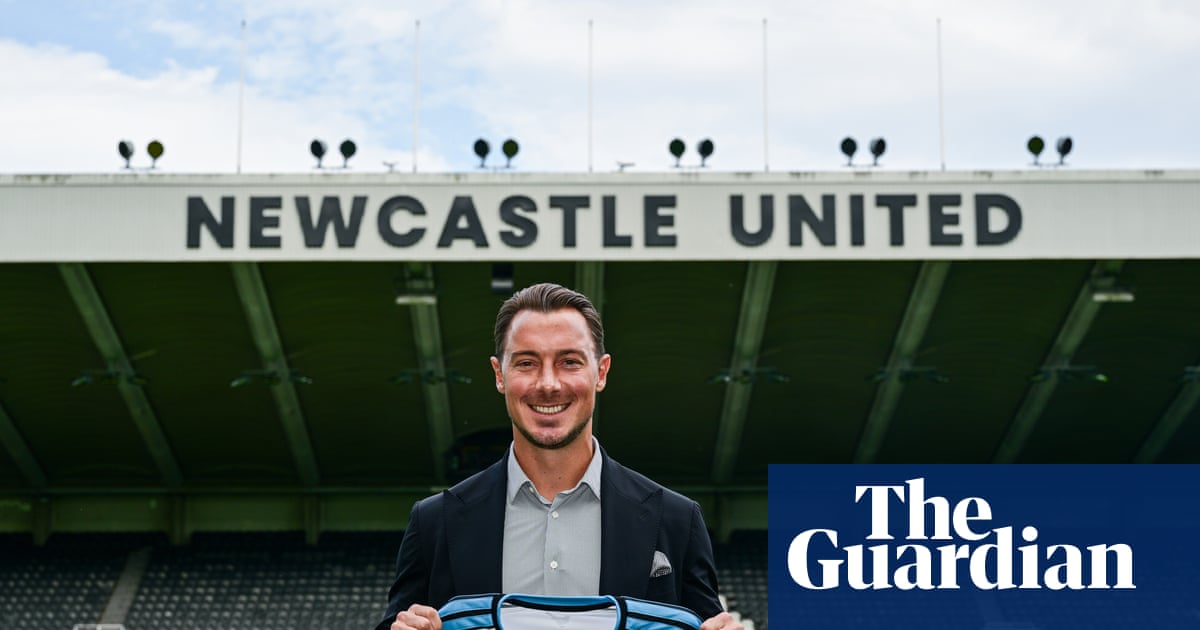
Newcastle United has appointed Matthias Jaissle as manager and launched a 100-day review under new chief executive David Hopkinson to restructure club operations following the departures of star players Anthony Gordon, Sandro Tonali, and Bruno Guimarães.
Matthias Jaissle Takes Charge as Manager Amid Tyneside Turnover
As the new season begins, Newcastle United finds itself navigating a period of significant transition. Former manager Eddie Howe’s successful reign concluded following a run that included an actual trophy and two Champions League campaigns, leaving behind a club in flux. To steer this next phase, the club appointed Matthias Jaissle as manager, drawing him from Al-Ahli within the Public Investment Fund’s portfolio.
Jaissle’s arrival arrives alongside a substantial reshaping of the squad. High-profile departures have depleted the playing roster, seeing the exits of Anthony Gordon, Sandro Tonali, and Bruno Guimarães. Despite these losses and the broader geopolitical interests of the Saudi investment fund stretching beyond the Tyneside club, Jaissle adopted a measured public stance during his introduction.
Describing his first impression of the stadium alongside his assistants, Jaissle remarked that they were looking at each other with smiles and goosebumps.
David Hopkinson Launches 100-Day Review to Reshape Operations
While Jaissle prepares the squad on the pitch, executive leadership off the pitch is undergoing a parallel overhaul. New chief executive David Hopkinson has initiated a comprehensive 100-day review of the club’s internal workings, likened by insiders to Sir Jim Ratcliffe’s review at Manchester United. The Canadian executive, formerly of Madison Square Garden and Real Madrid, aims to evaluate marketing, commercial, media, and ticketing operations.
Hopkinson’s approach has introduced a rigorous internal atmosphere. Insiders note that his direct leadership has brought a fresh sense of focus and urgency to the staff, underpinned by a clear expectation of alignment. The review serves as a diagnostic tool that will ultimately dictate changes in strategy, personnel, and club culture.
The executive team has also moved to mend internal divisions. Hopkinson and new sporting director Ross Wilson are aligned in their goal to foster a unified club structure following the fractures that emerged after the ousting of former co-owners Amanda Staveley and Mehrdad Ghodoussi 15 months prior.
Shielding the Manager and Restoring Executive Focus
During the final stretch of his tenure, Eddie Howe frequently found himself operating as a de facto CEO and sporting director, carrying administrative burdens far beyond coaching duties due to executive vacancies. Hopkinson aims to reverse that dynamic by isolating the manager from organizational debris.
Hopkinson has likened the current managerial setup to American rock music royalty, framing the leadership’s support around the club’s Bruce Springsteen so that the coaching staff can focus strictly on match preparation. Communication between the chief executive and the manager is kept streamlined to protect that focus.
Externally, the commercial strategy is already shifting to match the new executive pedigree. Drawing on Hopkinson’s background in global partnerships at Real Madrid, the club announced a commercial tie-in with Visa earlier in the month as part of an expanding corporate outreach.
Fan Engagement and the Path Forward
As the review progresses, club leadership is actively consulting with supporters and club figures. Hopkinson has participated in Fan Advisory Board meetings, engaged with members of the supporters’ trust, and met with club legend Alan Shearer to gather external perspectives.
With a summer squad overhaul, a fresh management team under Jaissle, and an executive review set to conclude in the autumn, Newcastle United is seeking a stable foundation to build upon last season’s Carabao Cup win and Champions League return. Ultimately, the success of the new structural changes will be measured by wins on the pitch.
Keep reading
Beauden Barrett and 14 All Blacks Released for Final NPC Regular Season Round
A plethora of All Blacks have been released to their provincial unions for the final regular season round...

Inagh-Kilnamona Dethrones Clare Champions Éire Óg
Éire Óg lost their Clare hurling crown following a heavy 1-24 to 2-14 semi-final defeat against Inagh-Kilnamona on...
Wallabies and Springboks Locked in 17-All Battle During Perth Test
The Wallabies and Springboks are locked in a tense 17-all battle late in the first half in Perth,...
Nor’easter Batters Northeast With Heavy Rain and Coastal Flooding
As a powerful nor’easter battered the U.S.