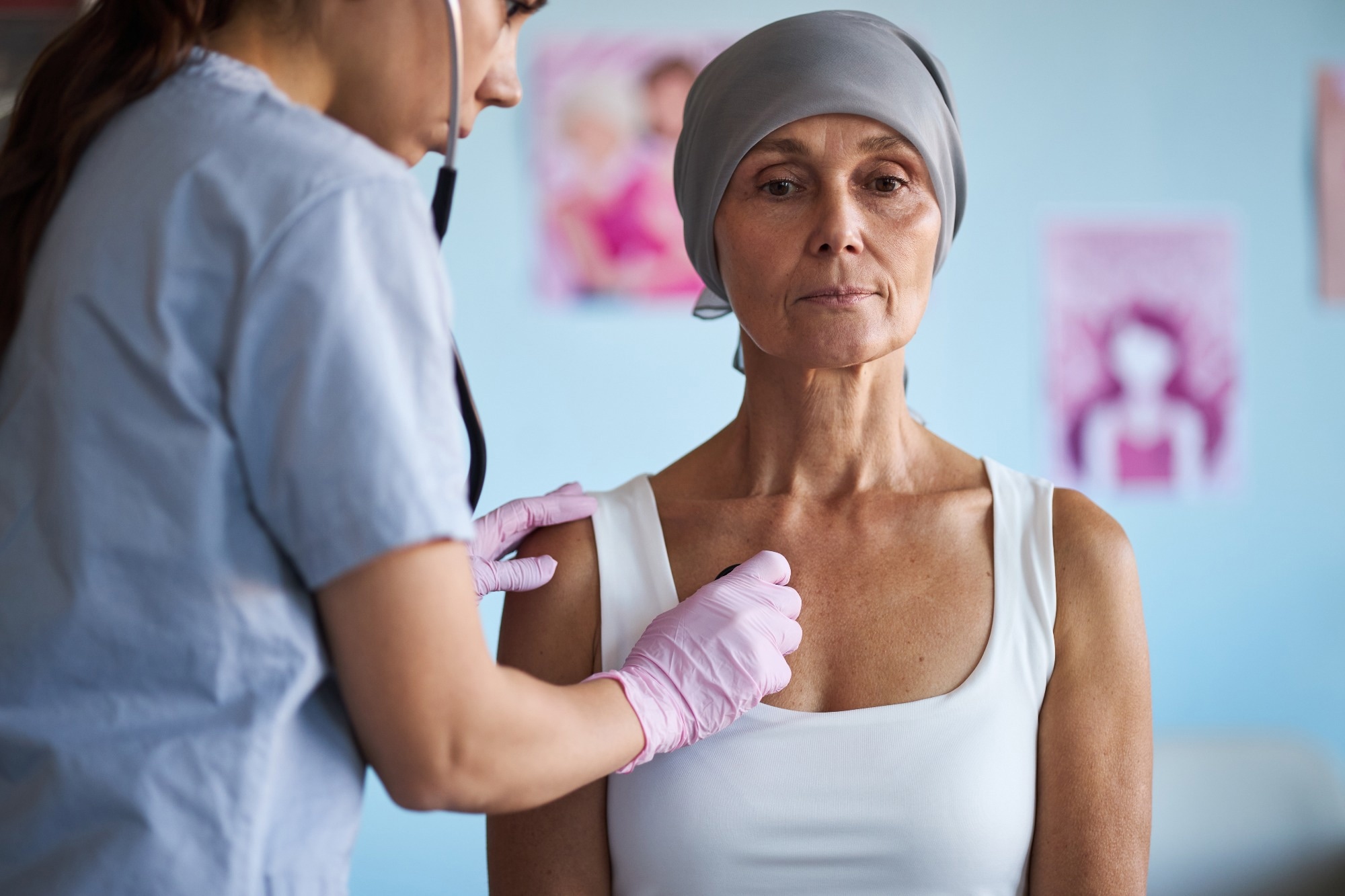
- 7,428 women treated before age 36 from 1954 to 2010 were followed a median of 20.2 years.
- Solid-cancer risk fell 34% in the most recent treatment era, driven by less radiotherapy.
- Breast and lung cancers remain the most common subsequent malignancies.
- No decline was seen in hematologic second-cancer risk across eras.
Researchers from The Royal Marsden Hospital NHS Foundation Trust and the Institute of Cancer Research analyzed 7,428 women diagnosed with Hodgkin lymphoma before age 36 in England (1954–2010) and Wales (1968–2003), with follow-up through 2018, News-Medical reported.
Radiotherapy use dropped from 98% before 1980 to 47% in 2000–2010, while chemotherapy rose from 55% to 97%, and anthracycline-based regimens replaced older alkylating agents. Average radiation doses also fell.
When the team adjusted for radiation exposure and dose, the overall decline in second-cancer risk was no longer statistically significant, although the reduction in solid-cancer risk remained significant. Adjusting for chemotherapy changes had little effect, indicating reduced radiation was the primary driver, according to targetedonc.com.
Breast and lung cancers persist as leading risks
During a median 20.2 years of follow-up, 1,200 women developed at least one invasive second cancer, yielding 1,467 invasive cancers overall — 3.3 times the rate expected in the general population. Breast cancer accounted for 648 cases (about 44% of all subsequent primary malignancies), followed by lung cancer with 122 cases, non-Hodgkin lymphoma, and thyroid cancer.
Women treated before age 15 faced the highest relative risk. Radiotherapy, especially at higher doses, was strongly linked to breast and lung cancers. Lung-cancer risk was highest with combined radiotherapy and chemotherapy, while breast-cancer risk was highest with radiotherapy alone, News-Medical reported.
Alkylating agents show mixed associations
Adding alkylating agents to radiotherapy was associated with a lower breast-cancer risk (hazard ratio 0.77; P = 0.01), potentially due to treatment-induced premature menopause, targetedonc.com reported. However, alkylating agents given without anthracyclines alongside radiotherapy more than doubled gastrointestinal-cancer risk (hazard ratio 2.20; P = 0.006).
Solid-cancer risk drops only after decade of follow-up
Solid-cancer risk reductions emerged mainly after more than a decade of follow-up, consistent with radiation-related latency. Leukemia and lung-cancer risks showed no statistically significant decline across eras. Among women treated before 1990, cumulative incidence of second primary cancers reached an estimated 35.6% at 50 years. Even by age 50, survivors had roughly twice the cumulative incidence of the general population (9.8% vs. 4.6%).
“Vigilant screening in high-risk subgroups who receive irradiation, particularly at young ages,” remains essential, lead author Aislinn Macklin-Doherty, MD, of The Royal Marsden, and colleagues emphasized, according to targetedonc.com. In the United Kingdom, women who received supradiaphragmatic irradiation are offered annual breast-cancer screening beginning eight years after treatment, and a UK pilot study has demonstrated the feasibility of low-dose CT screening for lung cancer among survivors.
Cumulative incidence shows lasting excess risk
Both breast and lung cancers remained important sources of excess risk more than four decades after treatment.
In contrast, no statistically significant decline was observed for hematologic malignancy risk across treatment eras, the JCO authors wrote.
Screening guidance targets high-risk survivors
A UK pilot study has also demonstrated the feasibility of low-dose computed tomography screening for lung cancer among Hodgkin lymphoma survivors, supporting further research into targeted strategies, targetedonc.com reported.
The investigators acknowledged limitations including the inability to precisely determine organ-level radiation doses, lack of detailed chemotherapy dose data, and shorter follow-up for recent eras limiting lifetime-risk conclusions, the JCO authors wrote.
Researchers from the Institute of Cancer Research (ICR), a public research institute and member institution of the University of London specialising in oncology, collaborated with The Royal Marsden Hospital NHS Foundation Trust on the Hodgkin lymphoma analysis.
The ICR was founded in 1909 as a research department of the Royal Marsden Hospital, and the two organisations’ sites in Chelsea and Sutton continue to reflect each other, forming the largest comprehensive cancer centre in Europe.
Study limited to women and lacks detailed treatment data
The study included only women, limiting generalizability to men. Researchers lacked precise organ-level radiation doses and detailed chemotherapy-dose data, and shorter follow-up for recent eras limits lifetime-risk conclusions. Non-pharmacological factors such as lifestyle, genetics, and family history were not assessed. Future work must evaluate newer therapies — including immunotherapies and antibody-drug conjugates — in both sexes, the authors wrote in the Journal of Clinical Oncology on November 12, 2026.
Keep reading

HDB Unveils Pasir Ris Neighbourhood 3 Plans, Proposes Retaining 13ha of Coastal Habitats
HDB proposes retaining 13ha of nature, including 8ha of coastal habitats and 5ha of terrestrial greenery, on a...

JMPD Officer Allegedly Used Police Resources to Shield Murder Suspect Katiso Molefe, Inquiry Hears
A Johannesburg Metropolitan Police Department officer used state resources to shield a murder suspect from surveillance, the Madlanga...

Bird Flu Confirmed at Poultry Farm Near Driffield, Defra Says
H5N1 detected at a farm near Driffield, East Yorkshire on 20 November; 3 km protection and 10 km...

Italian Courts Convict Family in Saman Abbas Murder; Docuseries Exposes System Failures
Saman Abbas was eighteen years old when she disappeared after rebelling against a forced marriage. Her body was...