UConn’s 39-Game Regular-Season Streak Ends in Ann Arbor
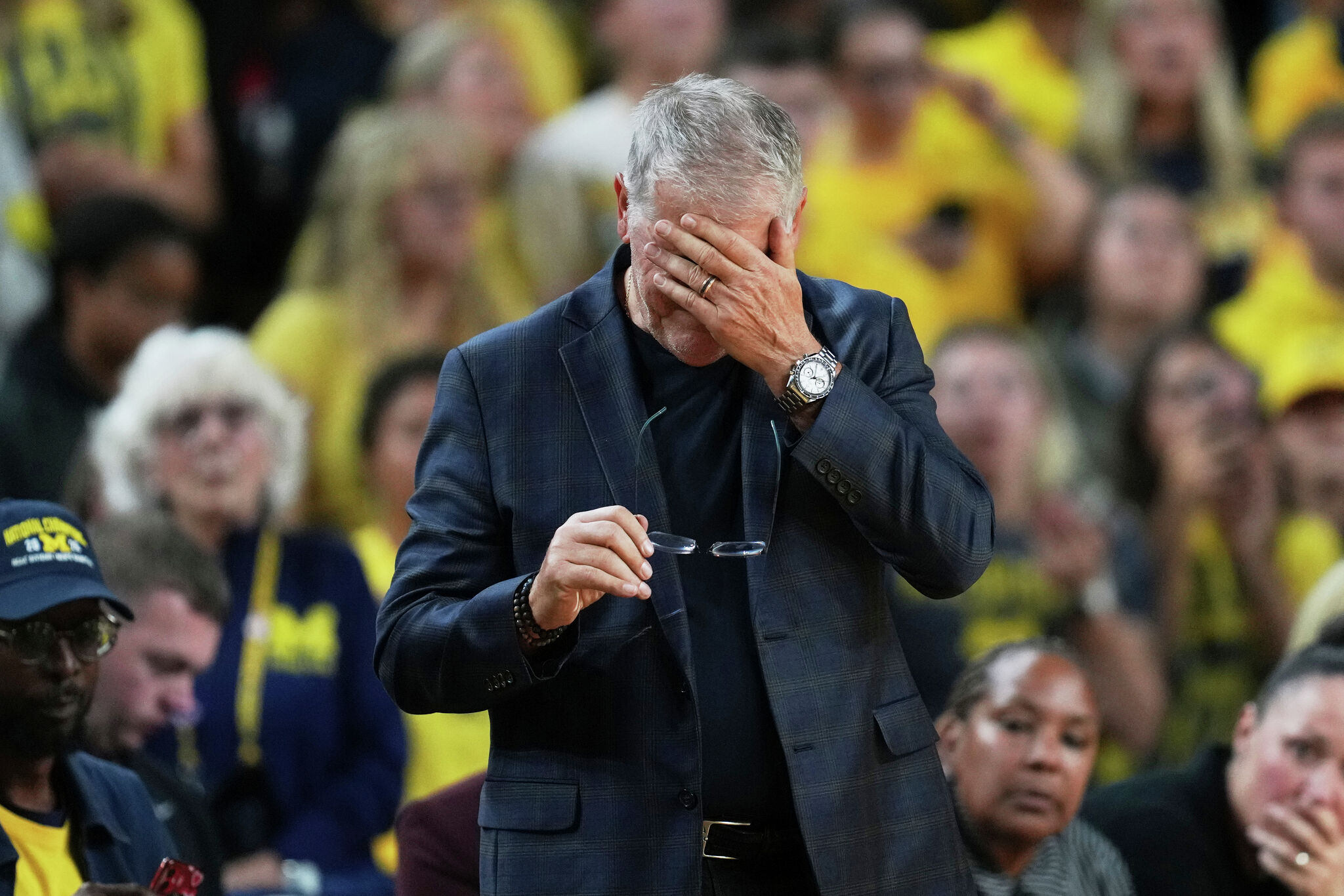
The UConn Huskies’ lengthy run of regular-season dominance concluded Thursday night at the Crisler Center, where the No. 2 ranked team fell 77-66 to No. 5 Michigan. This loss, the first time the Huskies have dropped their opening ranked matchup since an overtime defeat at Stanford on Nov. 17, 2014, marks a sharp departure from the team’s recent history. According to CT Insider, the result snaps a 39-game regular-season win streak that had remained intact since February 2025.
For a program accustomed to early-season blowouts, the atmosphere in Ann Arbor presented a starkly different reality. Head coach Geno Auriemma expressed significant frustration with his team’s performance, repeating the word “disappointing” six times during his initial three minutes of postgame comments. As reported by UConn WBB Weekly, Auriemma noted that the Wolverines appeared far more disciplined and organized from the opening tip, effectively turning the game into a high-intensity test that the Huskies were not prepared to match.
The Impact of Foul Trouble on the Floor
A central factor in the loss was the restricted availability of star forward Sarah Strong. Strong, the reigning national player of the year, picked up her second foul with 2:55 remaining in the first quarter. While she initially stayed in the game, a third foul followed just 30 seconds later, forcing her to the bench for the duration of the second quarter. The Courant reported that Auriemma took full responsibility for this decision, describing it as a miscommunication on the bench and an “unusual gaffe” that left the team without their primary offensive engine for over 12 minutes of play.

“I told them, ‘if this ever happens again, just sub somebody in.’ Because that’s on me, I would have gotten her out with two, rather than get a third. So add that to the list of things I’m disappointed about,” Auriemma said, as noted by the Courant.
When Strong returned for the second half, her impact was immediate—she scored 11 points in seven minutes—but the damage to the Huskies’ rhythm had already been done. Without her on the floor, the UConn offense struggled to generate consistent looks against Michigan’s zone defense, finishing the night shooting just 8-of-31 from beyond the arc.
Offensive Stagnation and Defensive Lapses
Beyond the foul trouble, UConn struggled to find reliable depth. While freshman guard Jovana Popovic led the team with 25 points, the supporting cast failed to provide a consistent secondary threat. Players like Blanca Quiñonez, still finding her footing after shoulder surgery, and others appeared flustered as the team committed 19 turnovers. Strong herself pointed to the team’s lack of movement, noting that the Huskies were largely stagnant on the perimeter, waiting for an opening that never materialized.

The defensive side of the ball also saw a dramatic decline compared to the team’s season opener against Cornell. Michigan took advantage of UConn’s lack of pressure, earning 24 trips to the free-throw line compared to just seven for the Huskies. Auriemma characterized the defensive effort as “lackadaisical,” noting that the team lost its “defensive integrity” as the game progressed.
Looking Toward a Challenging Schedule
Despite the frustration, the loss serves as a deliberate stress test for a team that has faced little resistance in Big East play over recent years. By scheduling four consecutive games against top-18 opponents, the coaching staff aimed to expose developmental gaps early rather than waiting until the postseason. The Huskies returned home early Friday morning and are scheduled to host No. 10 Iowa on Sunday, with eight of their next 10 games slated against teams currently ranked in the AP Top 25 Poll.
As UConn WBB Weekly observed, this result may ultimately prove beneficial by stripping away the illusion of invincibility that hampered the team’s progress during previous seasons. Rather than a sign of a collapsing program, the loss is framed as a clear diagnostic tool. The Huskies now face the immediate task of adjusting their rotation and defensive intensity before facing another ranked opponent in less than 72 hours.
Related reading

Cookie Policy Explains Data Collection and User Consent Processes
Digital Data Tracking and User Consent in Salem Destination Salem, the official tourism organization for Salem, Massachusetts, updated...

Ohio University Wins ZeeMee Trailblazer Award for Student Engagement
"The OHIO team does an amazing job of including ZeeMee in all facets of their admissions outreach," said...

Dr. Tearle L. Meyer, diagnostic radiologist, dies at age 91
A Legacy of Vision: Remembering Dr. Tearle Meyer The medical community in Ohio and beyond is mourning the...

Columbia and Cornell Lead New York in Latest U.S. News Rankings
For students and families navigating the high-stakes world of higher education, the latest rankings from U.S. News &...