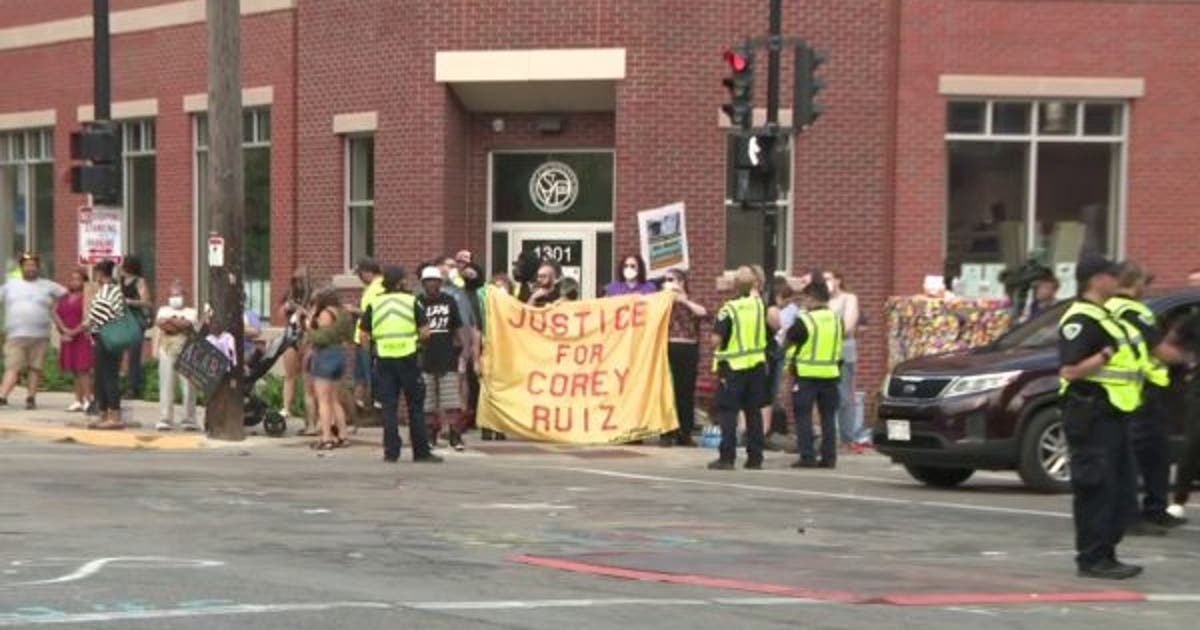
Dane County District Attorney Ismael Ozanne announced Thursday that Officer Kiel Baitinger-Peterson will not face criminal charges in the July 22 shooting death of Corey Ruiz, a decision that reignited protests in a city still raw from a similar case a decade ago.
Ozanne concluded the officer’s use of deadly force was legally justified after reviewing squad videos, surveillance footage and bystander recordings of the confrontation at the intersection of South Baldwin and Williamson streets.
“It was reasonable for the officer to use deadly force when this person resisted officers, produced a knife and was not affected by multiple attempts to use Tasers while officers attempted to take him into custody,” Ozanne wrote in his decision letter, FOX 9 Minneapolis-St. Paul reported.
The decision drew immediate condemnation from Ruiz’s family and their attorney, Ben Crump, who called the shooting an “execution” and “the textbook definition of excessive use of force” at a news conference Thursday.
“There is nothing in the videos the district attorney showed us that justifies this officer stepping back, pulling his gun and firing three shots at point-blank range at Corey Ruiz after he had been Tased and was on the ground, hitting him once in the chest and with the kill shot to his head,” Crump said.
Ruiz, 38, was killed after officers responded to reports of a man stealing bicycles and checking car doors near the Capitol. Police said Ruiz fled on a bicycle when first confronted, then was located about 30 minutes later.
During a struggle in the intersection, investigators said Ruiz pulled a knife and injured Baitinger-Peterson. Two officers deployed Tasers to no effect before Baitinger-Peterson fired three rounds, according to the Wisconsin Department of Justice’s Division of Criminal Investigation.
A familiar pattern on Madison’s streets
The shooting occurred blocks from where Officer Matt Kenny shot and killed Anthony Robinson Jr., a 19-year-old Black man, in 2015. Ozanne also declined to charge Kenny in that case, finding the force justified. The Ruiz decision renewed concerns about how Black residents are treated by police in Wisconsin’s capital, The New York Times reported. Ruiz was Black; Baitinger-Peterson, hired in 2015 with 10 years and 10 months of service, is white.

The New York Times reported that the shooting took place near where a Madison police officer had shot and killed Anthony Robinson Jr., a 19-year-old Black man, in 2015, and that in that case, which also led to large protests, Mr. Ozanne found that force was justified, and the officer was not charged.
Protesters occupied the intersection for days after Ruiz’s death, blocking traffic and clashing with law enforcement. The demonstrations prompted the city to accelerate a body-camera program; at the time of the shooting, Madison officers did not wear them. A $350,000 grant from the Madison Community Foundation is now funding a rollout slated for completion by the end of 2027, WKOW reported.
The medical examiner told Ruiz’s family that without the final shot to the head, Ruiz would have survived, according to Crump. Baitinger-Peterson and another officer were treated and released for injuries sustained during the struggle. Four officers were placed on administrative leave during the months-long DOJ investigation.
Ozanne described Ruiz’s death as a tragedy but said the evidence left no basis for prosecution under Wisconsin law, which permits deadly force when an officer genuinely fears death or great bodily harm. The family’s legal team said they were not shown witness statements during their meeting with the district attorney and medical examiner.
Public records show Ruiz had prior convictions for theft and resisting or obstructing an officer. Family members described him as a caring father. The next step is a potential civil lawsuit; Crump said the family is exploring all legal avenues.
Worth a look

Federal Inspection Finds 11 Deficiencies at Diamondback Correctional Facility
A federal inspection of the Diamondback Correctional Facility in Watonga uncovered 11 deficiencies across seven standards in September,...

Deputy Fire Marshal Roberts: Three Minutes Before Smoke Overtakes; Albany Blaze
"During a house fire, we only have about three minutes before smoke can overtake us," said Deputy Fire...

Bishop Koenig Announces Dec. 12-13 Retirement Fund for Religious Collection
Parishes across the Diocese of Wilmington will take up the annual Retirement Fund for Religious collection on the...

Wheels for Warmth Raises $126,000, Expected to Help 166 Vermont Households
Vermont drivers and donors pushed Wheels for Warmth past $126,000 this fall, a total expected to help 166...