
City-parish funding for outside organizations has collapsed from a peak of $5.6 million in 2024 to an estimated $1.7 million in the proposed 2027 budget, a 70 percent decline that would zero out grants for Live After Five, the Baton Rouge Symphony and the Big Buddy Program, The Advocate reported.
The Metro Council began dissecting the $1.2 billion spending plan Thursday, hearing from leaders of four nonprofits slated for elimination and setting a final vote for Dec. 8.
Mayor-President Sid Edwards’ administration has warned since 2025 that the expiration of American Rescue Plan Act money would force hard choices, and Christel Slaughter, the mayor’s chief advisor, told council members the office is still “digging hard in the seat cushions looking to find additional funding.”
“I’m not asking you to invest in an untested idea,” said Gaylynne Mack, executive director of the Big Buddy Program, which runs after-school and summer jobs programs for young people. “I’m asking you to invest in a proposal with 45 years of results.”
Arts Council
Gaylynne Mack, executive director of the Big Buddy Program, told the council. She brought students with her, including Travis Dabney of St. Francis Xavier Catholic Schools, who said, “Don’t just tell us we are the future,” said Travis Dabney, a student at St. Francis Xavier Catholic Schools. “Show us by investing in us today.”
Jonathan Grimes, president and chief executive officer of the Arts Council of Greater Baton Rouge, said the group’s general-fund request of $250,000 was met with a $25,290 line item — a nearly 90 percent cut from the $250,000 in ARPA money it received this year and far below the roughly $410,000 it collected in 2024.
Marshall Carby, executive director of the Baton Rouge Symphony, warned, “You can ensure that we are not a negative headline tomorrow by continuing to support the arts today.”
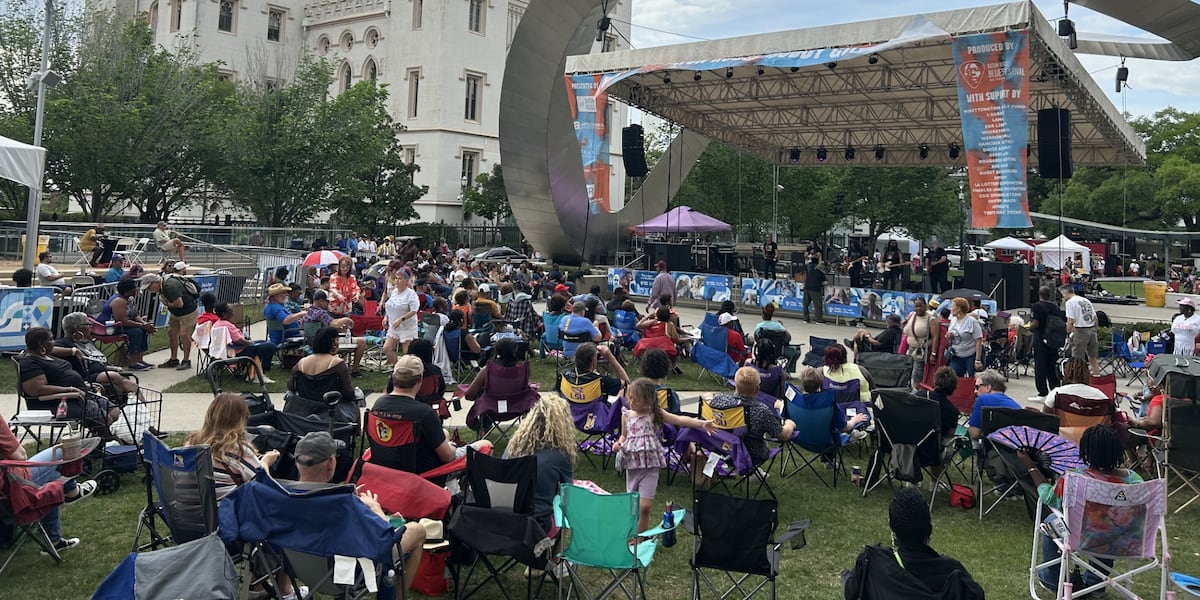
Live After Five, a free concert series running more than 25 years, saw its allocation drop from $45,000 in 2026 to $0 in the proposal. Board chair John Jackson told WAFB the cut was anticipated after months of conversations with the mayor’s office, and board member Lauren Lambert-Tompkins told WBRZ each show costs $10,000 to $15,000 to produce.
“Live After Five has been going on for over 25 years; we’re not just going to sleep on it,” she said. Edwards told WAFB, “Live After Five will be rockin’ and rollin’ right here,” though how much money has been secured and where it will come from remain unclear.
Councilman Darryl Hurst called the potential loss of Live After Five and the Blues Festival “asinine,” arguing the events reversed a downtown decline that once kept people away. Councilwoman Jen Racca said the programming helps prove Baton Rouge “It’s not just a football town.”
Councilman Rowdy Gaudet acknowledged the tradeoffs: “If you are going to put funding somewhere, you have to take it from somewhere.” He urged the nonprofits to press other local governments for support as well.
Founded in 1947 after years of organizing by a women’s string quartet, the Baton Rouge Symphony gave its first concert on February 5, 1947, in the Baton Rouge High School Auditorium with 60 musicians drawn from across the region. The orchestra moved to the Centroplex Theater for the Performing Arts downtown in 1980, establishing its first permanent home.
The budget also proposes eliminating $50,000 for the Baton Rouge Symphony and cutting the USS Kidd Museum to a fraction of its former allocation. Three more organizations — Baton Rouge Youth Coalition, City Year Baton Rouge and the USS Kidd — present their cases Monday.
Slaughter said the search for alternate revenue will continue in the days and weeks ahead, and Hurst demanded the administration return with “hard numbers” before the Dec. 8 adoption vote.
Worth a look

OKC Animal Welfare Halts Dog Adoptions After Distemper Outbreak, Three Dogs Euthanized
Oklahoma City Animal Welfare suspended dog adoptions and intakes Thursday after five shelter dogs tested positive for canine...

Morris County Students and Their Families Will Breathe Cleaner Air on the Daily Commute
Morris County students and their families will breathe cleaner air on the daily commute after state officials directed...

LSU Travels to No. 9 Tennessee as 1.5-Point Road Favorite Saturday
LSU travels to Neyland Stadium on Saturday as a narrow 1.5-point road favorite against No. 9 Tennessee in...

MSU Denver Beats Colorado Mesa in Five, Plays Angelo State Friday
MSU Denver survived a five-set grinder Thursday afternoon, knocking off Colorado Mesa 3-2 in the NCAA Division II...