
North Carolina ranks in the bottom half of states for defense-related economic activity despite having the fourth-largest active-duty military population, Commerce Secretary Lee Lilley told a defense industry summit in Wilmington on Tuesday.
The disconnect between military presence and industrial capture framed the Velocity Summit, hosted by the North Carolina Military Business Center and The Protocase Companies at Cape Fear Community College. Lilley laid out the numbers: the largest manufacturing workforce in the Southeast, the highest concentration of top-tier R1 research universities in the region, yet a defense economy that punches well below its weight class.
“This, despite having the fourth largest active-duty military population, the largest manufacturing workforce in the southeastern United States and the largest concentration of R1 or top-tier research universities in the Southeast,” Lilley said during his keynote.
The state’s new strategic economic development plan, released earlier this year, treats that gap as a “generational opportunity.” Lilley argued that the Pentagon’s shifting priorities — rapid commercialization, domestic manufacturing, operational performance — align with assets North Carolina already possesses: a coordinated innovation ecosystem, manufacturing infrastructure, and physical proximity to warfighters.
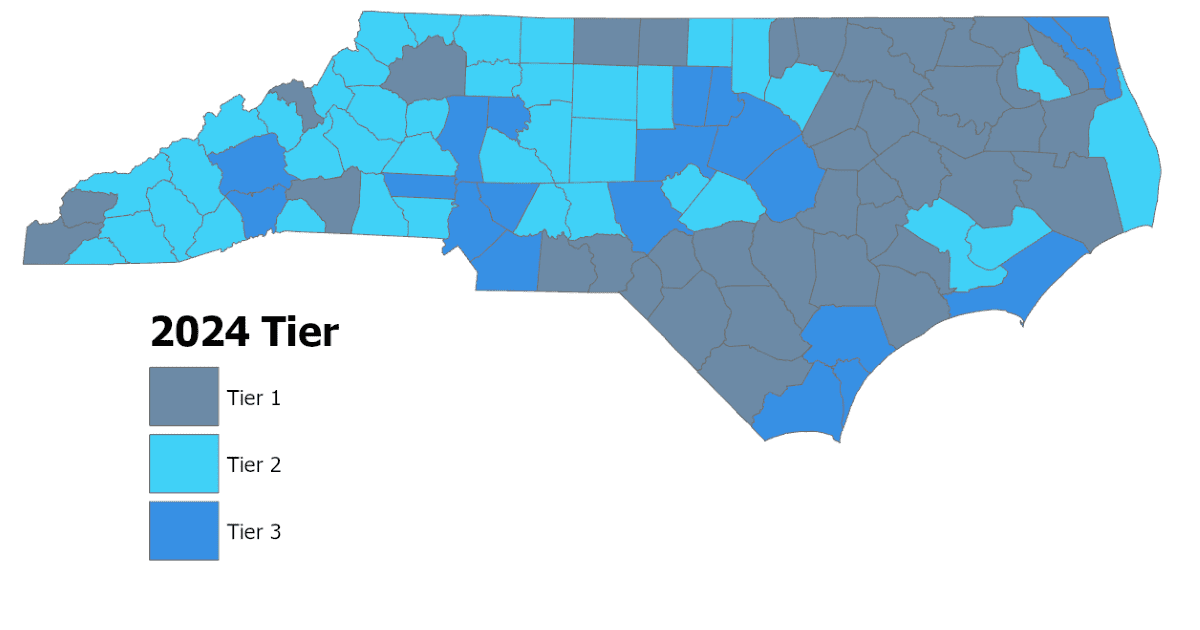
One model Lilley pointed to is the North Carolina Global TransPark in Kinston. The state invested in site infrastructure while the U.S. Navy signed a long-term agreement for an aircraft maintenance facility there. Seven hundred acres of permitted land remain available, and Lilley pledged that permitting delays “will not come from state or local governments in this process.”
Dual-use projects — technologies that serve both commercial and defense markets — are central to the pitch. JetZero is developing a blended-wing-body aircraft at Piedmont Triad International Airport in Greensboro with applications on both sides of that line. Lilley said 90 percent of the recruitment pitch for defense companies mirrors the standard economic development playbook: workforce talent, infrastructure, logistics, and speed.
“The focus is on building an economic development platform that supports rapid commercial scaling and ultimately defense surge capacity,” he said.
Retired Lt. Gen. Christopher Mohan, former commanding general of U.S. Army Materiel Command, offered a blunt assessment of the national industrial base. The problem is not funding or demand, he said, but a capacity erosion that began roughly 40 years ago as manufacturing jobs and suppliers moved overseas.
“We don’t have a money problem,” Mohan said. “We have a capacity problem in this nation that started about 40 years ago; we started shedding capacity and sending it to other places.”
Mohan cited aging infrastructure, outdated procedures, and long qualification timelines as barriers. Solutions, he argued, include long-term demand signals, increased data sharing, more responsive production lines, and advanced manufacturing partnerships.
“It’s about readiness,” Mohan said, “and at the end of the day, what we cannot lose sight of is that every time we cannot produce a part for one of our combat systems, there’s a soldier out there that’s going … ‘Why is this thing broken, and I cannot get a repair part?’”
The Protocase Companies — encompassing Protocase, 45Drives, ProtoSpace Manufacturing and Protomentum — selected Wilmington in 2024 for their first U.S. expansion. The rapid manufacturing firm produces parts for defense and aerospace customers. Chairman Doug Milburn joined Lilley and Mohan on the program Tuesday alongside panels of military officials and industry executives.
Lilley’s commitment to faster permitting shows the city now treats speed as a competitive edge in defense economic development.
Keep reading

Escaped Inmate’s Stolen Truck Found; Ziegler at Large, WAFB Says
James Ziegler, 55, escaped the West Baton Rouge Detention Center on Monday afternoon in a stolen 2012 white...

Louisville Metro Council Opens 4th Annual Food Donation Drive
Louisville Metro Council opened its 4th Annual Food Donation Drive with drop-off sites in every council district. "This...

Idaho Steelheads Return Home for Maine Series After 5-Point Wichita Road Trip
Idaho Steelheads hockey returns to Boise this week after the club squeezed five of six points from a...

US Army Detonating 5 Tons Unstable Lead Azide in Iowa; Toxic Dust Plume May Reach 100 Miles
The U.S. Army will detonate nearly five tons of unstable lead azide Friday at the Iowa Army Ammunition...