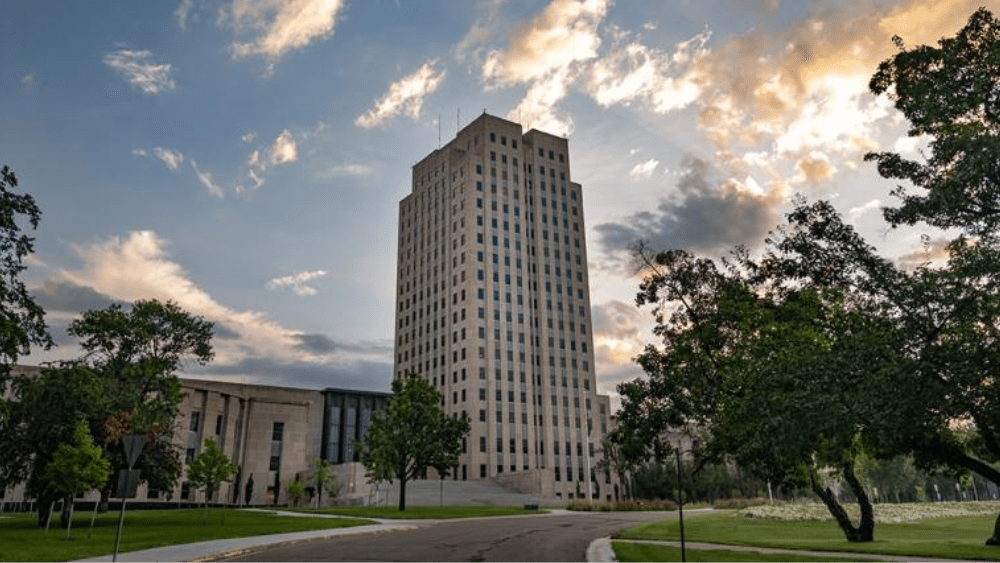
North Dakota secures $206 million for rural health
North Dakota will receive $206 million in federal funding to increase its rural healthcare services.
This second-year injection of capital brings the state’s total awards under the Rural Health Transformation Program (RHTP) to approximately $406 million over a two-year period, wdayradionow.com reported.
The announcement came Monday, November 9, from U.S. Senators John Hoeven and Kevin Cramer and Representative Julie Fedorchak. They stated the investment is designed to support the establishment of a comprehensive continuum of healthcare across the state’s rural landscapes.
This latest funding round keeps North Dakota on a trajectory to potentially access up to $1 billion through the program’s full five-year duration. The decision follows a recent roundtable discussion involving the state’s congressional delegation, U.S. Health and Human Services Secretary Robert F. Kennedy Jr., the North Dakota Department of Health and Human Services (NDHHS), and various healthcare providers.
Building a continuum of care
The recent meeting with Secretary Kennedy focused on creating partnerships to ensure federal resources directly address the specific requirements of rural hospitals, clinics, and medical providers. Senator John Hoeven noted that the $206 million award builds upon existing progress to unlock further opportunities for statewide care integration.
“This $206 million award builds on the progress North Dakota has made so far under the Rural Health Transformation Program and will unlock more opportunities to build a continuum of care across our state,” Hoeven said. Senator John Hoeven
Senator Kevin Cramer emphasized that rural hospitals serve as essential pillars for their communities. He expressed a commitment to working with state leaders and the Centers for Medicare and Medicaid Services to ensure the RHTP provides lasting improvements to service delivery.
Representative Julie Fedorchak characterized the combined funding as a chance to implement fundamental changes to the state’s medical infrastructure. She urged state officials to utilize these one-time resources to develop a more sustainable system rather than temporary fixes.
“I urge state leaders to think big and use these one time resources to fundamentally rethink and retool how we deliver healthcare in a way that maximizes access and quality at a cost that is sustainable,” Fedorchak said.
North Dakota uses funds to expand telehealth and infrastructure
During the program’s first year, North Dakota received nearly $200 million, an amount the congressional delegation noted was twice the program’s baseline funding. Several existing state investments helped secure that initial award, including the expansion of statewide fiber optic infrastructure and a network of modern critical access hospitals.
The state has also utilized funds to expand telehealth services, which are critical for remote patient monitoring and specialist consultations. These efforts aim to improve medical access while simultaneously helping rural communities recruit and retain necessary healthcare professionals.
The NDHHS recently obligated the entirety of the first-year award. Most of that capital was directed to the North Dakota Center for Rural Health, which is tasked with overseeing the distribution of grants to sub-grantees supporting various rural healthcare initiatives.
Current state-led programs supported by these funds include upgrading clinical equipment, improving workforce retention, and expanding mobile mammography services. These initiatives target the logistical hurdles that often prevent rural residents from receiving preventative screenings and specialized care.
The Rural Health Transformation Program was established through the Working Families Tax Cut Act. North Dakota’s congressional delegation assisted Governor Kelly Armstrong and his administration in the preparation of the state’s application for these federal funds.
The announcement did not specify the exact timeline for the distribution of the second-year funds. The specific facilities or individual healthcare providers slated to receive portions of the $206 million have not yet been identified.
Keep reading

Virginia DMV Announces New Driver License Rules for 18-to-20-Year-Olds
Virginia 18- to 20-year-olds will face new waiting periods before they can obtain their first driver's license, according...
Measles Cases Confirmed in Orleans County, Vermont
Vermont health officials have confirmed cases of measles in Orleans County, according to reports from nenc.news and capeandislands.org....

Salt Lake City Finishes 600/700 North Reconstruction Project
Salt Lake City finishes 600 North reconstruction Major roadwork on 600/700 North has reached completion after two years...

Ballad Health Refutes BlueCross BlueShield Claims Regarding TennCare Access
Ballad Health issued a statement addressing recent communications from BlueCross BlueShield of Tennessee regarding the future accessibility of...