
In a Code Switch episode for NPR, host Gene Demby reports that the Trump administration’s termination of Temporary Protected Status for Haiti has left roughly one million people who held legal status facing potential deportation to a country where gangs control most of the capital and shoot at commercial aircraft.
The administration said conditions in Haiti no longer justified the protection and that Haitians in the United States could return safely. Flights into Port-au-Prince have been largely shut down because gangs were shooting at planes, Demby noted on the program.
Haiti remains the poorest country in the Western Hemisphere, a condition shaped in part by a long history of U.S. interference, and is still reeling from its most recent coup d’état.
Florida enforcement
Florida has more local police agencies deputized for immigration enforcement than any other state and ranks second only to Texas in ICE arrests. Governor Ron DeSantis has required every county sheriff’s office to cooperate with ICE and extended immigration duties to agencies including the Department of Business and Professional Regulation, the Division of Alcoholic Beverages and Tobacco, the Florida Gaming Control Commission and the Florida Lottery.
“We’re also, though, not just stopping with law enforcement. Our Department of Business and Professional Regulation, Division of Alcohol Beverage & Tobacco, the Florida Gaming Control Commission and the Florida Lottery all operate in what we would consider target-rich environments. During their routine inspection…” DeSantis said in an archived recording played on the program.
Nadege Green, a journalist and director of community research at a racial justice law firm in Miami, told NPR that the deportation machinery in Florida operates through traffic stops and routine inspections rather than visible raids.
“You have all of these state mechanisms — right? — that are essentially being deputized to create, like, these immigration holds and detentions. And so, you know, when you’re driving on the highway, you’re not seeing a raid. It’s a traffic stop,” Green said.

Green added that Florida has a history of making its “really horrible actions invisible,” tracing the pattern to the civil rights era when Miami Beach was a sundown town. “Under the veneer of fun, sun and beaches, tourism — right? — there is a way in which the terror is hidden because terror is not good for tourism. And so Florida has a way of putting its terror underneath covers,” she said.
One nurse’s precarious path
Harlaine, a nurse from Fort Lauderdale who asked that only her first name be used because of her pending immigration case, arrived in Florida from Haiti at age seven in the 1990s after her family fled first to St. Martin.
“I tucked away my heritage, my culture and I became American. All I’ve known is America from that point. Went to school here. Studied American history. I know nothing about my background, know nothing about my Haitian history. I’ve been American for 31 years,” she said.
TPS, granted after Haiti’s catastrophic 2010 earthquake, allowed her to work, travel and attend college. “My dream of becoming a nurse was not possible without TPS. And I’ve been able to work as a frontline COVID nurse when the country needed nurses the most. I jumped in and said, hey. Here I am. Send me,” Harlaine said.
She now works as a travel nurse in rural, underserved hospitals, including a facility in North Dakota willing to sponsor her.
The termination of TPS has made her ability to take that job and remain in the country suddenly precarious. “Are you worried about ICE picking you up? Is that something you think about as you move through your life every day?” Demby asked.
“Absolutely. And now I see it all around me. I’ll be on the highway, and I’m watching Border Patrol, you know, several of them at someone’s car. I saw them literally down the street from me the other day. I recorded it. I’m still trying to make sure that they were ICE because they don’t have ICE on their clothes. You know, it doesn’t say Border Patrol. It says sheriff, but I just know it was a bunch of private vehicles. You know, in your mind, you’re like, oh, they’re all the same people,” Harlaine said.
Harlaine described anti-Haitian bullying throughout her schooling. “What you looking at, F-ing Haitian? Things like that,” she recalled. Her older brother endured “Haitian-and-Yank fight” incidents each year. “He definitely had it worse,” she said.
- U.S. Army Plans 10,000-Pound Detonation in Iowa After Court Clears Way
- Cam Talbot Seizes Blue Jackets Starting Goalie Role Over Jet Greaves
- Trump nets up to $15m in Nvidia stock gains after Huang return (newsarchyuk.com)
- Trump's Beef Quota Filled About 37% in Month One; Ground Beef Fell 13 Cents (daybreakwire.com)
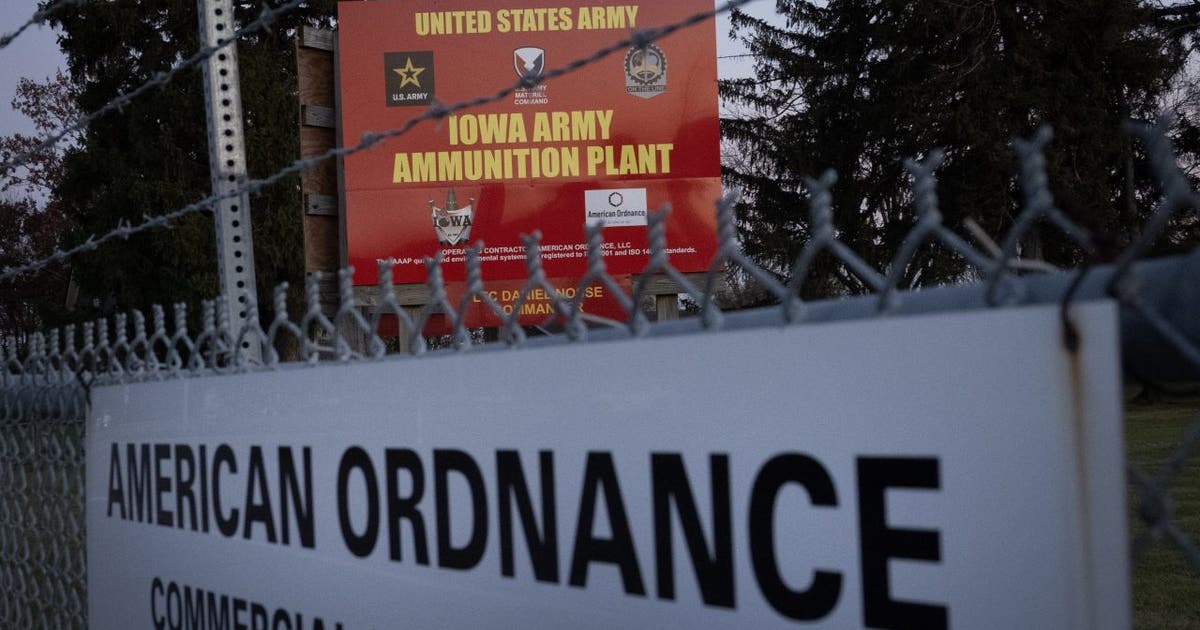
U.S. Army Plans 10,000-Pound Detonation in Iowa After Court Clears Way
The U.S. Army plans to detonate nearly 10,000 pounds of bomb-making material at its Middletown, Iowa, ammunition plant...

Cam Talbot Seizes Blue Jackets Starting Goalie Role Over Jet Greaves
Columbus Blue Jackets veteran goaltender Cam Talbot has seized the starting role just 22 games into the season,...

St. Paul Council Majority Opposes Mayor’s Plan to Clear Two Homeless Encampments
St. Paul Mayor Kaohly Her announced Nov. 19 that the city will clear its two remaining large homeless...

The Principal License Became Active 13 Days
The principal license became active 13 days after Reed submitted a new application on Nov. 10, according to...