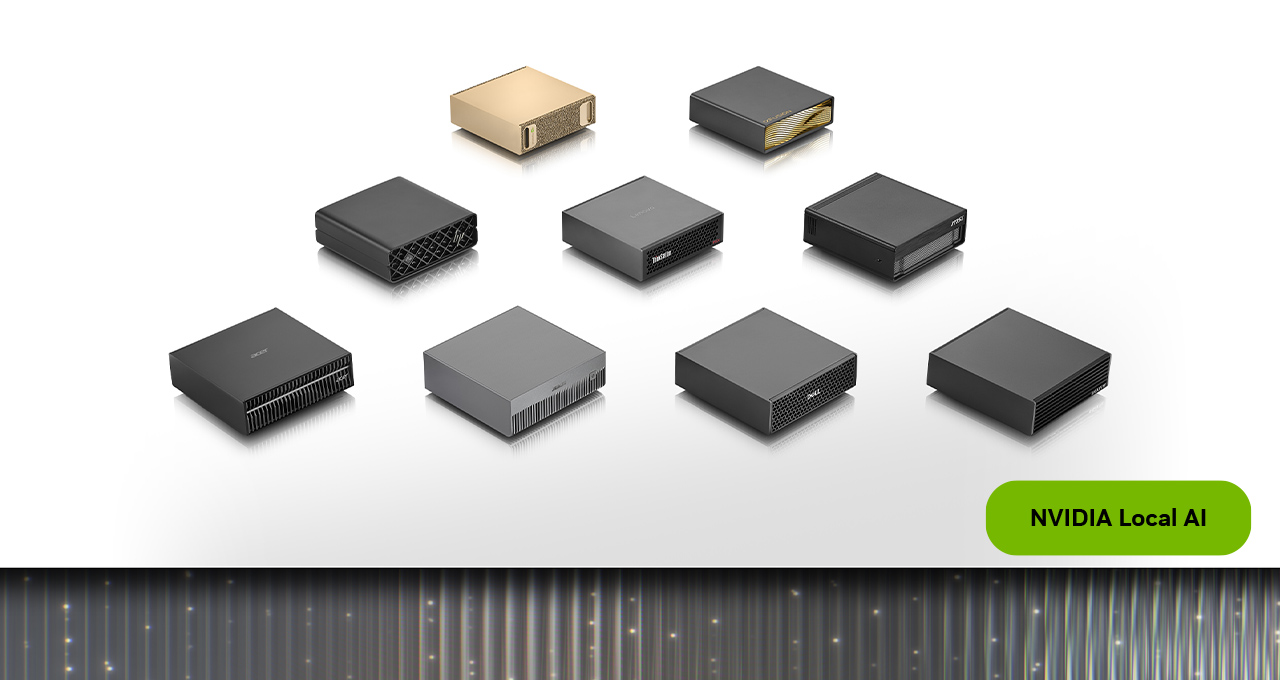
Nvidia has launched a 64GB configuration of its DGX Spark mini workstation starting at $4,999, arriving October 23 through hardware partners. The new tier delivers half the memory of the original model amid severe supply constraints that have pushed the 128GB version’s price past $6,950.
Local artificial intelligence development is getting a more accessible hardware option as Nvidia expands its workstation lineup. The hardware and graphics giant introduced a 64GB version of the DGX Spark desktop AI computer, positioning the new configuration to assist developers working with models that fit within smaller memory pools. The system is scheduled to reach store shelves on October 23 through an exclusive network of original equipment manufacturers.
OEM Availability and the GB10 Grace Blackwell Superchip Architecture
The upcoming 64GB systems will be offered strictly through hardware manufacturer partners, including Acer, ASUS, Dell, Gigabyte, HP, and MSI. Despite the reduction in unified memory, the hardware retains the same core processing silicon as its larger sibling.
The package also integrates a 20-core Arm CPU designed to accelerate data preprocessing and orchestration. According to hardware disclosures, the shared memory bandwidth remains unchanged at 273 GB/s, indicating that the manufacturer used lower-capacity memory modules rather than reducing the module count.
Supply Constraints Drive up Hardware Costs
The rollout of a smaller-capacity tier arrives in response to widespread pricing pressure across the memory market. Industry observers have pointed to constrained memory supplies as a primary driver behind surging hardware costs. Nvidia attributes the price adjustments to these ongoing supply constraints, which have driven up production expenses for high-capacity components.

The hardware concept originally surfaced under the Project Digits banner at CES 2025 with an anticipated retail target around $3,000, though it ultimately debuted at $4,000. With the latest adjustments, the price of the original 128GB model has climbed significantly higher.
| System Configuration | Original Launch MSRP | Current Price or MSRP |
|---|---|---|
| Project Digits (Concept) | $3,000 (Target) | N/A |
| DGX Spark (Original 128GB) | $4,000 | $6,950 |
| DGX Spark (New 64GB) | $4,999 | $4,999 |
As retail availability fluctuates, actual market prices for in-stock 128GB systems have been reported anywhere from $7,000 to $9,000. While the new 64GB model introduces a lower entry barrier than the top-spec configuration, its $4,999 starting price sits 25% above the initial launch price of the original 128GB system.
ConnectX-7 Interfaces Allow Users to Pool Memory Resources
To help developers handle workloads that eventually outgrow a single machine, every DGX Spark ships with a built-in ConnectX-7 networking interface. Users can link multiple systems together directly using a QSFP cable to pool their unified memory resources. Joining two 64GB units together creates a 128GB environment that supports larger language models and demanding agentic workflows.
Performance benchmarks shared by the company highlight the advantages of multi-node setups. In internal evaluations running the Qwen 3.8 27B model, a two-node 64GB cluster outperformed a single 128GB system by as much as 70 percent while offering twice the memory bandwidth.
To streamline multi-machine deployment, Nvidia is introducing software tools designed to remove command-line friction. The Sync Cluster Assistant automatically detects connected hardware, validates configurations, and establishes the network. Additionally, an upcoming feature called Model Launcher will allow users to automatically download and execute models across connected devices while linking them directly to browser-based coding tools.

As AI models become increasingly “lightweight,” GPU memory is becoming ever more expensive. NVIDIA is addressing this contradiction with a product that “cuts memory.”
Futunn News reporting team
Competition in the Local Workstation Market
The desktop hardware tier faces direct competition from alternative platforms. Systems built around AMD’s Gorgon Halo SoCs offer memory configurations ranging from 32GB up to 192GB on top-end Ryzen AI Max+ 495 processors. Industry analysis notes that competing systems often retail below the cost of high-end Nvidia configurations while providing higher maximum capacity.
However, independent testing demonstrates that Nvidia’s GB10 architecture maintains an advantage in raw AI processing performance. While alternative architectures win on ceiling capacity, developers requiring specialized software integration or specific cluster-scaling frameworks must weigh those performance metrics against rising hardware expenses.
Worth a look

IKEA and Xbox Launch YXSTABY Gaming Furniture Collection
IKEA and Xbox launched the nine-piece YXSTABY gaming furniture collection, combining original controller-inspired designs with everyday home goods.

Amazon Explores $8B Nvidia Chip Deal Via Special-Purpose Vehicle
Amazon is exploring a plan to offload approximately $8 billion in advanced Nvidia Corp. chips into a special-purpose...

OpenAI launches ChatGPT sign-in for 16 partner tools
OpenAI has introduced a sign-in feature allowing ChatGPT Plus and Pro subscribers to use their accounts and subscription...

Technics Launches EAH-A1000 Headphones With 45-Hour Battery Life
Priced at £399 in the UK and €449 in Europe, Technics has launched its flagship EAH-A1000 wireless over-ear...