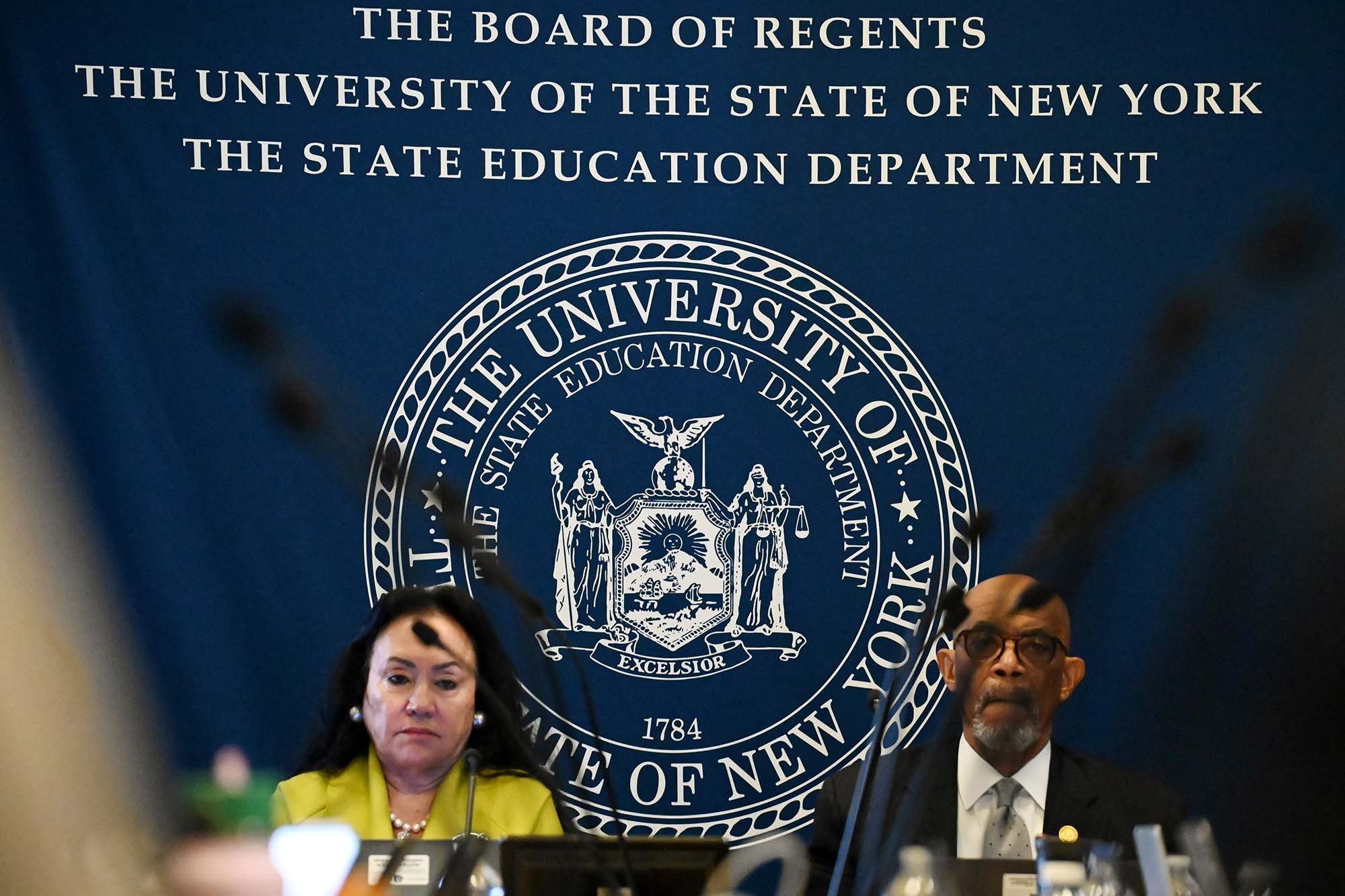
New York’s Board of Regents adopted new regulations last week requiring the state’s 85 teacher preparation programs to align with the science of reading, then gave them until 2028 to comply.
The move arrives decades after the research settled and years after states such as Mississippi turned that research into law — and into results. Today, New York looks up at Mississippi, and poor fourth graders in the Magnolia State now read better, on average, than their counterparts in New York.

Nearly three-quarters of New York City public-school students are economically disadvantaged. They would literally be better off going to school in Mississippi. More than 90 percent of the state’s elementary teachers are prepared in New York’s own programs, so Albany cannot claim the quality of its teaching force is beyond its control.
What the data show
A survey of hundreds of New York educators by the Science of Reading Center at SUNY New Paltz found that a mere 8 percent received substantial preparation in evidence-based reading instruction in their teacher training programs.
SUNY moved faster
If SUNY can manage it in a year, the Regents’ two-year timeline for the rest of the state is difficult to justify.

A pattern of misplaced urgency
The Regents have shown they can act quickly when they choose. In 2017 they eliminated a certification exam designed to assess prospective teachers’ literacy skills. In 2021 they instructed school districts to pursue diversity, equity and inclusion “with fidelity and urgency.”
They have spent years making it easier to earn a New York high school diploma. By 2028 — the same year they expect education schools to get serious about teaching children to read — they intend to stop requiring students to pass Regents exams to graduate.
SUNY New Paltz traces its origins to the New Paltz Classical School founded in 1828 and became a state normal school in 1885 specifically to prepare teachers for New York’s public schools. It was among the original 30 institutions incorporated into the State University of New York system when it was created by legislative act in 1948.
New York City has lost roughly 200,000 K–12 students in little more than a decade. Rochester, Buffalo, Syracuse and Yonkers have also seen substantial enrollment declines. For generations the state could count on its economic dynamism to draw educated people from elsewhere. The question now is whether it can produce them itself.
Related reading

HPD Arrests 35-Year-Old Suspect in Kapiolani Community College Armed Carjacking
Honolulu police arrested a 35-year-old man Thursday on suspicion of the armed carjacking that left a 19-year-old student...
Governor Janet Mills Highlights Community Spirit in Thanksgiving Address
Governor Janet Mills delivered her annual Thanksgiving address Thursday, highlighting community resilience across Maine while acknowledging the holiday's...

Montana Unemployment Holds at 3.1%, Below National Rate as Employment Rises
Montana's unemployment rate held at 3.1 percent in October, leaving the state a full percentage point below the...

Minneapolis Council Fails to Override Frey Veto on Data Centers, Moratorium Expires Saturday
The Minneapolis City Council fell two votes short Friday in its attempt to override Mayor Jacob Frey's veto...