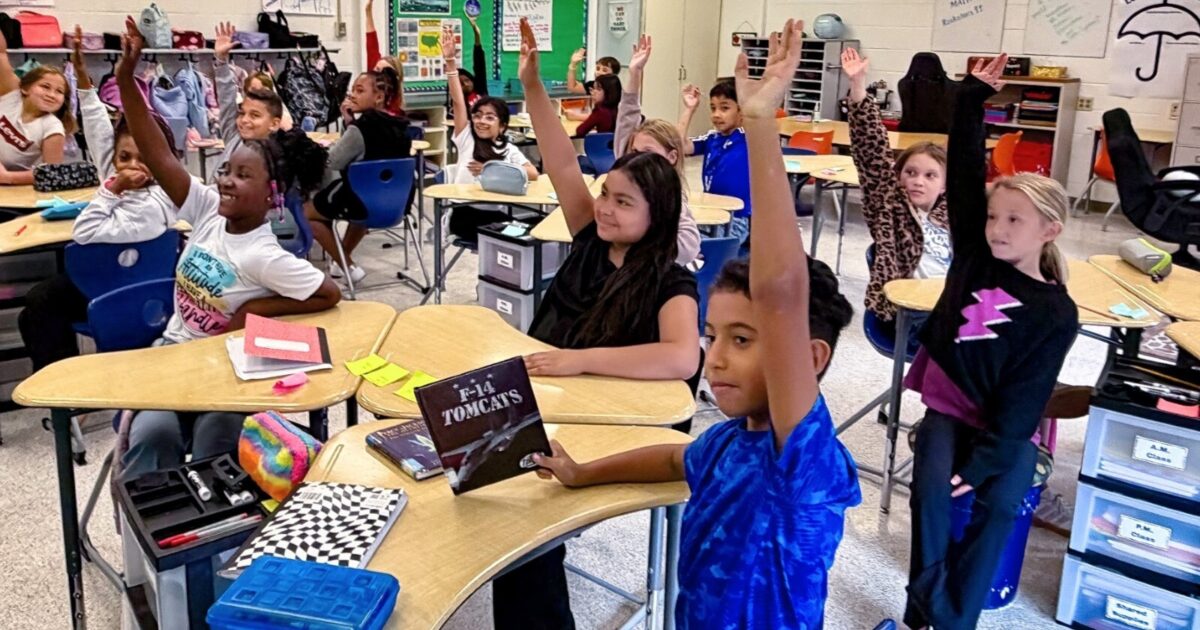
Fourth graders across Virginia Beach City Public Schools spent the fall building flood barriers out of sponges, cardboard and popsicle sticks — part of a new classroom guide developed by the school division and the City’s Flood Protection Program.
The “Teachers Guide: Understanding Floods for Fourth Graders” rolled out this semester as a five-lesson sequence that slots directly into the existing weather unit, City of Virginia Beach reported. It covers river, coastal and flash flooding; the mechanics of storm surge and watersheds; and the emergency warnings and infrastructure the city relies on when the water rises.
The unit culminates in a design challenge: students engineer small-scale mitigation models and test them against simulated flooding. At Thalia Elementary, where Thalia Creek runs behind the playground, the lesson hit unusually close to home.
“You could feel the excitement in the classroom during these lessons, sparked by the partnership between the City and VBCPS,” said Nikki Holdcraft, instructional technology specialist at Thalia Elementary School.
“With Thalia Creek right in our backyard, this project hit close to home with our students. They proudly presented their flooding solutions to an amazing group of community partners, including fifth-grade peers, teachers, school leaders and the team from Lynnhaven River NOW.”
The guide aligns with Virginia’s Science Standards of Learning, letting teachers fold it into the curriculum without adding a separate block. That alignment was intentional — the Flood Protection Program, branded as The Ripple Effect, is a 10-year plan funded by a resiliency package voters overwhelmingly approved in November 2021.
The package directs money toward drainage improvements, tide gates, pump stations and flood barriers across the city, overseen by Public Works and a community accountability board.
Virginia Beach City Public Schools, the city’s K-12 branch of government, serves approximately 70,000 students across 87 fully accredited schools. As a school division rather than a district, it has no taxing authority and relies on appropriations from the local government. The division is the fourth largest in Virginia and the second largest employer in the city, operating a fleet of nearly eight hundred buses.
By grounding the science in neighborhoods students already know, the program aims to build a generation that understands the specific risks of coastal living — and the role they can play in adapting to them. The full guide is available through the city’s Flood Protection Program page.
Related reading

HPD Arrests 35-Year-Old Suspect in Kapiolani Community College Armed Carjacking
Honolulu police arrested a 35-year-old man Thursday on suspicion of the armed carjacking that left a 19-year-old student...
Governor Janet Mills Highlights Community Spirit in Thanksgiving Address
Governor Janet Mills delivered her annual Thanksgiving address Thursday, highlighting community resilience across Maine while acknowledging the holiday's...

Montana Unemployment Holds at 3.1%, Below National Rate as Employment Rises
Montana's unemployment rate held at 3.1 percent in October, leaving the state a full percentage point below the...

Minneapolis Council Fails to Override Frey Veto on Data Centers, Moratorium Expires Saturday
The Minneapolis City Council fell two votes short Friday in its attempt to override Mayor Jacob Frey's veto...