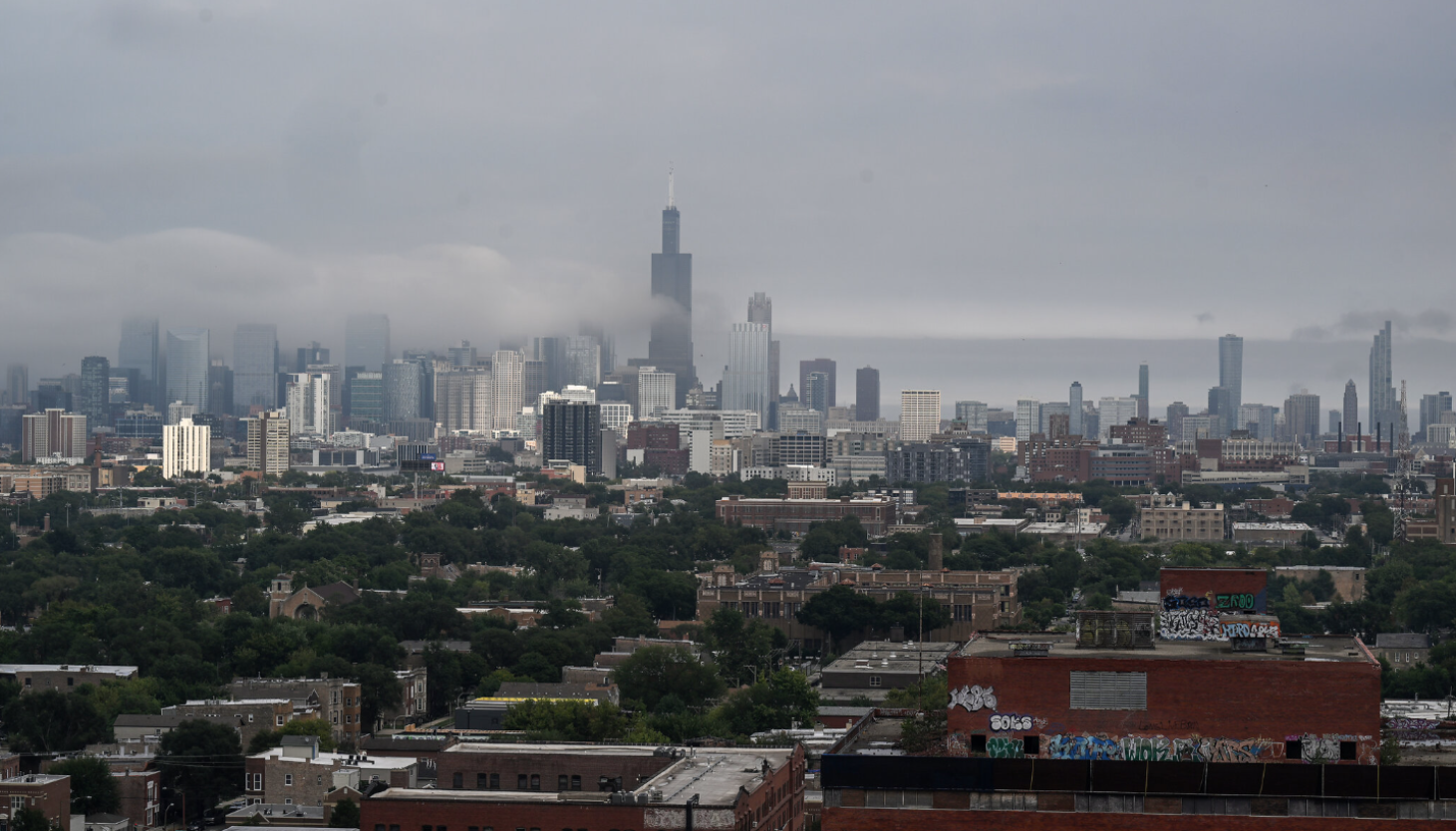
A tax program meant to revive Chicago’s blighted West Side has delivered a fraction of the investment seen downtown over three decades, The New York Times found.
- Downtown TIF districts collected nearly $5 billion; West Side districts collected $2 billion.
- Over $1 billion spent on downtown projects vs. just over $100 million on the West Side.
- Only about 400 of a projected 1,000 housing units renovated on the West Side by 2036.
- Mayor Brandon Johnson pledges equitable shift, but oversight remains fragmented.
Disparity in revenue and spending
The Times compared three West Side neighborhoods — North Lawndale, East Garfield Park and West Garfield Park — with three similarly sized downtown areas. Over the past three decades, the downtown TIF districts collected nearly $5 billion in revenue, more than double the $2 billion collected on the West Side, the Times reported.
Downtown, over $1 billion has been spent on projects including affordable housing, a top program priority. Just over $100 million has been spent on such projects in the West Side neighborhoods, according to the Times.
Housing targets missed, conditions persist
One TIF redevelopment plan projected the renovation of 1,000 residential units by 2036. According to the Times, the plan was first drafted in 2000 and then amended in 2015 to expand the project and push back its deadline. Only about 400 units in fewer than 20 buildings have been renovated so far, according to records from the city’s housing, planning and development agencies cited by the Times. Despite renovation, most of those buildings still have structural and maintenance problems, records show, including collapsed floors and broken windows. Across the three West Side neighborhoods, about 700 housing units in roughly 40 new buildings went up with TIF money, far short of satisfying housing needs, the Times found. At one development, construction costs rose to nearly $1 million per unit.
Thomas Cheatham, who lives in a new mixed-income building in North Lawndale, said he rarely lets his young children play outside. “The area, with its empty storefronts and drug dealers, makes him wary of letting his children play outside,” the Times reported.
Deborah Mitchell, 66, a caretaker for her disabled niece in Lawndale Apartments, said she has regularly complained about warped floors, doors that won’t shut and mice droppings on kitchen shelves. Her unit costs about $900 a month on top of a federal housing subsidy, she told the Times. Peter Holsten, president of the development company that owns the building, said his staff attempted to address life-threatening concerns quickly, but high staff turnover resulted in some repairs going unmade.
He acquired 170 units in 2006 using $8.9 million in TIF funds and addressed numerous safety violations, records show, but said he couldn’t afford to fix everything. Instead of replacing water-damaged floors, workers covered them with plywood and carpet.
By 2009 violations had declined, but short-term solutions failed and violations began racking up again, inspection records show. In 2023, after tenant complaints landed him in court, Holsten sought $10 million in TIF funds for improvements; his application was not selected.
Beyond the immediate housing challenges, North Lawndale possesses a distinct historical demographic identity as one of Chicago’s 77 community areas. Following its 1869 annexation, the neighborhood evolved from a hub for Bohemian and Czech immigrants in the 1890s to a predominantly Jewish community by 1918. By the mid-1950s, the area transitioned to become a center for Black residents from Chicago’s South Side and the American South.
The neighborhood also contains the city’s largest concentration of greystones and landmarks such as the K-Town Historic District. Despite experiencing economic decline and population loss beginning in the 1960s due to institutional factors, the area has seen ongoing reinvestment efforts since the 1990s, including the growth of new retail developments and a demographic shift that has included an influx of Hispanic residents.
Fractured oversight and political bottlenecks
Chicago has used TIF more extensively than any other major American city, building a $16.6 billion initiative, according to a recent study by the Great Cities Institute at the University of Illinois Chicago cited by the Times. The program began in 1984 under Mayor Harold Washington to offset declining federal urban funding. Washington insisted investment reach the West Side, but subsequent mayors applied it more broadly, including in wealthier neighborhoods, the Times reported.
David Doig, who was planning and development commissioner under Mayor Richard M. Daley in the 1990s, said early on there was “much more emphasis on getting the deal done than there was on monitoring and compliance,” he told the Times. In 2020, the city outlined a process for determining whether a project met public-benefit standards. But according to 10 current and former officials cited by the Times, the city lacks the administrative capacity to adequately track in real time whether projects deliver.
Jim Horan, who was deputy commissioner in the housing and planning departments before retiring in 2024, said management has improved recently. “Before, we just kind of accepted what developers came to us with,” Horan told the Times. “Now, we are telling developers where we want them to go.” But he said there isn’t a larger plan in place. “It’s whoever is the first one to the table,” he told the Times.
Developers described a bottleneck requiring aldermanic approval.
“The city of Chicago will put money in when they feel comfortable,” said Wilbert Cook, an appraiser in the Cook County assessor’s office who runs a nonprofit and has spent decades trying to develop an affordable housing project in West Garfield Park, the Times reported. “We don’t have enough support services to help the small nonprofits.”
Ald. Jason Ervin (28th), whose ward includes parts of East and West Garfield Park, said building momentum takes time. “Partnerships just don’t happen like instant coffee,” Ervin told the Times. “It comes down to meeting, talking with, working with, helping and doing what’s necessary to move things along.”
Former Ald. Walter Burnett (27th), whose ward covered parts of the West Loop, credited his success in securing TIF funds partly to the demolition of Cabrini-Green.
“Everybody’s values went up,” Burnett told the Times. “Lots were selling for $10,000. Now, you can’t get a lot for half a million dollars.”
A spokesman for Mayor Brandon Johnson said the city would keep working to “advance a more equitable vision for economic development, one that breaks from decades of uneven investment and puts public resources to work in the communities that need them most,” the Times reported.
Johnson is the first mayor from the West Side in a century, the Times reported. Earlier this year, construction began on a 107-unit rehab project, the first such effort in the three West Side neighborhoods in about a decade, funded in part with $10 million in TIF money, the Times reported.
Keep reading

No. 13 Iowa Hosts No. 25 Nebraska in 16th Heroes Game; Ferentz Says 10th Win Needed for Playoff, Title Hopes
No. 13 Iowa hosts No. 25 Nebraska at Kinnick Stadium on Friday, Nov. 27 at 11 a.m. CT...

St. Paul Park Residents Ask for ‘Common Sense’ on Winter Parking Restrictions
"Let's get some common sense to this ordinance," Nathan Koftis told the St. Paul Park City Council on...

Nevada Authors Have a Good Year in 2026, Linked to Pandemic Shifts
Southern Nevada authors published a wave of books through notable imprints in 2026, a cluster that local booksellers...

Buffett Names Teacher Joe Rosenfield in Thanksgiving Letter
Warren Buffett marked Thanksgiving on Nov. 16 by donating 9,225,000 Berkshire Hathaway Class B shares worth $5.5 billion...