
New York City Comptroller Mark Levine is escalating his criticism of Anthropic’s planned IPO, arguing that its governance structure gives founders and an independent trust disproportionate control while limiting shareholder influence.
The IPO arrives with an unusual governance model that has already drawn fire from New York City Comptroller Mark Levine, who oversees the city’s five public pension funds.
Levine told Bloomberg the structure gives Anthropic’s seven co-founders and an independent Long-Term Benefit Trust disproportionate control while limiting shareholder influence over a company developing potentially dangerous AI technology. “We’re seeing a very worrisome trend of disempowerment to shareholders and all the balance of power tipping towards management,” Levine said.
Anthropic’s board will determine how to measure the company’s progress toward its public-benefit mission, and the S-1 filing cautions that it cannot guarantee it will fulfill that purpose or deliver the anticipated benefits of operating as a public benefit corporation.
The draft registration statement devotes nearly 100 pages to risk factors — substantially more than the roughly 64 pages describing its business — and warns that advanced AI could pose “catastrophic or existential risks to humanity.”
Levine has called for Anthropic to delay the offering until it adopts stronger safety measures and greater transparency. He said in September he was in talks with CEO Dario Amodei, though he did not disclose details of those conversations. Amodei himself warned in a September 12 essay that AI capabilities could outpace society’s ability to control them and urged a slower pace of development.
The governance debate echoes the run-up to SpaceX’s offering. Before that IPO, Levine and other institutional investors objected to provisions expected to leave Elon Musk with roughly 79 percent of voting power despite holding about 42 percent of the equity, while Musk simultaneously served as CEO, chief technology officer, and board chairman.
While the financial world parses voting structures, Curbed looked at what the coming wave of AI wealth could buy in New York City. The magazine identified a menu of shovel-ready civic projects, each stalled for lack of capital, that a donor — or a new centi-millionaire — could fund tomorrow.
For $50 million, a donor could plant 25,000 food and nut trees that would provide passersby with free produce. Contact: [email protected]. For about $200,000, you could turn a single underused park space or abandoned lot into a Miyawaki-style mini-forest, like the one Councilmember Lincoln Restler worked with the Parks Department to build on the Williamsburg waterfront.
That sum can cover soil replacement, tree planting, and a few thousand ferns, grasses, and shrubs, all native. $20 million would buy 100 lot-size greeneries. (And that includes a few benches in each.) Contact: your local City Council office.
New York has 506 miles of greenway paths that stretch from the shores of upper Manhattan to the Rockaway beaches. But if you’ve biked along parts of the Brooklyn Waterfront Greenway recently, you may feel it’s woefully misnamed.

The Public Housing Community Fund has already identified the NYCHA basketball courts most in need of repair and has vendors lined up. Simple fixes — repainting, new backboards and hoops — can be done immediately. Courts with structural divots, like those at the Morris Houses in the Bronx, run about $200,000 to scarify.
Total reconstruction of courts “past saving” costs $500,000 to $1 million each. A few hundred thousand dollars more per year could revive the intra-NYCHA basketball tournament that briefly returned in 2021 and 2022. “It brought the city together in a very unique way,” executive director Alex Zablocki told Curbed.
Levine, born in Chicago and raised in Columbia, Maryland, taught bilingual math and science in the South Bronx as a Teach For America corps member before founding the Neighborhood Trust Federal Credit Union to serve low-income families in Washington Heights.
He later chaired the City Council’s Parks Committee and was lead sponsor of the 2017 law establishing a right to counsel for low-income tenants facing eviction, making New York City the first in the nation to grant such a right.
The contrast is stark: a governance model designed to insulate an AI company from short-term pressure, and a city full of proven, high-impact projects waiting for a check. “There is something truly special here in San Francisco,” Airbnb CEO Brian Chesky said at a November press conference announcing a $100 million gift to the city’s Parks Department.
“I think that’s why so many great companies emerge from this city.” He called on other business leaders to follow suit. The Anthropic IPO will test whether the new money answers that call.

C.A.R.E. Board Meets Thursday With 160 Animals in Shelter
The C.A.R.E. Board meets Thursday as the shelter housing over 160 animals launches its Giving Tuesday campaign for...
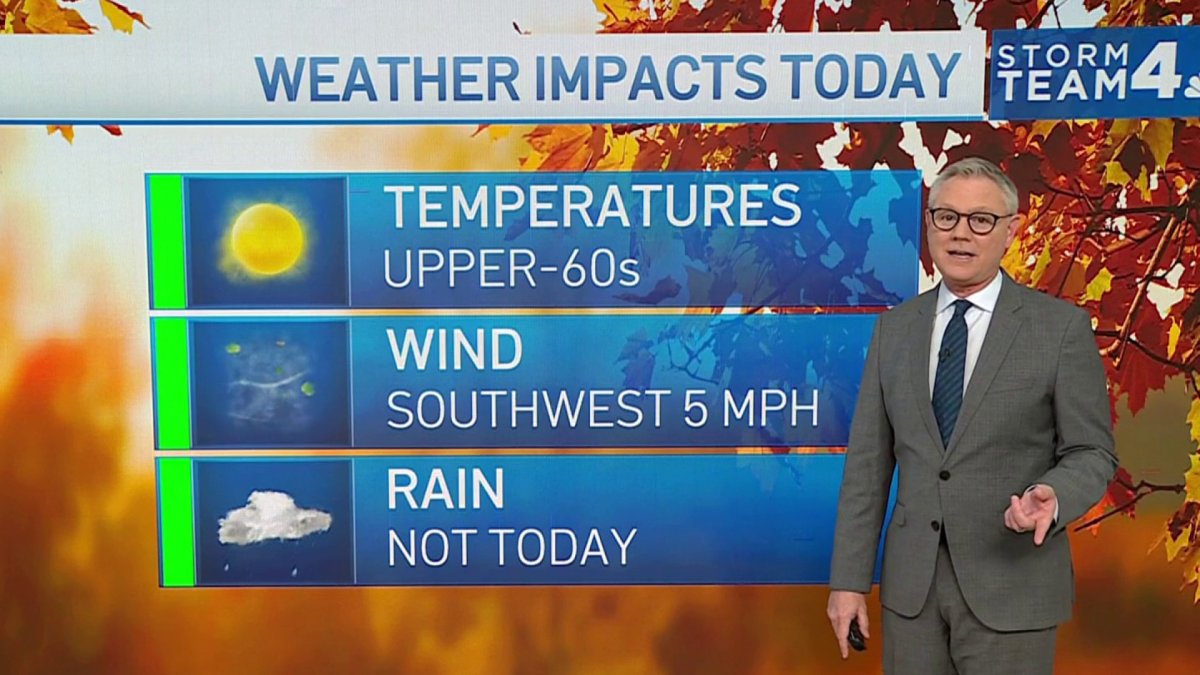
Mid-Atlantic Sliding Back Into Drought; Coastal Storm May Bring Weekend Rain, Cold Thanksgiving Ahead, NBC4 Says
The Mid-Atlantic is sliding back into drought while a coastal storm forming off Florida this weekend could either...

Talbott Springs Elementary Lifts Proficiency Above State Averages, the Banner Reports
Talbott Springs Elementary in Columbia nearly doubled the statewide improvement rate on Maryland's annual assessment, lifting math proficiency...

No. 15 Iowa at Illinois: CFP Stakes, Injuries, Odds and Picks
No. 15 Iowa carries an 8-2 record and College Football Playoff aspirations into Champaign on Saturday, where a...