
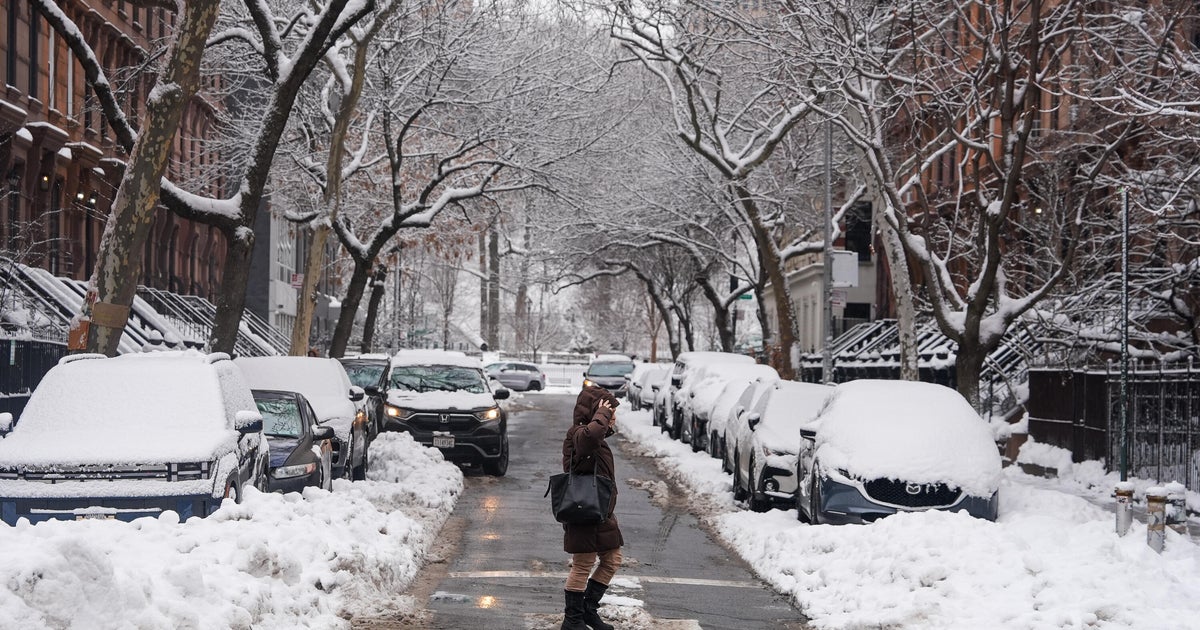
New York City is bracing for a potentially volatile winter as Mayor Zohran Mamdani announced a massive citywide mobilization to protect residents from extreme cold and heavy snow.
The plan includes a $25 million investment to expand the Code Blue system and a “supercharged” snow and ice clearing operation, according to a report from nyc.gov.
The administration is moving to scale up emergency resources ahead of a season that meteorologists expect to be unpredictable. The National Weather Service has indicated that a strong El Niño pattern could lead to a warmer, wetter winter, which often brings a higher risk of rain, sleet, ice, and heavy, wet snow.
“We have spent the past year preparing for any challenge winter throws our way,” Mayor Mamdani said. “This winter, we’re doing things differently — we’re expanding Code Blue to reach more New Yorkers in need, equipping New York’s Strongest to clear snow and ice faster and leaving no stone unturned when it comes to protecting our neighbors from the cold.”
Expanding the Code Blue safety net
A central pillar of the new strategy is the $25 million upgrade to the Code Blue system, which provides warming shelters and outreach for those experiencing homelessness during extreme cold. The city plans to deploy more than 300 additional canvassers to high-impact areas across all five boroughs.
Unlike previous efforts, these teams will engage people they encounter directly rather than relying solely on predetermined lists, a method CBS News reported was modeled after successful summer Code Red operations.
Medical support will also be more mobile. The city is deploying up to 55 NYC Health + Hospitals (H+H) WARM mobile units, each staffed with a registered nurse or nurse practitioner, to provide care and transportation to warming centers. ABC7NY noted that H+H will open at least three hospitals as warming centers, with all 11 facilities becoming available during the most severe weather events.
To address shelter capacity, the city is adding more than 600 single- and double-occupancy rooms, providing 800 additional beds. Mayor Mamdani also said the administration is prepared to use state laws to involuntarily remove individuals to hospitals if they are deemed mentally unstable or a danger to themselves or others, indicating a stricter approach to public safety during these emergencies.
The scale of the medical and housing response is detailed below:
| Resource Type | Planned Capacity/Deployment |
|---|---|
| Additional Code Blue Canvassers | 300+ teams |
| New Shelter Beds | 800 beds (600+ rooms) |
| H+H WARM Mobile Units | Up to 55 units |
| DHS Warming Buses | 20 buses at peak level |
| Hospital Warming Centers | 3 minimum; 11 during severe weather |
Strengthening snow and ice removal
The Department of Sanitation (DSNY) is also overhauling its infrastructure response to prevent the transit and pedestrian delays that plagued the city in recent years. For the first time, the agency has formally mapped pedestrian infrastructure, including every bus stop, sidewalk, and crosswalk, into its internal snow removal routes. This move aims to ensure that the most vulnerable commuters can travel the city safely.
To support this, the DSNY has acquired 120 new snow blowers and upgraded 678 plows and spreaders with new composite blades designed to adapt to road contours. The agency has also stockpiled 500 million pounds of salt. On Staten Island, eight new plow routes have been added to address the borough’s steepest and narrowest streets, a direct response to previous snow removal difficulties in those hilly areas, as reported by CBS News.

The city has also seen a surge in community participation through the Emergency Snow Shoveler program. While only a few hundred people had registered at this stage in 2025, the program has already surpassed 3,000 registered shovelers for the current season. Participants can earn $30 an hour, with pay increasing to $45 after the first 40 hours worked in a week.
Protecting public housing and infrastructure
Beyond the streets, the New York City Housing Authority (NYCHA) has focused on the reliability of heating systems. The agency has conducted preventative maintenance on 965 boilers and over 1,400 hot water systems. This follows a massive investment in heating infrastructure, with $121 million recently spent at four developments and another $728 million currently being deployed across 20 others.
After more than a dozen homeless New Yorkers died last winter during a nine-day period of sub-freezing temperatures, Mayor Zohran Mamdani announced Monday a $25 million plan to expand the city's emergency response program. The city's "Code Blue" winter preparedness plan calls… pic.twitter.com/wQCa9P2q56
Other city agencies are also preparing specialized equipment to manage the winter’s impact:
- NYC Public Schools: Acquired 10 all-terrain vehicles with plow attachments and 650 snow blowers.
- NYC Parks: Preparing 400 vehicles to clear 2,000 miles of pathways.
- NYC DOT: Purchased $2 million in small clearing equipment like tractors and “gators.”
- NYPD: Preparing to deploy tow trucks to keep snowplow routes clear and assist stranded motorists.
While the administration’s proactive spending is significant, the effectiveness of these measures will depend on the actual intensity of the storms. The First Alert Weather seasonal forecast is currently calling for between 18 and 28 inches of snow in Central Park this winter.
The last time a “super” El Niño winter hit the city was in 2016, which saw a record-breaking 27.5 inches of snowfall in January.
Related reading

Finding Diamonds in the Rough: Mark Branch and the Wyoming Wrestling Philosophy
“Credentials give you an advantage on the coaching resume, but they certainly don’t give you an advantage as...

MUSC Health Opens Pee Dee’s First Combined Emergency and Urgent Care Facility in Florence
MUSC Health and Intuitive Health are launching the Pee Dee region's first facility that combines emergency and urgent...

IFBB Pro Bodybuilder Alix Small Dies at Age 26
Alix Small dies at 26 Two-time IFBB Pro League Fitness champion Alix Small has died at the age...

ARGO Development Corp. Opens New Burlington Headquarters
ARGO Development Corp. has opened a new 16,000-square-foot headquarters in Burlington, Ontario, doubling its previous office capacity without...