Ocean references appear throughout the draft COP31 Cover Decision and a new Antalya Ocean and Seas Compact, marking a change from past agreements where the Paris Agreement text contained no ocean mention, Vermont Law School reported.
At the 31st UNFCCC Conference of Parties in Antalya, Türkiye, the ocean has surfaced in negotiations on adaptation, finance and loss and damage. The draft Cover Decision makes multiple references advocating for the ocean as integral to the climate response, while the presidency launched the Antalya Ocean and Seas Compact to accelerate ocean-based climate action.
Side events on November 17, designated for oceans and seas, focused on integrating ocean climate action into nationally determined contributions, tourism, blue economies and marine carbon dioxide removal. The Blue NDC Challenge Implementation Taskforce was launched to help countries turn ocean commitments into policies, projects and investments.
Seagrass covers less than 1% of the ocean floor yet stores around 10% of annual carbon sequestration, capturing CO2 at a rate 40 times more efficiently than forest soils. Mangrove soils hold up to four times more carbon than tropical forests. Nearly half of seagrass habitat on the U.S. East Coast has been destroyed.
At the SDG Pavilion, Criselda Castor, section chief of the Philippines’ Department of Environment and Natural Resources Coastal and Marine Division, outlined the National Blue Carbon Action Partnership Roadmap. The Philippines holds roughly 327,000 hectares of mangroves, and the initiative aims to invest in blue carbon projects that cut atmospheric CO2 while advancing biodiversity and coastal resilience.
Jamaica’s Climate Change Ambassador Professor Dale Webber told a side event at the SDG Pavilion that the country’s mangrove network reduced Hurricane Melissa’s storm surge by 36% to 58%. Areas where seawalls replaced mangroves were devastated, resulting in loss of life.
“If we had mangroves, it would have been better,” Webber said.
At the Ocean Pavilion during COP31 on November 17, 2026, the Blue NDC Challenge Implementation Taskforce was launched as a country-led initiative co-chaired by Brazil and France to turn ocean measures in nationally determined contributions into practical action.
The Taskforce, hosted by the Governments of Brazil and France alongside Ocean & Climate Platform, Ocean Conservancy, WRI, and WWF, aims to help participating countries address common barriers including access to finance and technical assistance, weak coordination across ministries, and limited cooperation between countries.
The launch reflects that more than 90% of coastal countries now include at least one ocean measure in their NDCs, yet over 60% of these commitments depend on additional financial or technical support.
The draft decision text underscores that financing for ocean climate action is essential for adaptation, mitigation and responding to loss and damage, and highlights the need for improved data on climate finance for ocean-based action. Inclusion of ocean language in the final COP31 decision remains undecided.

Kansas City Police Kill Jesse West, 36, 21 Minutes After Sister Called 911 for Mental Health Crisis
Kansas City, Kansas, police shot and killed Jesse West, 36, on Nov. 6 after his sister called 911...
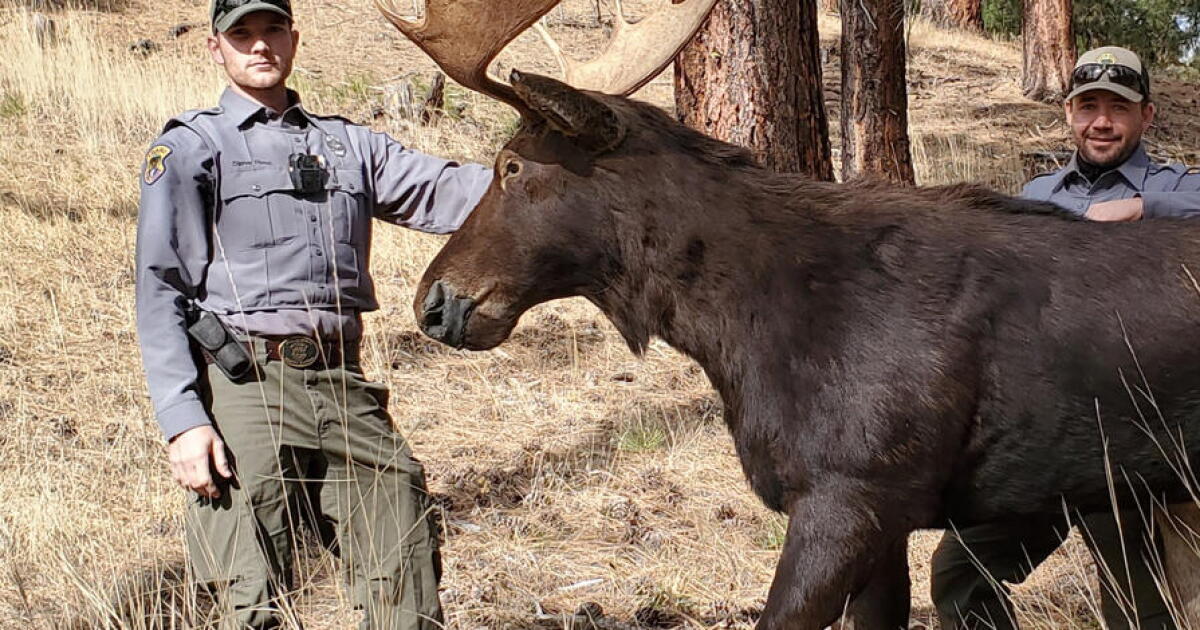
Idaho Fish and Game Uses Lifelike Decoys to Catch Illegal Hunters
"It's a moose ... It's an elk ... It's an artificially simulated animal and you shouldn't shoot it,"...

Millard South, Westside to Extend Omaha Class a Streak to 14 Monday
Omaha-area schools have won 14 consecutive Class A state football championships, a streak that will extend to seven...

Brewers Win First World Series Title in Franchise History
Brewers finished the regular season with a franchise-record 103-59 mark, best in MLB. Milwaukee won 11 of 13...