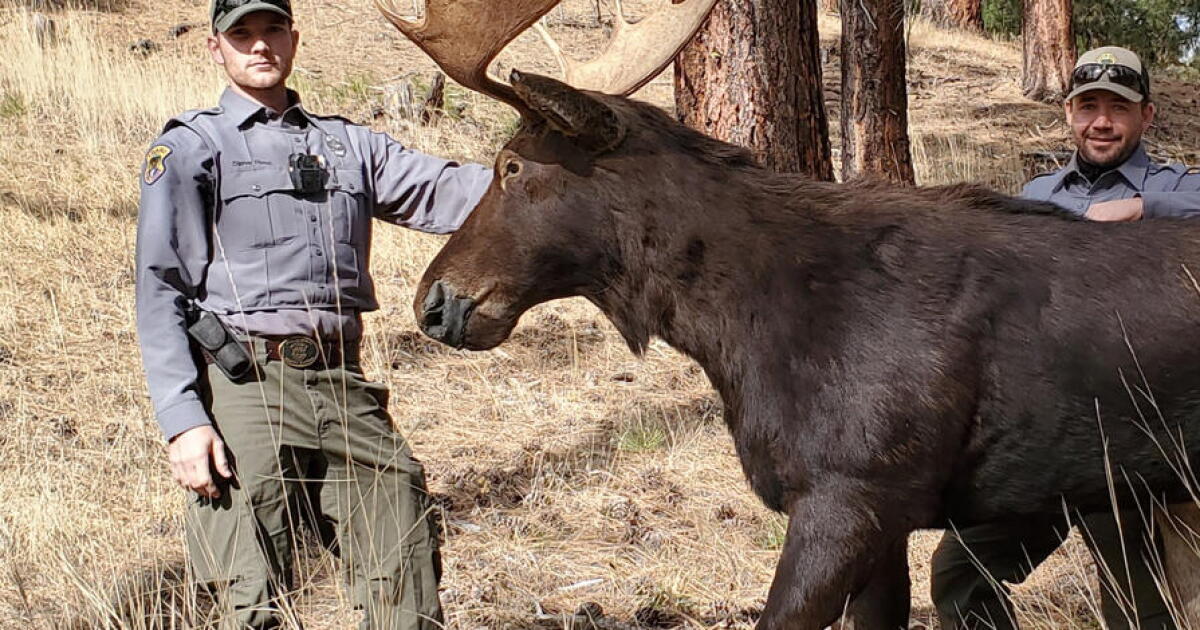
“It’s a moose … It’s an elk … It’s an artificially simulated animal and you shouldn’t shoot it,” Idaho Department of Fish and Game Assistant Chief of Enforcement Joey Ishida said, describing the decoys used to catch hunting violators.
The agency deploys lifelike fake moose, elk and deer in areas where officers suspect illegal activity such as shooting from a road or spotlighting at night, then waits nearby to apprehend anyone who fires at them.
IDFG places several decoys per region and moves them to locations that have drawn multiple complaints. “We might have in a patrol area or a county where the local officer has received multiple complaints about someone shooting from a road or shooting at night with the aid of artificial light or a spotlight,” Ishida said.
“That might be a perfect opportunity to set up one of these artificially simulated animals to see if we can apprehend these animals.” The decoys are highly realistic; some have mechanical parts that make their heads move or ears twitch, and officers conceal themselves nearby “like police waiting by the roadside” to catch violators on the spot.
The decoys take damage quickly. “Unfortunately, Ishida said it doesn’t take many shots for one of those guys to be out of commission, and they often need patching up,” the report said. Taxidermists assist with repairs, sometimes using hides from road-killed animals when the hide is in good shape.
“We do have some taxidermists that help us out in that process,” Ishida said. “When we’re out in the field, and let’s say we respond to a roadkill deer, if the hide is in good shape, we might skin that and then see if a taxidermist is willing to help us out by placing it on a new mold or a new form.”
Hunters who shoot a decoy face an automatic $50 fine for shooting the artificial animal, plus potential loss of their hunting license, additional hefty fines and possible jail time depending on the infraction. In 2025, IDFG recorded 28 hunting infractions aided by the decoys out of nearly 6,200 total citations or warnings issued that year. “But Ishida said the props are mostly used as a deterrent against wildlife violations,” the article said.
Related reading
Lanxess Charleston Plant Faces Federal, State Investigations Over Air Permit Violations
South Carolina’s Department of Environmental Services filed a separate enforcement action in October 2025 after reviewing records from...

Gary Neville Brands Manchester United Hierarchy Negligent After 4-0 Liverpool Rout Leaves Club With Worst Defence In Europe
Manchester United arrived at Anfield hoping a new manager could steady a defence that had already shipped 30...
Westin Baltimore Washington Airport Reviews Highlight Strong Service, Lounge Issues, and Difficult Access
Travelers reviewing the Westin Baltimore Washington Airport on Tripadvisor describe a reliable airport hotel with strong service and...
Alabama Sweeps Top 3 in Livability Best Small Cities Ranking
Alabama was expected to appear on a national quality-of-life list, but no one projected a clean sweep of...