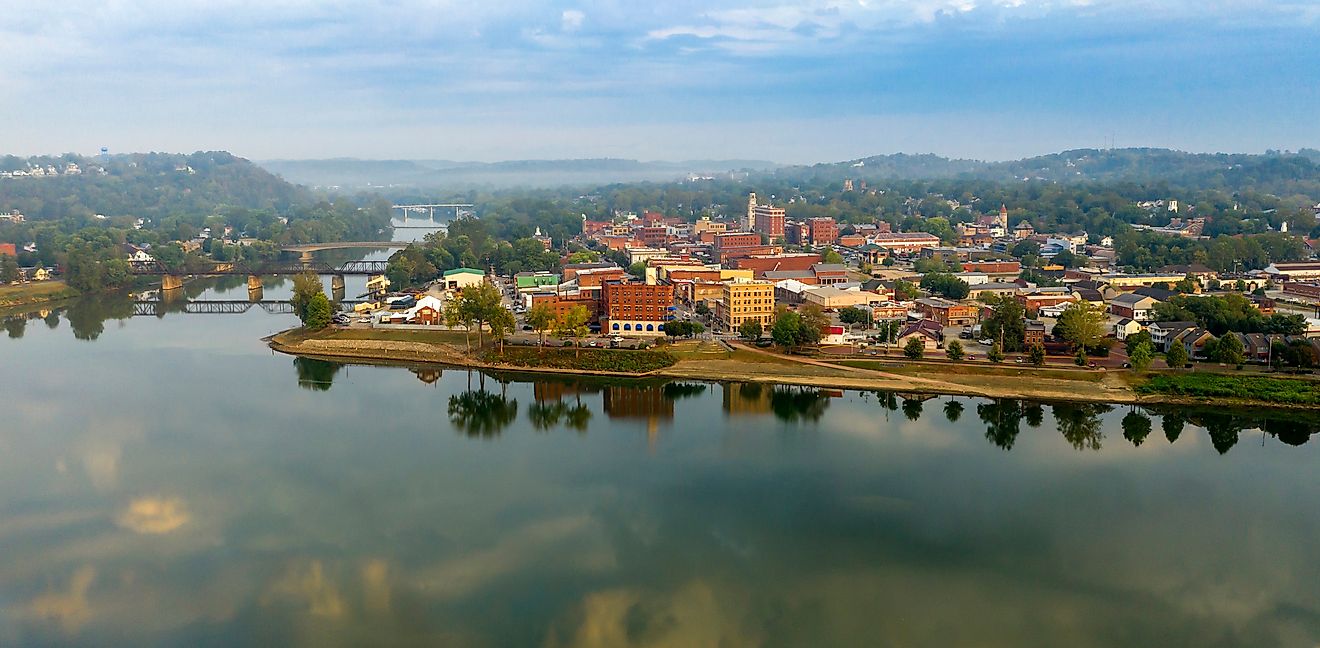
Ohio’s small towns offer a stark contrast to the glitz of its major urban hubs, blending Midwestern hospitality with a mix of river valleys, Lake Erie shores, and rolling hills. These locales—ranging from the historic riverside of Marietta to the Amish farm country of Burton—provide a slower, more authentic cultural experience for travelers looking to escape the commotion of cities.
While big cities often grab the spotlight, these towns maintain the state’s rich history, preserving everything from 18th-century frontier life to 19th-century canal towns.
Riverfronts and Ruins in the Valley
The geography of Ohio is defined by its water, and towns like Maumee and Coshocton lean heavily into this identity. In Maumee, the area is defined by a wooded site that hosted a 1794 conflict between U.S. forces and a Native American confederacy. The town also anchors a piece of American military history at this site, where a walking trail now crosses the grounds.
Further south, Coshocton sits at the confluence of the Tuscarawas and Walhonding Rivers. The town’s civic heart is Historic Roscoe Village, a preserved 1816 canal town. Here, the transition from the industrial age to the agrarian past is visible in the cluster of old shops and gardens.
Marietta takes this historical depth even further. Founded in 1788, it was the first permanent American settlement of the Northwest Territory.
The Lake Erie Edge and Coastal Escapes
Along the southern shore of Lake Erie, the atmosphere shifts from river valleys to wide-open panoramas. Bay Village uses its waterfront through the Huntington Reservation, where 100 acres of forest and beach habitats meet the lake. The Lake Erie Nature & Science Center acts as a hub here, focusing on native wildlife species.
Fairport Harbor offers a different coastal vibe, centered on the mouth of the Grand River. The town’s identity is tied to its maritime heritage, anchored by a rustic 1871 lighthouse and the Fairport Harbor Marine Museum. Interestingly, the town also preserves a specific ethnic legacy through the Finnish Heritage Museum, which showcases Finnish crafts and musical instruments, proving that Ohio’s “small town” feel is often built on diverse immigrant foundations.
Wilderness and the Appalachian Spirit
Moving into the rugged terrain of Athens and Greene counties, the landscape becomes more vertical.
In Cedarville, the draw is the Indian Mound Reserve. This 169-acre property is where nature and archaeology collide, featuring an ancient Adena-era earthen mound alongside the region’s striking waterfalls.
The town balances the “college town” bustle of Court Street with the quiet, hilltop vistas of The Ridges. The Kennedy Museum of Art provides a sophisticated counterpoint to the outdoor adventures found in West State Street Park, focusing heavily on Native American art.
Hidden Caves and Amish Traditions
Some of Ohio’s most breathtaking sites are literally underground. West Liberty is home to the Ohio Caverns, a network of limestone passages featuring crystalline formations. Above ground, the town maintains a Gothic aesthetic via the Piatt Castles, which have stood since the 1800s.
In Geauga County, Burton offers a glimpse into a lifestyle that resists the modern clock. As a hub of Amish farm country, horse-drawn buggies are a common sight on the roads. The town’s identity is tied to the land, from the 45-foot colored sandstone walls of Welton’s Gorge Preserve to the Great Geauga County Fair, which has run continuously since 1823.
Steubenville rounds out the list by utilizing the Ohio River as a canvas. The town is famous for its City Murals—nearly two dozen larger-than-life paintings on downtown buildings that act as a free, open-air history book. From the 18th-century frontier life depicted at Fort Steuben to the high school football intensity at Harding Stadium, the town represents the intersection of deep history and modern community passion.
Keep reading

Man Arrested After Hoax Bomb Device Evacuates Colorado State Capitol
An object with wires protruding from its top and bottom triggered the evacuation of the Colorado State Capitol...
POLA TEACH Prepares Workforce for Zero-Emission Cargo Jobs
The Port of Los Angeles launched a new workforce education initiative this week to prepare Southern California workers...

Arkansas Leads Memphis 48-34 at halftime in exhibition game
Arkansas entered the halftime break of Wednesday's exhibition game at Bud Walton Arena with a commanding 48-34 lead...

Phoenix Symphony suspends season and lays off 66 musicians
The Phoenix Symphony is currently facing a cash shortage so severe that it has suspended its season, leaving...