
Oklahoma’s New Schools Chief Faces ‘Behemoth’ Turnaround Task
Just a day after his decisive election victory, Oklahoma’s Superintendent-elect Robert Franklin was already on the phone with a local superintendent, trading messages with the governor-elect, and fielding a nonstop series of media requests. The 67-year-old veteran educator from Sand Springs officially takes office in January, inheriting what he calls a “behemoth” challenge: reversing the state’s persistently bottom-tier rankings in reading and math scores. General election results show Franklin trounced his Democratic opponent, Jennettie Marshall, 66% to 34%, making him one of only two statewide office winners to carry all 77 counties.
Franklin’s victory signals a departure from the approach of his predecessor, Ryan Walters, who resigned last September following a tenure marked by controversy. As Oklahoma Voice reported, Franklin’s victory reflects a widespread desire to refocus on the fundamental work of educating children, a task he believes doesn’t require the political combat that defined the recent past.
A Departure from the Past
The contrast between Franklin and Walters could not be starker. Walters, elected in 2022, was known for his hyper-partisan rhetoric and numerous controversies. In an effort to quiet the storm, Governor Kevin Stitt appointed Superintendent Lindel Fields and a “turnaround team” to lead the agency during the final 15 months of the Walters era. Fields’s mission was simple, as he put it, to make the Education Department “boring again.”
Franklin has promised a similar emphasis on substance over spectacle. “I think there is a mindset out there that says we don’t have to be ugly and politically divisive to lean in and support the work of schools,” Franklin told Oklahoma Voice. He described a common sentiment he’s encountered: people may not agree with everything he says, but they do agree on the work at hand.
Robert Franklin comes into this role as a highly-qualified educational leader. He’s excited and as someone I’ve known for many years, I know his heart and I know he has great plans for education in Oklahoma. He’s ready to hit the ground running.
Lindel Fields, Oklahoma State Superintendent
Franklin steps into a department that has been in flux for over a year. He has already acknowledged it’s unclear how many members of Fields’s “turnaround team” plan to stay on. Fields, for his part, has pledged to ensure a “smooth, uneventful transition,” praising Franklin’s qualifications and experience.
Managing Literacy Law Rollout
One of Franklin’s most pressing tasks will be managing the rollout of the state’s new literacy law, the Strong Readers Act. Signed into law this spring, the legislation mandates intensive academic interventions for students reading below grade level, including small-group tutoring and summer programs. Starting with the 2027-28 school year, third graders who score below a basic reading level on state tests and fail a second assessment will be required to repeat the grade, unless they qualify for a limited exemption.
Franklin also intends to revisit a controversial rule implemented under Walters that tied a school’s academic performance directly to its state accreditation. This policy recently led to accreditation downgrades for dozens of districts struggling with low math and reading scores. Franklin argues that the rule “conflates things” that were meant to be separate, suggesting a fundamental rethink of how accountability is structured. He has also said he wants to replace annual high-stakes tests with more frequent benchmark assessments during the school year, a change that needs federal approval.
Building a Coalition for Change
The good news is that improving reading scores is a shared priority. Mazzei, a Republican, made education a cornerstone of his gubernatorial campaign and has been a vocal supporter of the new literacy law. He has already pledged to hire a statewide literacy director to oversee its implementation.
The relationship between the two leaders appears poised for cooperation. “Let me just say that fixing our schools isn’t a Republican or Democrat issue,” Mazzei said during a news conference. “It’s about giving every child in Oklahoma the opportunity to succeed.” Franklin echoed this sentiment, expressing confidence that despite any tactical differences, they will ultimately be in “complete accord with our outcomes that we want to achieve.” The practical question, he said, will be how to achieve those goals “efficiently and effectively.”
Addressing the state’s persistent teacher shortage and expanding access to behavioral health specialists in schools were also central themes of Franklin’s campaign, and they will remain critical focus areas.

Scott Colom could become Mississippi’s first Black senator since Reconstruction
A Mississippi Senate Race Built on Quiet Belief “Watching Scott’s campaign pick up so much momentum has been...
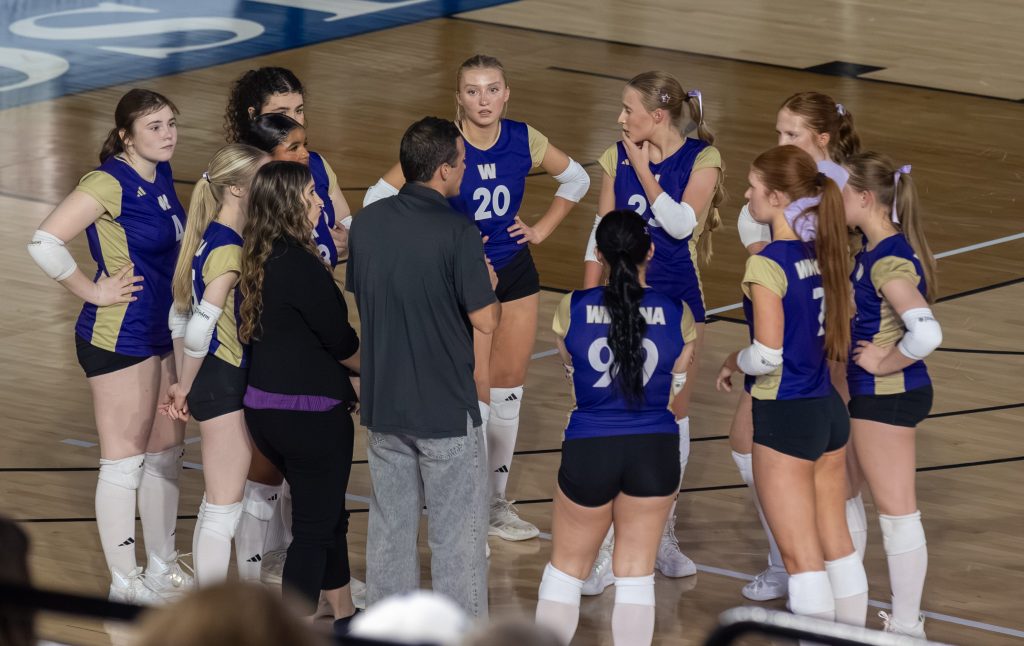
Winona Claims Class 1 Third Place Trophy in Five-Set Victory
Winona claims Class 1 third-place trophy in five-set thriller over Billings Winona secured the Class 1 third-place trophy...

Jefferson City Community Center leaders say council is withholding funds
Funds Frozen, Safety Stalled Leaders of the Jefferson City Community Center say they are caught in a bureaucratic...

CNU 35 Twin Cities Highlights Historic Mill District Urbanism
Imagine a map. Eight feet wide. It sprawls across a wall, a sprawling web of more than 10,000...