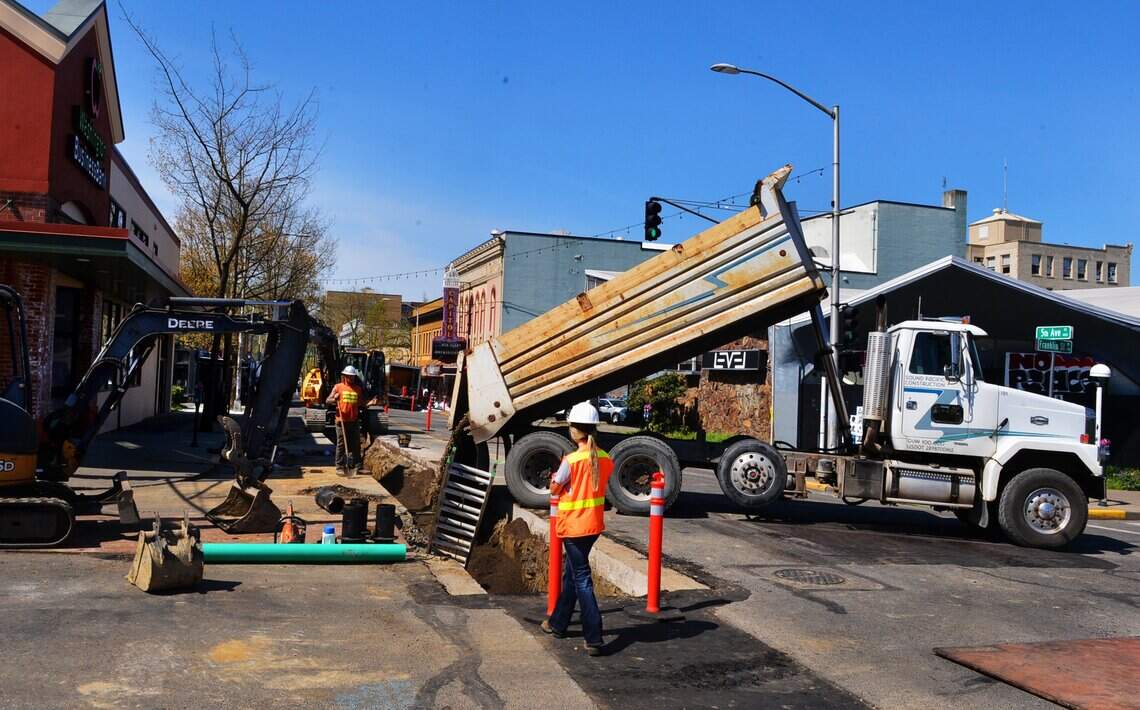
Downtown Olympia’s ongoing sidewalk overhaul is entering its final stretch, with the city transitioning to nighttime construction starting October 28 to clear the path for businesses and commuters. While the concrete work is slated for completion by November 20, the 26 trees removed to facilitate these repairs will not be replanted until the dormant season.
Why the work is moving into the night
Beginning this week, city contractors are shifting their schedule to include early morning, early evening, and nighttime shifts between 9 p.m. and 5 a.m. As noted by the city in an October 21 social media post, the goal is to protect downtown parking and business access while maintaining progress on the three primary work zones: the north side of Fourth Avenue from Water Street to Capitol Way, the east side of Washington Street from Fourth Avenue to State Avenue, and the south side of Fourth Avenue from Quince Street to Eastside Street.
Chicory chef opens new restaurant in downtown Olympia. Here’s what to know https://t.co/iqKzKOtWj7
— https://x.com/theolympian/status/2046605223054004274
City spokesperson Brandon Chapman confirmed on October 26 that this nighttime phase is expected to last roughly two to three days, though the timeline remains subject to weather conditions and the unpredictability of what lies beneath the pavement. Drivers and pedestrians can find ongoing updates and traffic alerts on the city’s project webpage.
What happened to the 26 trees?
According to Chapman, the trees were identified by a certified downtown arborist as the wrong species for their specific planting sites, causing persistent sidewalk damage and accessibility issues. Rather than simply pruning roots—which would have been a temporary fix at best—the city opted for full removal and replacement.
Engineering Project Coordinator Patrick Knouff explained that while the holes are currently empty, the replanting process is tied to the biological clock of the new trees. They cannot be moved from the nursery until they reach a state of dormancy. Consequently, there is no firm date for when the greenery will return, as the timing depends entirely on the onset of the dormant season.
The replacement plan also involves a strategic relocation. Not every site on Fourth Avenue can accommodate new growth due to building awnings and structural constraints. Instead, the city is moving some of the new plantings to Columbia Street Northwest, a move the city describes as no net loss of downtown trees. The species selection is also changing: the problematic maples are being swapped for less aggressive root systems, including Honeylocust on Fourth Avenue and Ginkgo trees on Columbia, while the Washington Street block will see a new, slower-growing columnar oak.
The future of Olympia’s sidewalks
This project is part of a larger, $500,000 annual initiative established in 2024 and funded by the Transportation Benefit District’s 0.1% sales tax. With roughly 28,000 instances of sidewalk damage identified across 226 miles of city sidewalks, the current work is only a fraction of a much larger maintenance backlog. While the initial three-year funding cycle for this specific program concludes in 2026, the city is already transitioning toward a permanent, dedicated maintenance crew to move from reactive, project-based work to sustained, long-term infrastructure upkeep.
Keep reading

Arkansas vs. Missouri: Why the Razorbacks Must Stop Losing the Battle Line Rivalry
Arkansas has lost 10 of its last 12 annual SEC matchups against Missouri, a stretch of dominance that...

Arizona Auto Theft Trends: The Rise of High-Value Vehicle Fraud
Arizona is seeing a paradoxical shift in auto theft: while official reports show the lowest number of stolen...

Why Alaska Is a Cheap Bargain for National Political Power
A U.S. Senate seat in Alaska carries the exact same weight as one from California or Texas when...

UAH Basketball Earns No. 25 Spot in NABC Preseason Poll
The University of Alabama in Huntsville (UAH) men's basketball program has entered the 2026-27 season with national momentum,...