
The $200 Question for Oregon Tasting Rooms
Clarissa Winn spent about eight months pouring wine in 2022 inside the tasting room at Blakeslee Vineyard Estate. When she left that hourly job, she did not just pack up her corkscrews. She launched a legal fight that exposed a gaping hole in Oregon wage law, forcing appellate judges to pick sides in a math puzzle that could cost employers across the state dearly—or let them off remarkably light.
At issue was a simple statutory phrase: whether a worker stiffed on tips, hours, or bonuses can claim $200 for every single paycheck that took a hit, or just $200 once per category of violation. In a ruling handed down in Winn v. Blakeslee Vineyard Estate, Inc., 352 Or App 803 (2026), the Oregon Court of Appeals sided firmly with the winery, holding that the state’s civil penalty under ORS 652.615 caps out in the aggregate per type of violation rather than multiplying with every direct deposit.
The stakes of that single mathematical distinction turned an ordinary labor dispute into a high-stakes class action battleground. As Ogletree Deakins reported in its legal analysis of the decision, the court had to untangle how a private right of action interacts with messy payroll errors.
How the Statute Collided with Reality
Oregon law under ORS 652.610(3) draws a sharp line, barring bosses from holding back, taking, or diverting worker wages outside of a few specific exceptions. If an employer crosses that line, ORS 652.615 steps in with a private lawsuit option offering actual damages or $200, whichever happens to be greater. But the text left a glaring blank: does that $200 attach to the paycheck, the specific pay deduction, or the whole category of misconduct?
Winn argued that every time Blakeslee handed out a paycheck carrying an unlawful withholding, a fresh violation occurred, triggering a fresh $200 penalty. Multiply that across dozens of workers over eight months, and a small vineyard faces financial exposure for routine bookkeeping snafus. Blakeslee countered that the penalty is a one-time fix per category of violation.
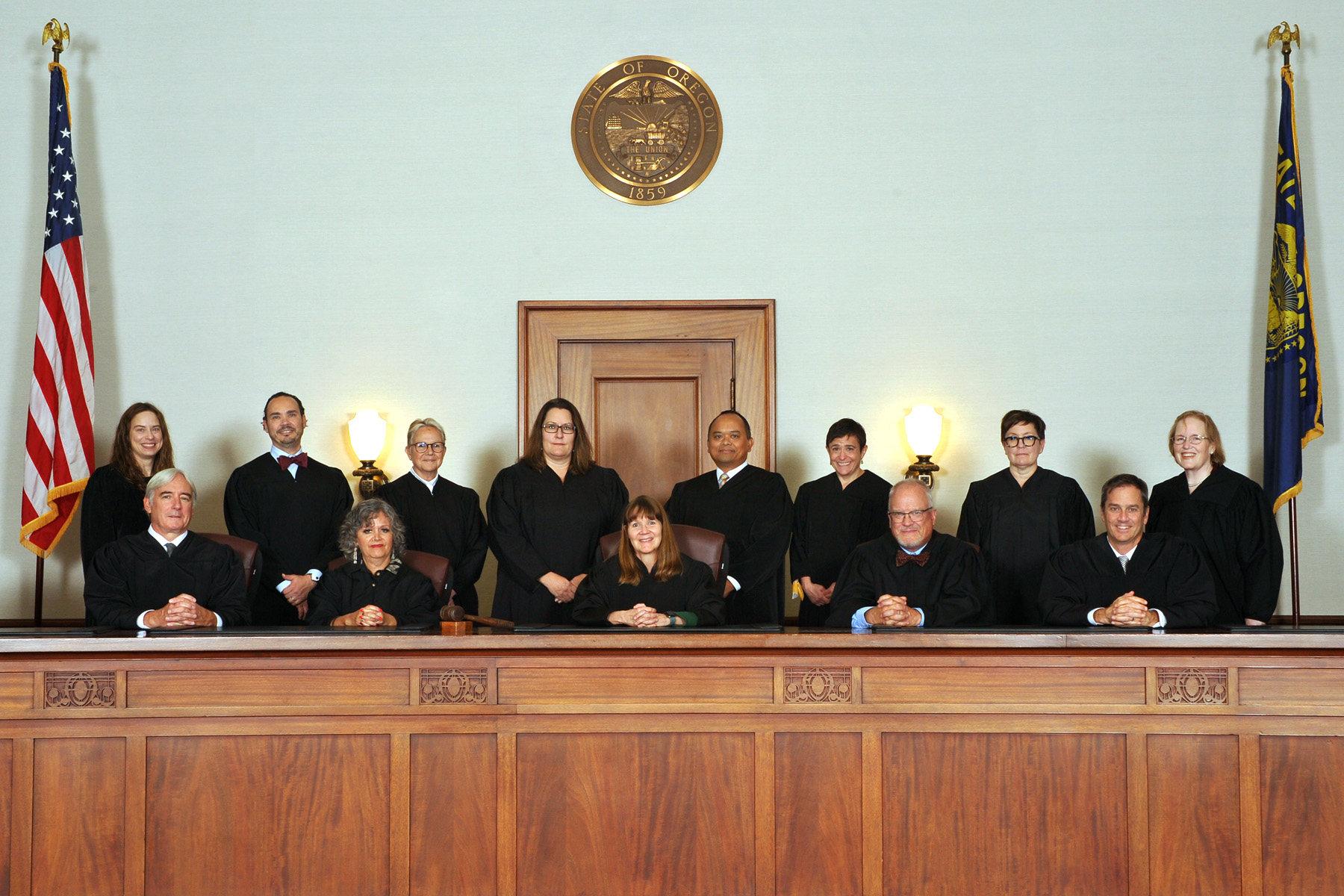
Writing for the majority, Judge Kamins dove deep into legislative history and statutory context to break the tie. The court pointed out that when the legislature wanted to penalize employers per pay period—like it did in neighboring ORS 652.100(2)—it spelled it out in plain English. That language was conspicuously missing from the private right of action statute. Committee archives revealed lawmakers openly fretted about drafting a law that might accidentally “zing” small businesses with stacking penalties.
Chief Judge Lagesen Dissents over per Paycheck Remedies
Not everyone on the bench agreed that lawmakers wanted to protect employers from stacking penalties. Chief Judge Lagesen issued a sharp dissent, arguing that the plain text should win the day regardless of legislative hand-wringing.
In her view, a violation of the wage statute occurs every single time an employer prints a paycheck loaded with an illegal deduction. Because the unlawful act happens at the moment of payment, the cause of action and the $200 remedy accrue per paycheck. Lagesen would have revived the class claims entirely on that ground, setting up a clear ideological divide over how strictly courts should police employer payroll practices.
The majority also batted away an amicus brief that pushed for an even wilder reading: a separate $200 award for every single discrete unlawful deduction buried inside a paycheck. By shutting down both the per-paycheck and per-deduction interpretations, the court established a predictable ceiling for employers facing class-action wage litigation.
Pretrial Notice and the Limits of Curing
The litigation also put Oregon’s unique class action cure mechanism under the microscope. Under ORCP 32 I, an employer facing class claims for damages can short-circuit the lawsuit by stepping up to fix the problem: identifying the class, notifying workers that compensation is on the way, paying up within a reasonable window, and halting the bad behavior.
Blakeslee tried to use this escape hatch, but it did not go smoothly. Trial Judge Melvin Oden-Orr initially found the winery’s notice lacking and put the case on ice for sixty days to let them try again. Only after Blakeslee supplemented its outreach under the court-approved per-category standard did the judge accept the cure and toss out the class claims.
For employers, the takeaway is stark. The cure mechanism can save a business from a ruinous class action, but the paperwork has to be airtight from day one. A sloppy or rushed notification letter will only drag out the litigation and run up legal bills.
Oregon Employers Await Potential Appeal to State Supreme Court
While the court neatly resolved the damages ceiling, the case did not end cleanly for everyone. Winn’s individual claims were ultimately thrown out for failure to prosecute, and the trial court refused to set that dismissal aside, prompting the broader appeal.
It is unclear if this ruling is the final word for Oregon workplaces. Employment defense lawyers are watching closely to see if the plaintiff pushes the fight up to the Oregon Supreme Court. Until then, employers across the state have a clearer sense of their exposure limits—even as the dissenting opinion lingers as a warning that the math of wage deductions is still fiercely contested ground.
Keep reading

Sanford Health and Lewis Drug Break Ground on Southeast Sioux Falls Clinic
Construction is officially underway on a nearly 30,000-square-foot combined medical clinic and retail pharmacy in southeast Sioux Falls,...

Mahmoud Khalil Returns to Columbia University Following Detention to Discuss New Memoir
Mahmoud Khalil Returns to Columbia University After Detention Pro-Palestinian activist Mahmoud Khalil returned to Columbia University on Tuesday,...

Providence man Nelson Pires faces 11 charges after police chase
A High-Speed Chase, a Punched Detective, and a Courtroom Reckoning on I-95 Nelson Pires has spent years orbiting...

17 Books Our Editors Couldn’t Put Down This October
Literary Picks and Publishing Highlights for October In a feature published by Scary Mommy, the editorial team compiled...