
Foreign investors added 146,500 acres of agricultural land in Oregon during 2024, marking the fourth-highest gain in the United States. This surge, detailed in an analysis by the American Farm Bureau Federation based on updated USDA data, pushes the total foreign-held agricultural land in the Pacific Northwest to nearly 3.4 million acres, a 6.9% increase from the previous year, Capital Press reported.
The trend isn’t a sudden spike but a sustained climb. Oregon’s land shift follows a similar pattern from 2023, when 166,000 acres moved to foreign interests. While the numbers are climbing, the identity of the buyers has shifted. The growth is largely driven by Canadian and European interests focusing on timber and renewable energy, while holdings linked to China are described as small and shrinking.
Timber and Energy Drive Northwest Acquisitions
The vast majority of this foreign-held land isn’t being used for traditional farming. Nearly two-thirds of the foreign agricultural holdings in the Pacific Northwest are timberlands. In Oregon alone, foreign investors hold 1.14 million acres of forests, while Washington holdings stand at 1.08 million acres.
Beyond the trees, a significant portion of acquired land is being repurposed for renewable energy projects.
“Foreign ownership of U.S. land is a widely debated issue, driven by concerns about national security, agricultural productivity and long-term implications for U.S. agriculture,” wrote Faith Parum, deputy chief economist for the American Farm Bureau Federation.
Parum noted that the data includes leases of 10 years or more, meaning “foreign-held” does not always equate to “foreign-owned.” For the local rancher or farmer, the distinction is often academic; the result is the same—competition for ground increases, and the land’s primary purpose may shift away from food production.
A Comparative Look at Regional Holdings
While Oregon saw a sharp 11.6% increase in foreign-held land, its neighbors experienced more modest growth. Washington’s holdings grew by 3.3% to roughly 1.84 million acres by the end of 2024. Idaho saw the smallest shift, with an increase of 15,200 acres, leaving foreign interests with only 1% of the state’s privately held agricultural land.
| State | Foreign-Held Acreage (Dec 31, 2024) | Annual Growth % | % of Private Ag Land |
|---|---|---|---|
| Washington | 1.84 Million | 3.3% | 8.3% |
| Oregon | 1.41 Million | 11.6% | 5.6% |
| Idaho | 147,405 | 11.5% | 1.0% |
On a national scale, the trend is even more pronounced. Foreign holdings across the U.S. totaled 46.3 million acres at the end of 2024, representing 3.6% of all private American agricultural acreage. Since 2010, these holdings have increased by 90%.
Canadian Investors Hold Most Foreign Agricultural Land
Much of the political rhetoric surrounding foreign land ownership focuses on adversarial nations, but the data tells a different story. Canadian investors are the primary drivers of this expansion, holding 16.1 million acres—roughly 34% of all foreign-held agricultural land in the U.S. In 2024 alone, Canadian holdings grew by approximately 781,000 acres.
Following Canada, the Netherlands holds 10% of foreign-controlled land, with Germany, Italy, and the United Kingdom each holding 6%. In stark contrast, Chinese investors hold about 245,000 acres nationwide, which is less than 1% of the total. In the Pacific Northwest, Chinese holdings are almost negligible, totaling roughly 420 acres.

Pat McAfee says he hates University of Utah after ‘College GameDay’ video – LA Times
Pat McAfee Puts University of Utah in His Crosshairs After Social Media Video In a tense fallout that...

Franklin Web Printing Empowers The Contributor for Nearly Two Decades
For nearly two decades, a partnership has turned the act of printing a newspaper into a vehicle for...
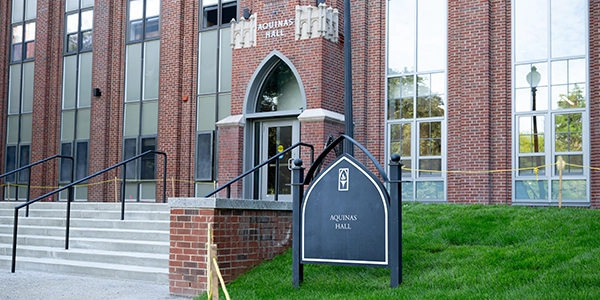
Aquinas Hall Undergoes Major Renovation at Providence College
Built in 1933 as Providence College's first residence hall and just the second building on campus, Aquinas Hall...

Green Bay Packers missed passing opportunities defined Week 7 game
A handful of missed passing opportunities defined the Green Bay Packers' Week 7 performance against the Detroit Lions,...