City officials confirmed the former Orlando Sentinel building will be demolished in early 2027 for a $2 billion Heatherwick mixed-use district.
The hulking former Orlando Sentinel building at Colonial Drive and North Orange Avenue will come down in early 2027, city officials confirmed this week, ending years of uncertainty over the 20-acre gateway to downtown’s North Quarter.
Orlando Planning Director Jason Burton told GrowthSpotter that Midtown Development, the Miami-based firm that has owned the property for a decade, recently informed the city it intends to file demolition permits next year with teardown beginning shortly after.
The schedule slips a year from what city spokesperson Andrea Otero told the Orlando Sentinel in December 2025, when she said demolition and site prep were expected in 2026; neither the city nor the developer has explained the delay.
“They’re refining the vision,” Burton said, adding that the team is cost-engineering the initial concepts to determine what they can fit on the site, which covers two city blocks.
The project, unveiled by Mayor Buddy Dyer at last year’s State of Downtown event, carries a $2 billion price tag and the imprimatur of London-based Heatherwick Studio.
Thomas Heatherwick, the firm’s founder, called the site “an opportunity to create an amazing new district, with a gathering space at its heart, with thousands of new homes and dozens of new businesses.” Florida YIMBY reported in December that design work remains in early stages, with full buildout expected to unfold over a 20-year period.
A Half-Century Newspaper Legacy Ends in Vacancy
The campus at 633 North Orange Avenue housed the Orlando Sentinel for 69 years. Tribune Publishing sold the nearly 20-acre, two-block property to Midtown Opportunities in 2016 for $35.1 million. The paper shuttered its printing operation there in 2017 and vacated entirely in October 2020 amid the pandemic, leaving a prime downtown parcel dormant for years.
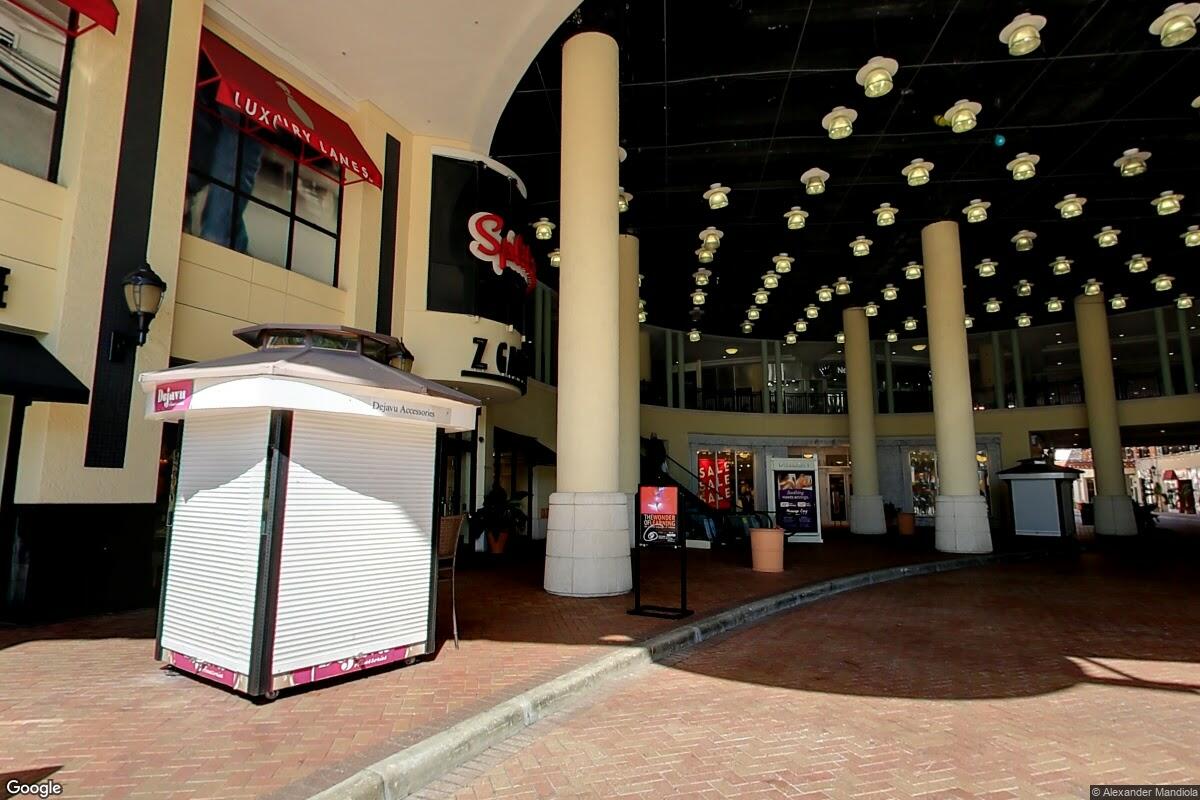
Other reporting has complicated even the acreage: the Orlando Sentinel has described it as a 20-acre property, while Florida YIMBY put it at approximately 18 acres bounded by North Orange Avenue, North Magnolia Avenue, Colonial Drive, and East Amelia Street. Either way, it remains one of the largest single redevelopment opportunities in the central business district.
Park Space Emerges as Critical Civic Lever
Burton said the city would likely partner with Midtown to incorporate a public park into the project, calling expanded open space “critical to creating a true urban neighborhood.” He was blunt about the deficit: “We’re park poor — out of any metropolitan major downtown in the United States, we probably have the least amount of open space.”
That assessment tracks with the 2026 ParkScore ranking from the Trust for Public Land, cited by Central Florida Public Media, where Orlando tied with Memphis for 73rd place among the 100 most populous U.S. cities — a drop from 64th in each of the three prior years.
About 6.3% of the city is dedicated to parkland, compared with an 18% average across the top 100, though Orlando’s share is closer to the 7% average among other very fast-growing cities.

Midtown Used Wynwood Model Attract Businesses
Burton pointed to Midtown’s work in Miami’s Wynwood neighborhood — co-working, retail, and residential uses that “all function together” — as a template. He said that Midtown Principal Alex Vadia included retail in the first phase there while keeping late-night businesses out, a strategy that eventually attracted a Trader Joe’s and spawned hotels and high-rises.
But the financial backdrop has shifted. The passage of Amendment 3, which will slash the city’s property tax collections in coming years, “didn’t help us out any in terms of what type of incentive things we might put on the table” for the developers, Dyer said this week. He still expects a “pretty fabulous project,” though the city’s capacity for public-private partnership structures may be constrained.
The involvement of Heatherwick Studio brings a notable history to the project. Founded in 1994 after graduation from the Royal College of Art, the London-based practice has created several memorable works. These include the Olympic cauldron for the 2012 Summer Olympics and the UK pavilion at Expo 2010 in Shanghai.
Midtown Files Demolition Permit Applications Twenty Seven
Midtown plans to file demolition permit applications in 2027, with the teardown targeted for early that year. No further design details, financing arrangements, or phase schedules have been released in the 11 months since the Heatherwick partnership was announced. Residents and businesses in the North Quarter will watch for those filings — and for any city agreements on the promised park — as the physical landscape of the Colonial Drive corridor prepares to change.
Keep reading

Liz Weston Advises Reviewing Estate Plans Every 3 to 5 Years
A 95-year-old woman named a revocable trust with 17 beneficiaries as the heir to her IRA accounts, a...

Glacier High Secures Third Class AA Title Beating Bozeman Gallatin 42-6
Glacier High achieved its third Class AA football championship on Friday night, defeating Bozeman Gallatin 42-6 at Legends...

Blues Host Devils Saturday; McMichael Out, Johnston in After Blues’ Offensive Surge
The St. Louis Blues host the New Jersey Devils at Enterprise Center on Saturday with Connor McMichael sidelined...

Montpelier stores ready for holiday shopping rush on Saturday
Montpelier stores ready for holiday shopping rush on Saturday. Businesses across Montpelier, Vermont, are gearing up for what...