
Over 100 people packed the Barnes County Courthouse on Thursday night, forcing the North Dakota Department of Environmental Quality to extend the comment window on a permit that would allow 8,461 hogs just outside Valley City.
The hearing on the Blackhawk Farms permit ran from 5 p.m. to 8 p.m., drawing a crowd that spilled into hallways as residents, farmers, and economic development officials lined up to speak for or against the concentrated animal feeding operation, News Dakota reported. The department recorded every oral and written statement before pushing the public comment deadline from November 30 to December 4, according to the North Dakota Monitor.
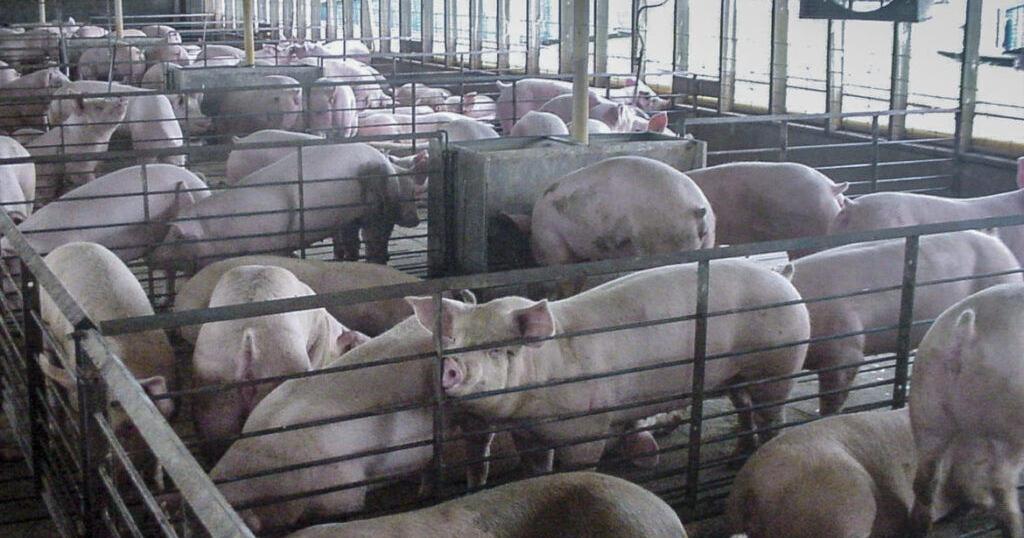
The operation would sit on slatted floors with manure dropping into pits beneath the barns, 14 miles north and seven miles east of Valley City. The application, submitted by Justin Roelofs of Minnesota-based Pipestone, shows the site sits outside the one-mile buffer required around aquifers and source-water protection areas, so state law does not mandate monitoring wells, the North Dakota Monitor noted. Five private wells sit within two miles.
“Don’t be fooled by the smear campaign against this operation,” said Scott German, who runs a 4,000-head CAFO in Dickey County. “You need to get the facts.”
German testified in favor of the permit. Two miles southeast of the proposed site, Aaron Henderson, a farmer and livestock producer, told the hearing he worries about air quality, water contamination, and the wear heavy trucks will put on township roads. Jack Olson, an organic farmer near Litchville, echoed those concerns, citing risks to his operation and the surrounding watershed.
Jennifer Feist, director of economic development for the Valley City Barnes County Development Corporation, backed the project for the jobs and tax base it would bring. Amber Wood, executive director of the North Dakota Livestock Alliance, pointed to six large hog farms already operating under DEQ permits in Dickey, LaMoure, Ransom, and Sargent counties as proof the model works in the state.
The department proposes a five-year permit with conditions designed to protect human health, aquatic life, and water quality. Written comments can be sent to the Division of Water Quality at 4201 Normandy St., Bismarck, ND 58503, or emailed to [email protected].
Permit authorizes 8,461 swine in enclosed barns
Blackhawk Farms would house a maximum of 8,461 head of swine in enclosed barns. Manure would collect in deep pits beneath slatted flooring, a standard design for modern CAFOs.
The DEQ fact sheet confirms the site is not within a mile of any aquifers, sensitive groundwater areas, source water protection areas, or public wells, which triggers the monitoring-well exemption under North Dakota Century Code. Five private wells remain within a two-mile radius.
Pipestone, the management company behind the application, operates hog systems across the upper Midwest. Justin Roelofs, vice president of relationship management, filed the paperwork on behalf of the ownership group. The department has not given a timeline for a final decision beyond the extended comment period.
Local voices, divided
Henderson told the crowd his family lives two miles from the proposed barns and that when the wind blows they will know it.
Olson argued that an operation of this scale threatens the organic certification he relies on and the groundwater his community draws from. German countered that existing permitted farms in the region have operated without the environmental failures opponents predict. Wood reinforced that point, citing the six permitted facilities in southeastern counties as a track record the department can point to.
“This is about keeping our communities viable,” she said, linking the permit to school funding, road maintenance, and population retention in Barnes County.
Pipestone began in 1942 as a farmer-owned veterinary practice in Pipestone, Minnesota, and has grown into a multi-service network that works with more than 1,500 family farms across the upper Midwest. The company now provides health, nutrition, research, and business consulting, and its management division oversees hog systems that allow farmers to retain ownership while Pipestone handles daily operations.
The DEQ will review the transcript and written submissions before issuing or denying the permit. The public comment period now closes December 4. All materials, including the draft permit and fact sheet, are posted on the department’s public notices page.
Worth a look

JPMorgan Chase, Visa, Mastercard Confirm Third-Party Vendor Cyberattack Exposing Customer Data
JPMorgan Chase, Visa and Mastercard confirmed Thursday that a cyberattack on shared third-party vendors may have exposed customer...
Aeneas Sweeps DSBF Final in Career-Best 1:54 at Bally’s Dover
Aeneas turned a $110,000 Delaware Standardbred Breeders' Fund final into a clinic on pocket patience Thursday night, stalking...

Dr. Seuss’s How the Grinch Stole Christmas! Musical Opens Dec. 11 in Helena; Resale Tickets Start at $1,679
Dr. Seuss's How the Grinch Stole Christmas! The Musical opens a six-performance run at the Helena Civic Center...

Las Vegas Police Swarm GTA Mansion After Swatting Call
Las Vegas police swarmed a Grand Theft Auto-themed mansion Wednesday night after a swatting call interrupted a live...