
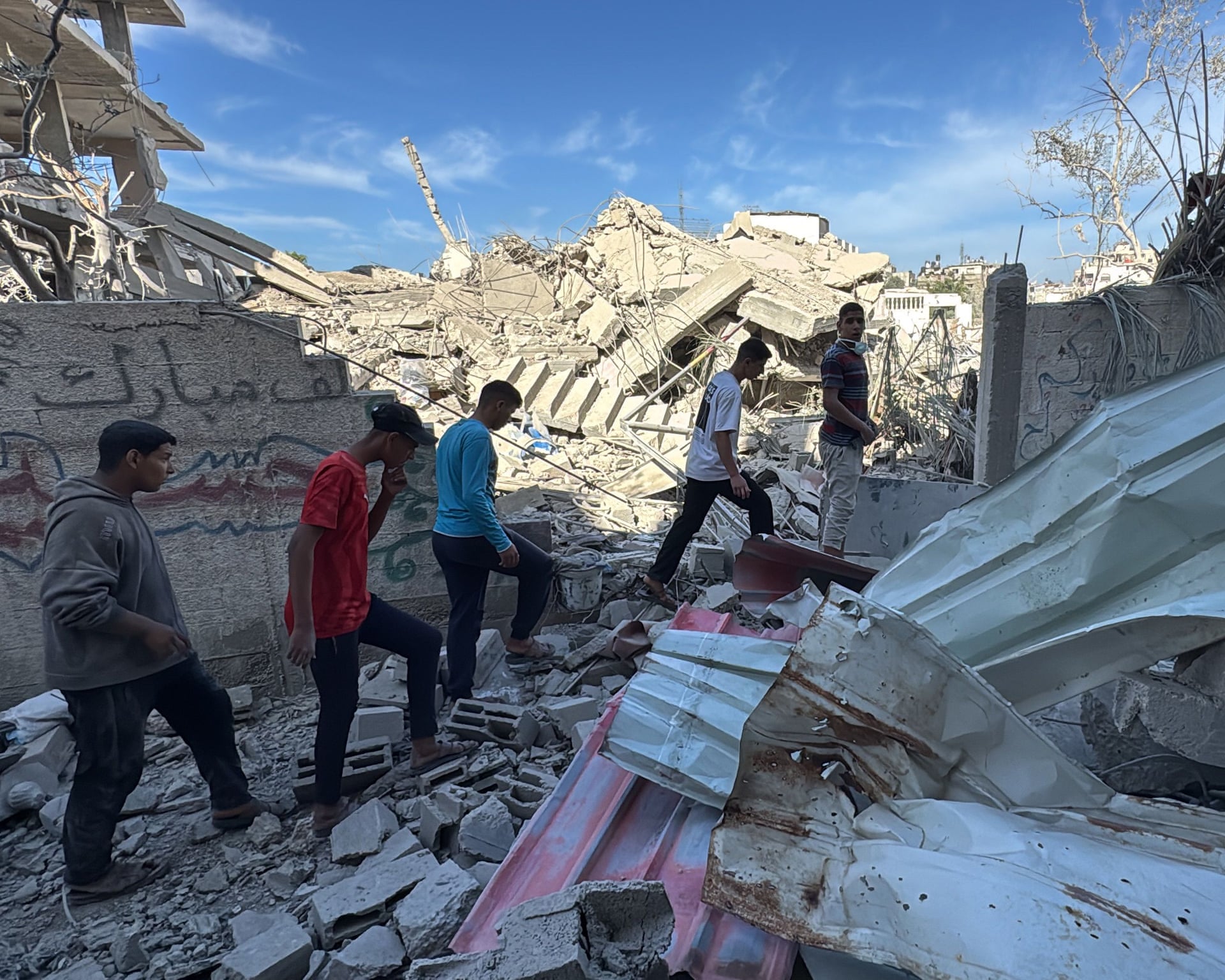
More than 99 percent of the Gaza Strip shows indicators of potential environmental contamination, Oxfam and the Conflict and Environment Observatory reported on Monday.
- Israeli military operations have directly affected 78 percent of Gaza’s land area since October 2023
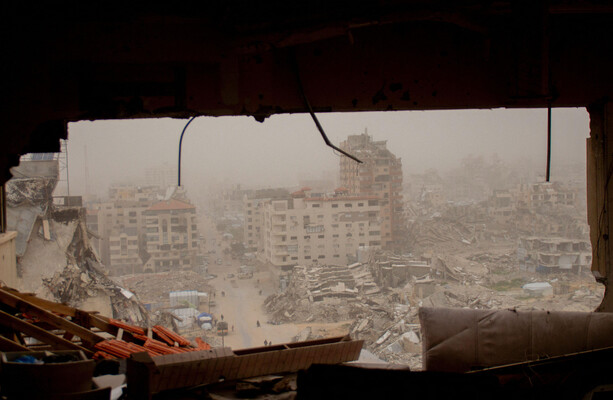
- 61 million tonnes of rubble — about 29 tonnes per person — now cover the enclave
- Faecal coliform bacteria were found in 19 percent of 79 groundwater wells tested in July 2026, up from 2 percent in 2021
- Daily water supply remains 61 percent below pre-war levels despite emergency repairs
Contamination across air, soil and water
The report, based on satellite imagery, remote sensing and open-source data, identifies heavy metals, explosive residues, asbestos, dioxins and biological pollutants across almost the entire territory. Gaza City, Jabalia and North Gaza governorate face the highest air contamination risks, while Beit Hanoun, Wadi Gaza and northeastern Khan Younis show heightened soil contamination risks due to clay-rich soils that retain pollutants.
“Israel’s ongoing genocide in Gaza includes military assaults on its environment, which are environmental war crimes threatening life now and for generations to come,” said Amitabh Behar, Oxfam’s international executive director.
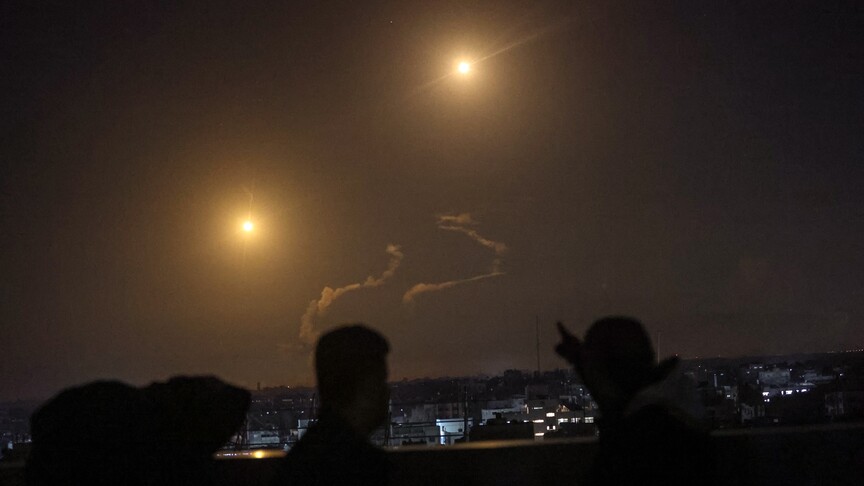
“Since October 2023, Israel's military has subjected Gaza to a sustained military assault of extraordinary scale and intensity, inflicting a humanitarian and environmental catastrophe through the excessive use of explosive weapons in one of the most densely populated areas in the world,” said Oxfam and the Conflict and Environment Observatory.
“Palestinians living in Gaza are being exposed to toxins in multiple ways through air, food, water and via direct contact with contaminated soils and debris,” said Amitabh Behar, Oxfam's international executive director.
Sewage flow reaches 40,000 cubic metres daily
Roughly 40,000 cubic metres of untreated sewage pour into the Mediterranean each day — a volume equal to 16 Olympic-size swimming pools. Nine of 61 reservoirs were operational, with combined storage sufficient for 18 litres per person for one day.
Gaza’s Coastal Aquifer, historically supplying 81 percent of the territory’s water, was already 97 percent chemically polluted before October 2023. In July 2026, the Gaza Ministry of Health detected faecal coliforms in 15 of 79 groundwater wells tested.
Oxfam pinpointed North Gaza, Gaza City and Deir el-Balah as the areas most at risk from contaminated drinking water.
The Palestine Chronicle documented how displaced families in Al-Jundi Al-Majhoul area west of Gaza City dig sewage pits between tents that frequently collapse; on October 29, 2026, a pit collapse killed 19-year-old Baha Jundiya while he was helping empty it manually.
Food production decimated
Before October 2023, Gaza’s farms supplied about 95 percent of fresh vegetables consumed locally. By late 2025, more than 87 percent of cropland was damaged, with only 3 percent accessible and undamaged. More than one million olive trees had been uprooted by October 2024, and over 7,200 greenhouses damaged.
The average daily fish catch from October 2023 to April 2024 was 7.3 percent of its 2022 level.
In July 2026, an estimated 1.2 million people — 59 percent of the population — faced crisis levels of acute food shortages or worse, according to the Integrated Food Security Phase Classification cited in the report.
Health consequences mounting
In 2024, vaccine-derived poliovirus type 2 was detected in wastewater, and a child was diagnosed with paralytic polio — Gaza’s first reported case in 25 years. Multidrug-resistant pseudomonas has been found in water at primary healthcare centres.
Israeli mission rejects commission findings
The Israeli mission in Geneva dismissed the commission’s findings as a “libellous sham,” while Netanyahu separately faces an International Criminal Court warrant for war crimes.
Oxfam states that the destruction of water, food and sanitation systems may constitute crimes under the Rome Statute and the Genocide Convention, and that the environmental damage would breach Israel’s obligations under international humanitarian and human rights law.
UNICEF warns flooding worsens sewage crisis
UNICEF warned in a November 9 statement that flooding was worsening the sewage crisis and that no wastewater treatment facilities were functioning anywhere in the strip.
Oxfam reports that of at least 56 temporary waste dumps, only 11 were accessible and operating, and these generally lack barriers to protect soil and groundwater.
Deadly sewage pits in displacement camps
Pits are sometimes left uncovered or covered only with makeshift boards along narrow pathways, creating foul odours and increasing the risk of soil collapse. With treatment plants idle and pumping capacity severely reduced, Gaza’s sewage crisis continues to deepen, threatening water resources, the environment and public health for years after the war ends.
Oxfam, an international confederation of 21 independent NGOs focusing on the alleviation of global poverty, operates in 79 countries and has become a globally recognized leader in providing water sanitation to impoverished and war-torn areas.
In July 2026, Oxfam’s international executive director Amitabh Behar stated that Israel’s ongoing military assault constitutes environmental war crimes, with the organization pinpointing North Gaza, Gaza City and Deir el-Balah as areas most at risk from contaminated drinking water.
Since 2012, Oxfam has comprised part of the UK’s Rapid Response Facility to ensure clean water in the wake of humanitarian disasters, and its work includes relief services during crises such as the Israeli–Palestinian conflict and Yemeni crisis.
Legal and reconstruction challenges
The joint World Bank, European Union and UN assessment put direct physical damage at $35.2 billion and economic losses at $22.7 billion by October 2025, with reconstruction needs at $71.4 billion over a decade.
The Israeli mission in Geneva rejected the UN commission’s findings as a “libellous sham.”
Prime Minister Benjamin Netanyahu is separately wanted by the International Criminal Court for war crimes.
Oxfam calls for a full, independent, field-based post-conflict environmental assessment, which it says is prevented by Israel’s continued refusal of independent access to Gaza.
Worth a look

Beaver Supermoon Rises With Pleiades Star Cluster Tonight
November's Beaver Moon reaches peak illumination Tuesday at 9:53 a.m. Eastern, the first of three consecutive supermoons through...

Study: COVID-19 Shots Carry 63% Higher Shoulder Injury Risk Than Flu Vaccines
Shoulder injuries after vaccination remain rare, but COVID-19 shots carried a 63% higher relative risk than flu shots...

Lexie Shoaibi Embraces ‘Super Woke’ Label on HasanAbi Stream
Lexie Shoaibi, the actor and motion-capture performer behind Mandy in Rockstar Games’ Grand Theft Auto 6, appeared on...

Auckland Bottle Store Drops Licence Appeal After Police Opposition to Anti-Social Behaviour
A south Auckland bottle shop dropped its liquor licence appeal last week, ending a contentious legal battle over...