
Pacific Power filed November 6 for a 57 percent rate increase that would add roughly $120 a month to the average residential bill for about 46,000 customers across Del Norte, Siskiyou, Modoc and Shasta counties.
- The utility seeks $102.6 million in additional annual revenue, effective January 1, 2027.
- Roughly 80 percent of the request is tied to wildfire mitigation and safety upgrades.
- Del Norte County supervisors vowed to fight the increase before the California Public Utilities Commission.
- A final CPUC decision is expected in August, more than a year from now.
The filing landed in a region where the median income runs about 35 percent below the state average, and where 40 percent of Pacific Power’s Shasta County customers already fall in the “extremely low to low-income category,” according to the utility’s own data.
“This is not an adjustment. This is a financial shock,” said Eva Lopez, vice president of the Del Norte County Employees Association, at a packed hearing Tuesday. “In Del Norte, families already struggle with the rising costs for housing, groceries, health care, insurance and fuel.”
Crescent City resident Florinda Salcedo put it more bluntly: “I can't afford this — I don't know what I'm going to do.” She was among roughly two dozen customers who pleaded with Del Norte officials to intervene.
Supervisor Valerie Starkey said the meeting drew the largest crowd she had ever seen. “We all agree on: We have to unite and push back against this increase,” she told the Chronicle. “This could have such a long-standing impact for people.”
What the $102.6 Million Would Buy
Pacific Power says about 80 percent of the requested increase covers wildfire prevention — covered conductors, pole replacements, vegetation management, and situational-awareness technology across a service territory that spans 11,292 square miles with only four customers per square mile. The company’s application notes incremental wildfire mitigation costs recorded since December 2023, and proposes recovering those balances over six years.
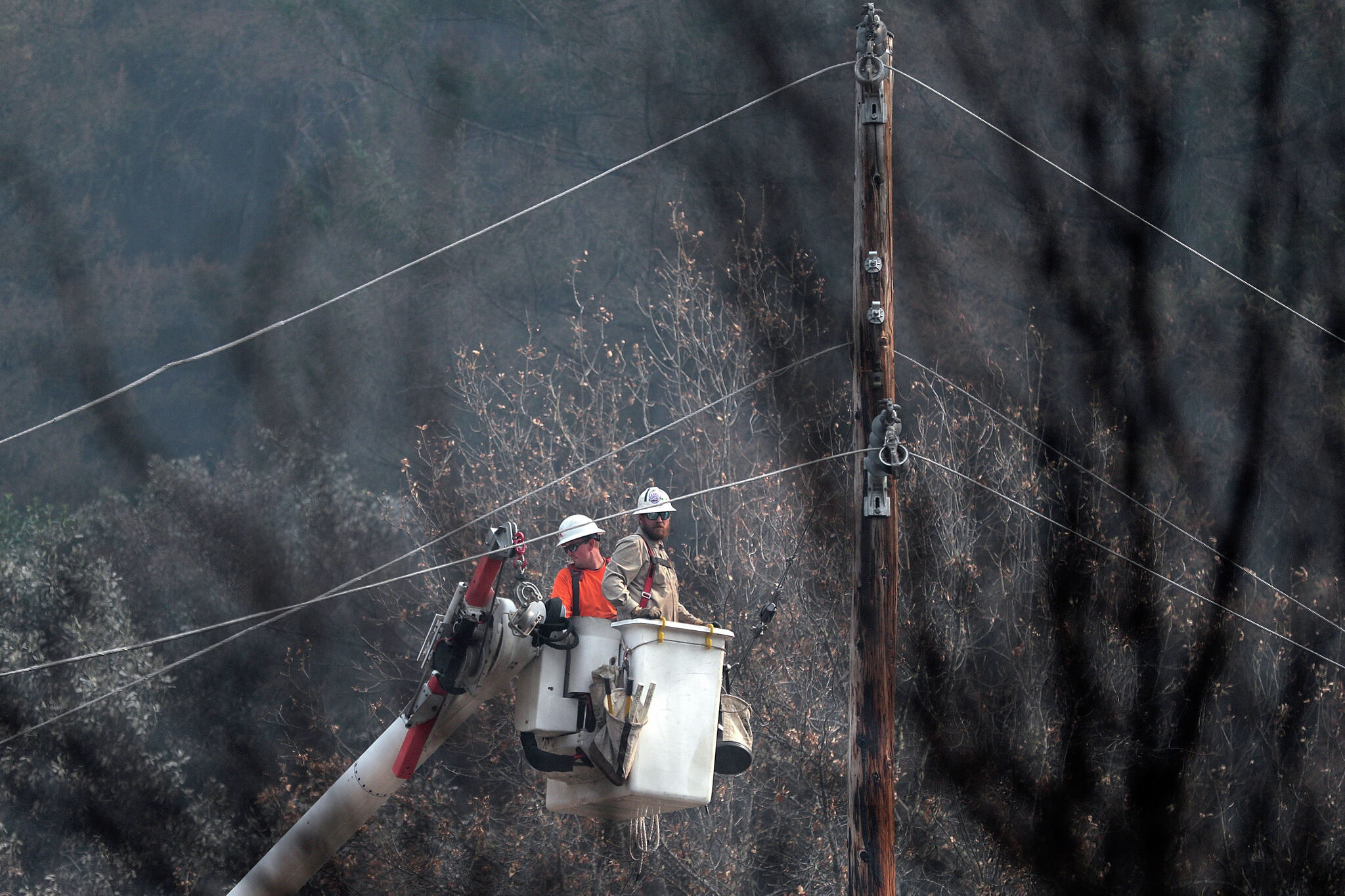
“The communities that we serve in Northern California face some of the highest wildfire risk in the country — these investments are not optional, and they are the right thing to do,” regional business manager Jill Drinkwater told supervisors.
The utility also points to more than half a billion dollars already invested in wildfire risk reduction across its service area. But the request arrives just two years after a 19 percent hike added roughly $324 annually to customer bills, and on the heels of a $575 million settlement Pacific Power’s parent, PacifiCorp, agreed to pay this year over six wildfires in 2020 and 2022 — fires the utility has denied liability for.
Rising Utility Prices Burden Businesses and Rural Residents
Tim Sullivan, principal of Lodging Vertical LLC, framed the increase in business terms: “I run a business, and in business, you don't get to solve your problems by raising your customers' prices by 57%, especially when we have nowhere else to go.” Assemblywoman Heather Hadwick, whose district stretches from the Sierra to the Oregon border, echoed the sentiment after sending staff to a Liberty Utilities meeting in Portola: “We're Pacific Power customers ourselves, with three meters on our farm and a bill already around $1,000 a month — even when we aren't irrigating.”
Supervisor Describes Largest Hearing Turnout Ever
Del Norte County Supervisor Valerie Starkey told the San Francisco Chronicle the county’s recent meeting on the rate request drew the greatest public attendance she had ever seen, with residents packing the hearing room in the county’s only incorporated city.

Starkey said she and fellow supervisors would advocate for residents before the California Public Utilities Commission. “We all agree on: We have to unite and push back against this increase,” she told the Chronicle, adding the request was a “huge surprise and a huge blow to us.”
Assemblywoman Heather Hadwick raised concerns about the growing impact of electricity costs on rural Northern California families and businesses following Pacific Power’s November 6 filing and a Liberty Utilities meeting in Portola. Hadwick sent her entire district team to Portola to hear from residents, business owners and local organizations.
“People in Portola deserve to be heard, and our district team was there to listen firsthand,” Hadwick said, noting working families, seniors on fixed incomes and small business owners have reached their limit.
Hadwick Warns Rural Communities Cannot Absorb More
Hadwick said the concerns extend across her district, from Alpine and Plumas counties north to Modoc and Siskiyou. “How much more can people afford just to stay in their homes and keep their businesses running?” Hadwick said, according to Lassen County News.
She acknowledged wildfire prevention matters but said those costs cannot be discussed without considering who pays. “Nobody has to explain to us why wildfire prevention matters. We live here. We know what wildfires can do,” she said.
Hadwick’s district director, Yolanda Cookson, highlighted a structural gap: there is no gubernatorial appointee tasked with advocating for rural communities before the CPUC. Hadwick added her own farm runs three meters with a bill already around $1,000 monthly even without irrigation.
The Regulatory Clock
The CPUC typically takes 19 to 22 months from filing to final decision. Pacific Power has requested a January 1, 2027 effective date; the commission is expected to rule in August. In the meantime, the company notes a separate proposed 14 percent rate decrease that could partially offset the increase.
Starkey said Del Norte hopes to coordinate with Modoc and Siskiyou counties to present data that might convince commissioners to reduce the overall ask — but even cut in half, she warned, the burden remains huge.
State Sen. Mike McGuire, recently elected to represent California’s 2nd Congressional District, called the request “reckless” and urged commissioners to reject it. PG&E, facing its own wildfire-cost scrutiny, criticized state officials in September over California’s system for assigning wildfire liability — a debate that also shapes what utilities can recover from ratepayers.
Residents can submit comments directly to the CPUC as the review proceeds.
Keep reading

Netflix’s “The Hunting Wives” Returns With 89% Rotten Tomatoes Score
Netflix's "The Hunting Wives" returned Thursday with an 89% Rotten Tomatoes critics score, up from Season 1's 81%....

Viewers Criticise Joanna Page For Rudeness On I’m A Celebrity
"Nah the rage Joanna just made me feel. Telling Claire to shut up and then NOT shutting up...

Denis Villeneuve Deeply Disappointed Dune 3 to Face Avengers Doomsday in Dunesday Box Office Battle
“I was deeply disappointed,” Denis Villeneuve told Time magazine about the scheduling of his upcoming film. The director...

Five-bed Rochestown Detached on 0.3-Acre Site for €745k
A five-bedroom detached house on a 0.3-acre site in Rochestown is on the market for €745,000, Irish Examiner...