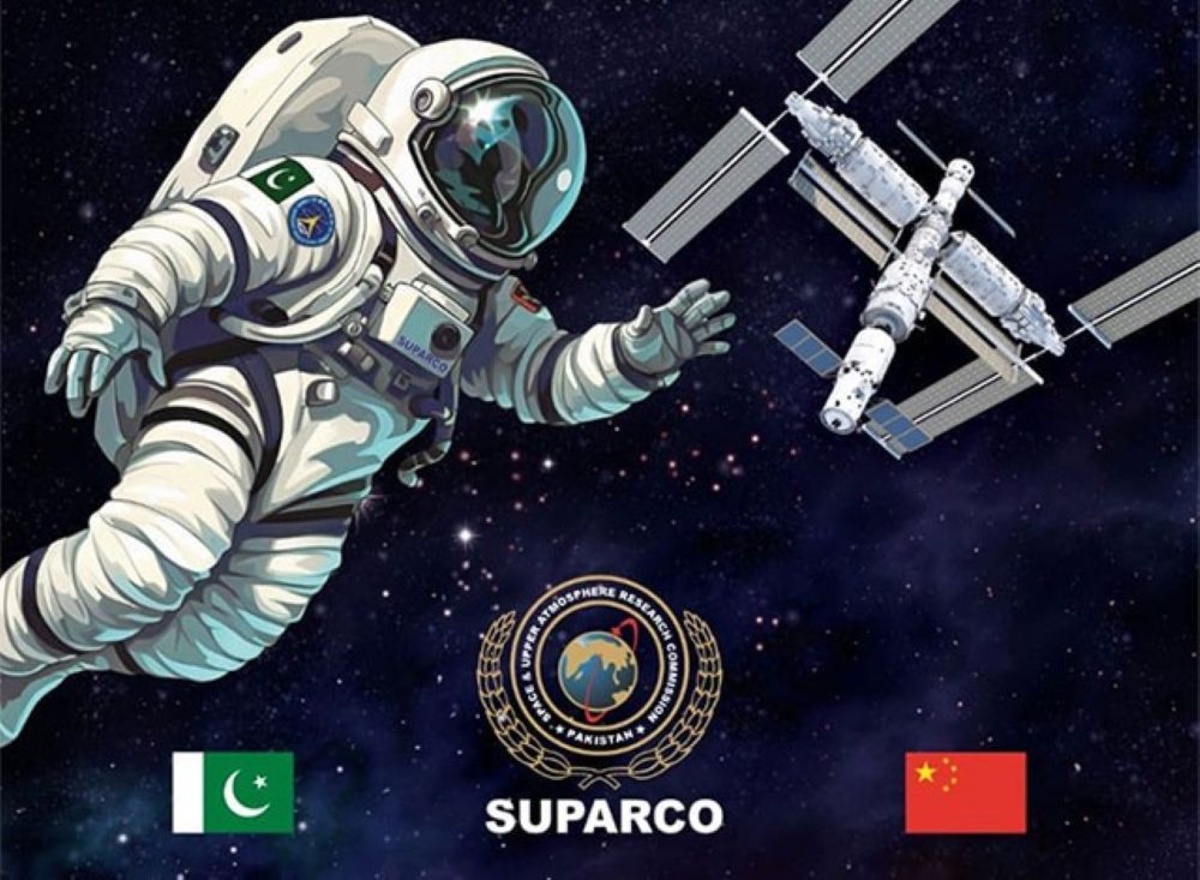
Pakistan will send its first astronaut into orbit Wednesday aboard a Chinese Shenzhou-24 mission, making Muhammad Zeeshan Ali the first foreign visitor to China’s Tiangong space station.
- Liftoff is set for 8:18 a.m. Beijing time (5:18 a.m. Pakistan time) on November 25 from the Jiuquan Satellite Launch Center.
- Ali, a 40-year-old Pakistan Air Force wing commander, will serve as payload specialist alongside Chinese commander Tang Hongbo and flight engineer Wu Yi.
- The mission stems from a February 2025 agreement between SUPARCO and the China Manned Space Agency.
- Ali will spend about one week on Tiangong conducting four biotechnology and materials experiments before returning on Shenzhou-23.
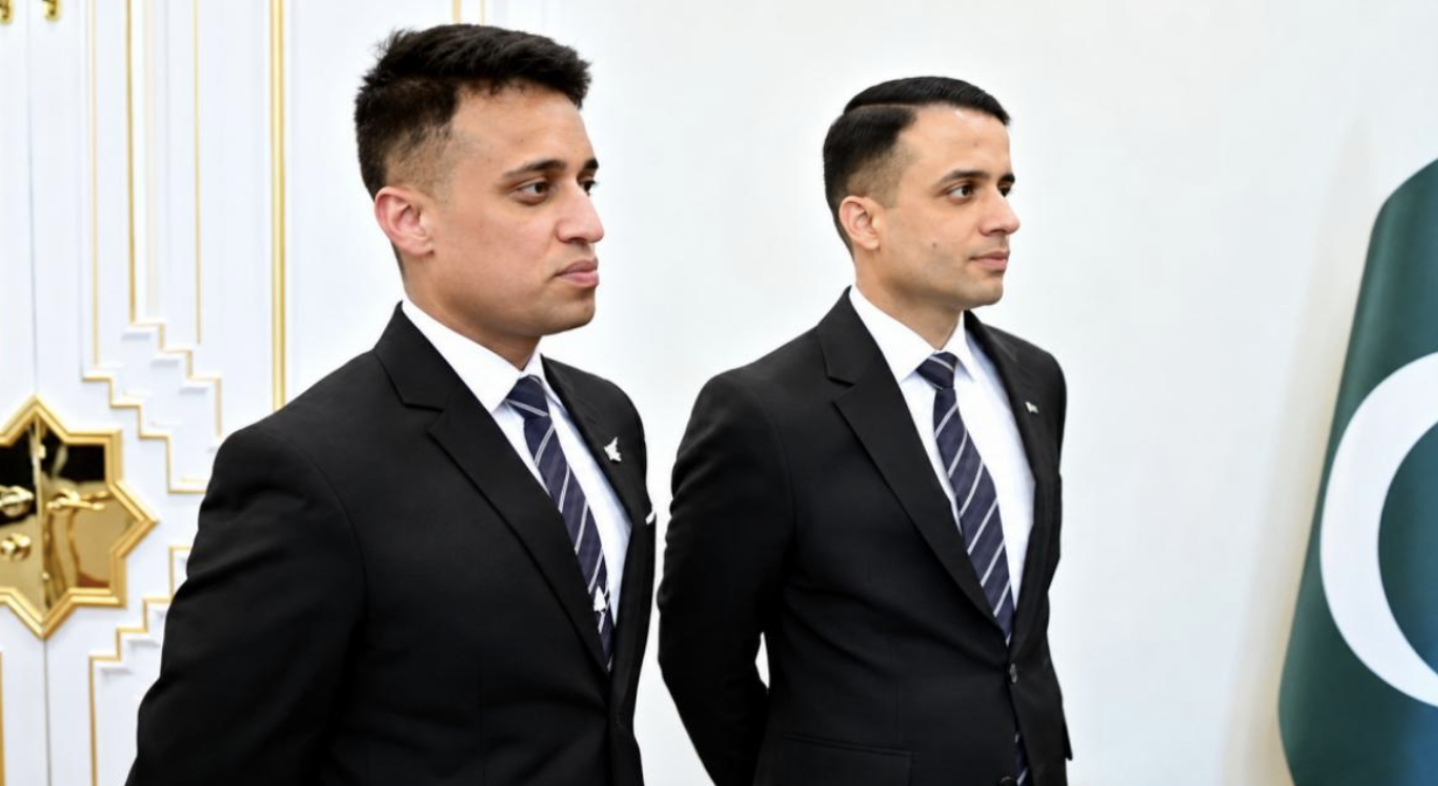
The China Manned Space Agency announced the three-person crew at a press conference in Jiuquan on Tuesday. Tang, 51, becomes the first astronaut to visit Tiangong three times after previous flights on Shenzhou-12 and Shenzhou-17. Wu, 39, is making his first spaceflight. Ali was selected from two Pakistani candidates — the other being Khurram Daud — after months of training at the China Astronaut Research and Training Centre in Beijing.
چین کے جیوچوان خلائی مرکز میں پاکستان کے پہلے خلا نورد محمد ذیشان علی کے ساتھ یہ لمحہ میرے لیے اور پوری پاکستانی قوم کے لیے باعثِ فخر ہے۔ مشن پہ روانگی سے پہلے پاکستانی وفد سے ان کی خصوصی ملاقات کروائی گئی۔ ان کے ہمراہ دوسرے خلانورد خرم داؤد بھی تھے جنہوں نے کامیابی سے ٹریننگ… pic.twitter.com/CY5QT0nk5P
Tang acknowledged the crew faced unusual hurdles. “The labels and operating instructions aboard the spacecraft and space station are all in Chinese, and the Pakistani astronaut began training with virtually no foundation of the language,” he told reporters. He added that he and Wu stepped up their English studies to compensate.
Science and symbolism on a short-duration flight
Ali’s primary role is scientific. State broadcaster CCTV said he will carry out four cooperative projects in biotechnology and materials, including an in-orbit experiment on photosynthetic microorganisms. Suparco officials previously told Reuters the research targets food security and climate change. The payload specialist will return to Earth aboard the Shenzhou-23 spacecraft, which docked with Tiangong in May.
A Pakistani astronaut, Muhammad Zeeshan Ali, will become the first foreign astronaut to visit the China Space Station, serving as a payload specialist on the Shenzhou-24 crewed spaceflight mission, which is scheduled to launch on Wednesday. #TheFaces The announcement was made at… pic.twitter.com/Qum30gUF0U
One member of the outgoing Shenzhou-23 crew, Zhu Yangzhu, will remain aboard Tiangong for a year-long residency experiment, according to details released alongside the crew announcement. The station, which offers 340 cubic metres of pressurised volume — slightly over one-third of the International Space Station — will host six astronauts during the handover period.
Rescue rocket ready without published turnaround
The Long March-2F rocket rolled to the launch pad on November 17 wrapped in insulation foam against Gobi Desert temperatures of about 1°C (34°F). A second Long March-2F (Y25) and Shenzhou-25 spacecraft stand ready in the vertical assembly building as an emergency rescue vehicle.
Congrats! Pakistani astronaut Zeeshan Ali selected to be one of three crew of Shenzhou-24, first ever international astronaut to be part of a manned space mission and he will be first ever visitor to Chinese Space Station marking the trust and iron brotherhood between Pakistan… pic.twitter.com/3VVBwKQGhp
China has not published a turnaround time for the standby pair. The only recent data point: after minor cracks were found in Shenzhou-20’s return capsule on November 5, 2025, an uncrewed Shenzhou-22 launched 20 days later on November 25.
Pakistan minister honours both astronaut candidates
Planning Minister Ahsan Iqbal travelled to Beijing for the departure ceremony and praised both Pakistani candidates who completed the training programme. He said that although only Zeeshan Ali will fly on Wednesday, both he and Khurram Daud have already made Pakistan proud through their selection and preparation, according to the minister’s remarks reported by The Express Tribune.
Answering a question from CGTN ahead of the Shenzhou-24 launch, Muhammad Zeeshan Ali, an astronaut from Pakistan, described the mission as "not a finish line" but "a launchpad" for China-Pakistan space cooperation. pic.twitter.com/imIErRQFOU
Iqbal also paid tribute to Daud during a press engagement, noting the pair were chosen from among Pakistan’s finest pilots and scientists and had trained in centrifuges, simulators, emergency drills and a new language. The two candidates graduated from the Confucius Institute Mandarin programme in Islamabad before moving to China for intensive training, Dawn and WE News English reported.
CMSA spokesperson confirms historic first for foreign participation
China Manned Space Agency spokesperson Zhang Jingbo told a press conference that Muhammad Zeeshan Ali is the first foreign national to visit Tiangong, marking the first joint crewed flight involving Chinese and foreign astronauts in the history of China’s manned space programme. The mission follows the February 2025 agreement signed in Islamabad between SUPARCO and CMSA that established a framework for selecting and training Pakistani astronauts for Tiangong missions.
The scientific work builds on four Pakistani biotechnology experiments selected by Chinese institutions from more than 300 proposals submitted to SUPARCO by universities across the country, Geo News reported. Ali will conduct an in-orbit experiment on photosynthetic microorganisms among the cooperative projects in biotechnology and materials, CCTV said, with Suparco officials previously telling Reuters the research targets food security and climate change.
Zhang Chaozhe ties mission to bilateral trust
Zhang Chaozhe, director of the Pakistan Study Center at Sichuan University, said the mission reflects the growing depth of bilateral trust and technological cooperation.
Two Pakistani candidates Muhammad Zeeshan Ali and Khurram Daud have been selected as the first foreign astronauts to train for China's space station missions, the China Manned Space Agency announced on Wednesday. #XinhuaNews pic.twitter.com/z4cuKlIvNR
Weinmann highlights overview effect from Tiangong
American space entrepreneur George Weinmann, speaking to NDTV, said Beijing has “been broadcasting that for some time” — signalling its intent to make Tiangong a platform for international cooperation. “Space is not a domain for any one country or even a select few. But it is still a hard and rare opportunity to be able to go into space,” Weinmann said.
He highlighted the “overview effect” — the perceptual shift astronauts report when viewing Earth from orbit — and argued that when a new national group gains that perspective, “they bring that overview effect back to their population.”
Pakistani and Chinese astronauts hold press conference ahead of the historic Shenzhou-24 space mission. https://t.co/1Zzra1tvHs
Zhang Chaozhe, director of the Pakistan Study Center at Sichuan University, told Daily Sabah the mission reflects “the growing depth of bilateral trust and technological cooperation.”
The Shenzhou-24 launch on November 25 is the 41st flight of China’s crewed space programme. China targets its first crewed lunar landing by 2030, while NASA aims for a 2028 return to the Moon. Pakistan’s next steps include a rover on Chang’e-8 around 2028 and participation in the China-led International Lunar Research Station.
For now, a 40-year-old pilot from the Pakistan Air Force will spend a week on Tiangong, running experiments and, as he put it at the pre-launch briefing, “carry the name of Pakistan on my shoulder, the hopes of 250 million Pakistanis.”
Keep reading

Montgomery County, TxDOT Outline $80M Projects for Traffic, Flooding
Montgomery County and TxDOT outlined three major infrastructure projects Thursday as part of more than 140 projects totaling...

Ehmkes Say Wheat $2 Below Cost as Tractors Hit $700K, Combines $1M
New four-wheel-drive tractors cost $700,000 and combines $1 million, up from $25,000 for a first tractor 50 years...

Indrusaitis Scores 18 as California Routs Alabama State 96-54
California routed Alabama State 96-54 on Monday night at Haas Pavilion, pushing its winning streak to three games...

Daniel Jeremiah Expects Seahawks Second-Half Heater as Run Game Improves
Seattle Seahawks sit 6-4 after ten games despite a dominant 17-3 championship season a year ago. NFL Network...