
On November 17, the Pan American Health Organization confirmed that the United States, Mexico and Bolivia had lost measles elimination status after the same virus lineage circulated uninterrupted for at least 12 months.
The announcement came during a media briefing led by PAHO Director Dr. Jarbas Barbosa, who called the development “a serious warning for our Region, but it is not an irreversible setback.” The U.S. had held elimination status since 2000; Canada lost its own designation in November 2025.
As of November 13, the Americas region had recorded 58,213 confirmed measles cases and 82 deaths this year, compared with 12,806 cases during the same period in 2025, according to PAHO.
As a pediatrician, I saw firsthand how decisions made in Washington hurt our children and families. Nothing makes that clearer than this. No child should have to suffer from a disease we know how to prevent because of political hubris in Washington. https://t.co/6xJFqGCg0V
“The decision to strip the United States of its measles elimination status is sadly not a surprise,” said Jennifer Nuzzo, director of Brown University’s Pandemic Center, in an interview with HuffPost. “The fact that we’ve now lost our status means we’re going backwards. It’s a loss of standing. It’s the loss of stature in the world. And it’s a loss for public health, because measles is a terrible disease.”
How Elimination Is Lost
PAHO’s Regional Monitoring and Re-Verification Commission reviews whether a single measles strain has spread locally for 12 months or more, using genetic sequencing to distinguish sustained transmission from import-linked cases. The commission met November 10–13 and accepted its recommendations the same day Director Barbosa announced the status changes.
The loss of our measles-elimination status is a troubling step backward for public health. Ohio has reported more than 325 cases this year, mostly in Northeast Ohio, and the U. S. has seen more measles cases in the last 18 months than in the previous 25 years combined. We cannot…
CIDRAP reported that the U.S. outbreak traces to a Mennonite community in West Texas beginning in January 2025; genetically linked cases have since appeared in multiple states.
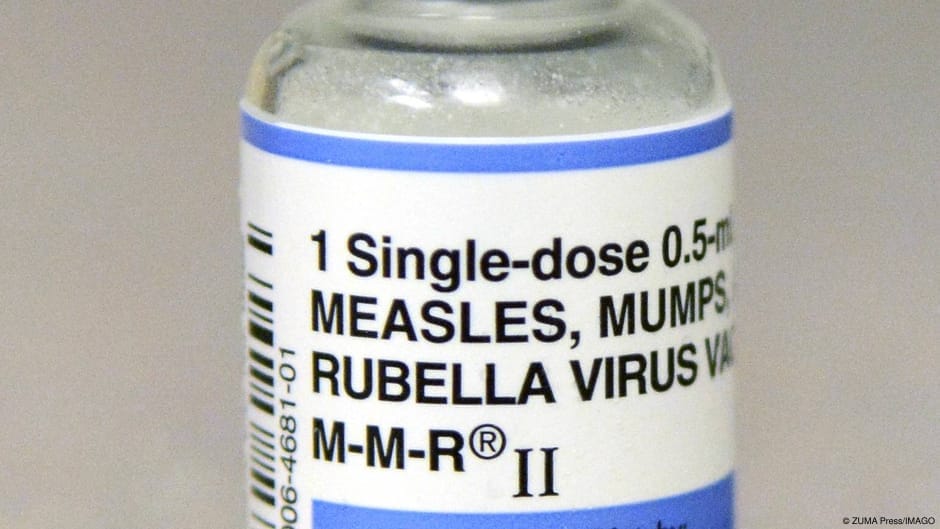
National kindergarten MMR coverage fell to 92.4 percent in the 2025–26 school year, down from 95.2 percent in 2019–20, CIDRAP noted. School-aged children and teens account for 40 percent of 2026 cases; adults represent another 41 percent, up from 29 percent last year. Nearly all cases are among people who are unvaccinated or have unknown vaccination status.
Saving babies is the lowest common denominator for a civilized society. Babies can’t get vaccinated. When measles surges, they are defenseless. This is what happens when we appoint an anti-science grifter to the highest public health role in the country. https://t.co/skGrIM3JjL
Federal Response and the Kennedy Factor
Health Secretary Robert F. Kennedy Jr., a longtime vaccine skeptic, has questioned the safety of the MMR vaccine and suggested immunity wanes quickly — a claim infectious disease experts reject. “We eliminated measles from this country. That could never happen if immunity waned,” Dr. William Schaffner, professor of infectious diseases at Vanderbilt University School of Medicine, told TODAY.
In September, Kennedy told anti-vaccine activists they have a “friend in the White House,” according to Sky News. After the PAHO announcement, Kennedy said the U.S. would work to regain elimination status and “continue to recommend MMR vaccination as the most effective way to prevent measles.”
We will stop measles outbreaks, protect American families, and work to regain U. S. measles elimination status. I continue to recommend MMR vaccination as the most effective way to prevent measles. Worldwide COVID-era disruptions interrupted routine childhood vaccination, leaving… https://t.co/XXswAdOfn6
The CDC pledged to “encourage MMR vaccination, expand access to vaccines, and help communities close gaps in protection,” adding it has invested $100 million in state and local health departments to reach under-vaccinated communities. CDC Director Erica Schwartz emphasized: “The measles elimination designation is not what protects Americans. Vaccination does.”
What the Disease Does
This year’s U.S. outbreak has already cost more than $93 million, according to a Johns Hopkins University estimate cited by HuffPost. A single outbreak, regardless of size, costs an estimated $298,000 upfront plus $16,300 per additional case. Ten measles-associated deaths have been reported by state health departments in 2026; the CDC has confirmed six.
Brazil Shows the Way Back
Brazil lost its elimination status in 2019 amid more than 21,000 cases but regained it in 2024 after aggressive contact tracing, rapid vaccination of exposed communities, and sustained immunization campaigns. In 2026, Brazil has reported only 70 cases and donated 500,000 vaccine doses to Peru. “It must be protected every day,” Director Barbosa said, DW reported.
PAHO’s commission has recommended that countries use its risk assessment tool to identify high-risk municipalities, conduct active case searches in health facilities and communities every three months, and strengthen laboratory surveillance and rapid-response teams. PAHO said the U.S. and other affected countries must submit corrective action plans outlining how they will improve vaccination rates.
“It can be the canary in the coal mine to other things." – ASTHO Chief Medical Officer Susan Kansagra on measles as a warning sign of the potential resurgence of other vaccine-preventable diseases. More from @bylenasun of @washingtonpost: https://t.co/7IxNNExjKW
Pregnant People and Infants Face Distinct Risks
The loss of elimination status raises specific threats for pregnant people and babies too young for vaccination. Dr. James Campbell, chair of the American Academy of Pediatrics committee on infectious diseases, told The 19th News that congenital measles — infection passed in utero — and measles in pregnancy were rarely seen before because women of childbearing age were protected.
“What does that tell you when women of childbearing age are getting measles? That means multiple generations are unvaccinated,” he said.
The United States has lost its measles elimination status, the Pan American Health Organization formally announced on Tuesday. PAHO, a part of the World Health Organization, made the decision after reviewing evidence and determining that the measles virus has been continuously… pic.twitter.com/kSJSFs3tTR
Maternal antibodies passed through the placenta and breast milk wane after three to six months, leaving infants vulnerable before they can receive their first MMR dose at 12–15 months. Measles exposures have already been reported in children’s hospital waiting rooms in Des Moines and Philadelphia this year. Some health departments in outbreak zones are recommending an early dose for infants as young as six months, TODAY reported.
The Road to Regaining Status
Regaining elimination status requires stopping transmission and remaining free of it for at least 12 months; countries in the Americas have historically needed more than two years after stopping an outbreak to restore the designation.
Under this Administration's vaccine-skeptic leadership, the United States has lost its status as measles-free for the past 26 years. Measles is preventable, and the lifesaving vaccine is safe and effective. We beat this disease once; we can beat it again.…
PAHO Director Barbosa said the region has done it before — after Venezuela and Brazil re-established endemic transmission in 2018 and 2019, the Americas regained regional elimination status in 2024. “We have done it before. And with sustained commitment and action, the Americas can eliminate measles transmission once again,” he said.
“This isn’t hard. We did it. We know how to do it,” Nuzzo said of the U.S. recovery path. The next step is the submission of corrective action plans by the U.S., Mexico and Bolivia, expected in the coming weeks.
More on Pan American Health Organization
The U. S. has officially lost its measles elimination status, Dr. Jarbas Barbosa, director of the Pan American Health Organization, the Americas arm of the World Health Organization, said on Nov. 17. Mexico and Bolivia have also lost their elimination statuses, international… pic.twitter.com/QFEHqqECtq
Keep reading

Du Plessis Eyes Q1 2027 Return, Frames Next Bout as Title Eliminator
Former middleweight champion Dricus du Plessis plans a first-quarter 2027 return after his unanimous decision over Kamaru Usman...

Ireland XV Beat Fijian Latui 61-12 as Fiji Reduced to 12 Men
Ireland XV overwhelmed Fijian Latui 61-12 at Virgin Media Park in Cork on Friday night, a nine-try rout...

Designer Greg Durrell Calls Hockey Night in Canada Rebrand Deeply Personal
In an interview with CBC Sports, designer Greg Durrell argues that rebranding Hockey Night in Canada for its...

INDYCAR.com Writers Analyze Hypothetical 2027 Arrow McLaren Lineup of Former Winners
Arrow McLaren has bet its 2027 Indianapolis 500 pursuit on a four-driver lineup of former winners, a gamble...