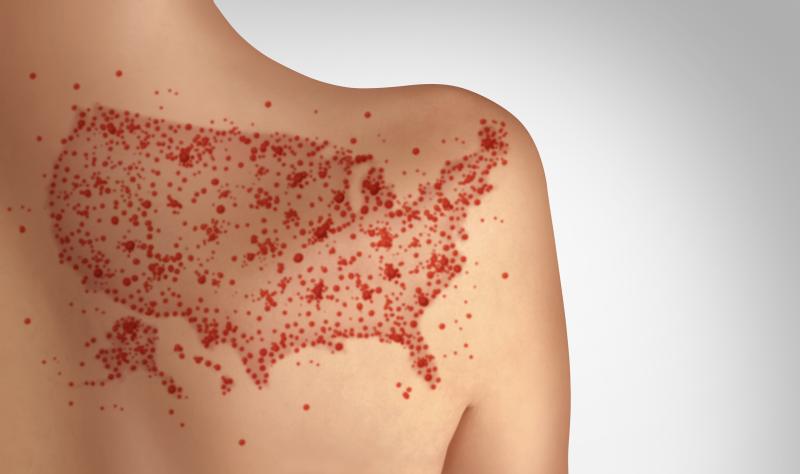
The United States has lost its measles elimination status after the virus spread continuously through the country for more than 12 months.
The Pan American Health Organization (PAHO) reached this conclusion this week, ending a period of 26 years during which the nation had successfully interrupted endemic transmission. Researchers with direct knowledge of the deliberations told KFF Health News that the decision follows a period of sustained domestic transmission. A formal public announcement of the finding is expected on Nov. 17.
“Formally losing our elimination status is like a fire alarm going off,” said Celine Gounder, an epidemiologist and editor-at-large for public health at KFF Health News.
Measles Cases Spike as Vaccination Rates Decline
The loss of status follows a dramatic spike in infections. As of November 12, the CDC counted 5,412 confirmed measles cases in 2026, a figure that more than doubles the 2,289 cases recorded in 2025. Some estimates suggest the number of cases could reach 7,000 before the year ends. The disease has been detected in 46 states plus Washington, D.C.
Public health experts point to a steady erosion of vaccination coverage as a primary driver. Nationwide vaccination rates among kindergartners have slipped from 95.2% in the 2019–2020 school year to 92.4% in the 2025–2026 school year.
This decline is significant because the ideal coverage rate required to sustain herd immunity and prevent outbreaks is 95%. Currently, the 92.4% kindergarten vaccination rate leaves approximately 280,000 kindergartners without documented MMR. Additionally, nonmedical exemptions reached a record 4% during the 2025-26 school year, up from 1.9% during the 2020-21 school year.
The current outbreak has reached nearly every state. Pennsylvania has been hit particularly hard, recording more than 1,500 cases and seven deaths in 2026, according to the Pennsylvania Department of Health. In Lancaster County, 528 infections have been reported as of Friday. Other confirmed deaths in 2026 include six in Pennsylvania, one in New York, and one in Wisconsin.
The U. S. lost its measles elimination status because Sec. Kennedy is playing deadly games with public health. Vaccines are a safe and effective tool to prevent illness and deaths, but Trump’s admin chooses to put lives at risk by undercutting science and spreading misinformation.…
— Post by @BettyMcCollum04 on X
The Economic Toll of Outbreaks
Beyond the clinical impact, the resurgence of the virus is creating a substantial financial burden. A new tool developed by researchers at Johns Hopkins University estimates that 2026 outbreaks could cost the U.S. nearly $83 million.
| Cost Category | 2026 Estimated Impact |
|---|---|
| Public health response | $56 million |
| Lost productivity | Almost $25 million |
| Direct medical expenses | More than $1.8 million |
These costs stem from the intensive resources required to investigate infections, notify exposed individuals, and coordinate with schools and hospitals. Even for those who do not contract the virus, the economic impact is felt through mandatory quarantines and the diversion of local health department resources.
For example, in New Mexico, researchers from the CDC and the state health department determined that the 2025 outbreak cost $5.4 million, averaging $53,522 for every person infected. A model for New York in 2025 estimated that 48 cases carried roughly $1.1 million in costs, including $749,000 for public health responses, $333,000 in productivity losses, and approximately $24,500 in direct medical expenses.
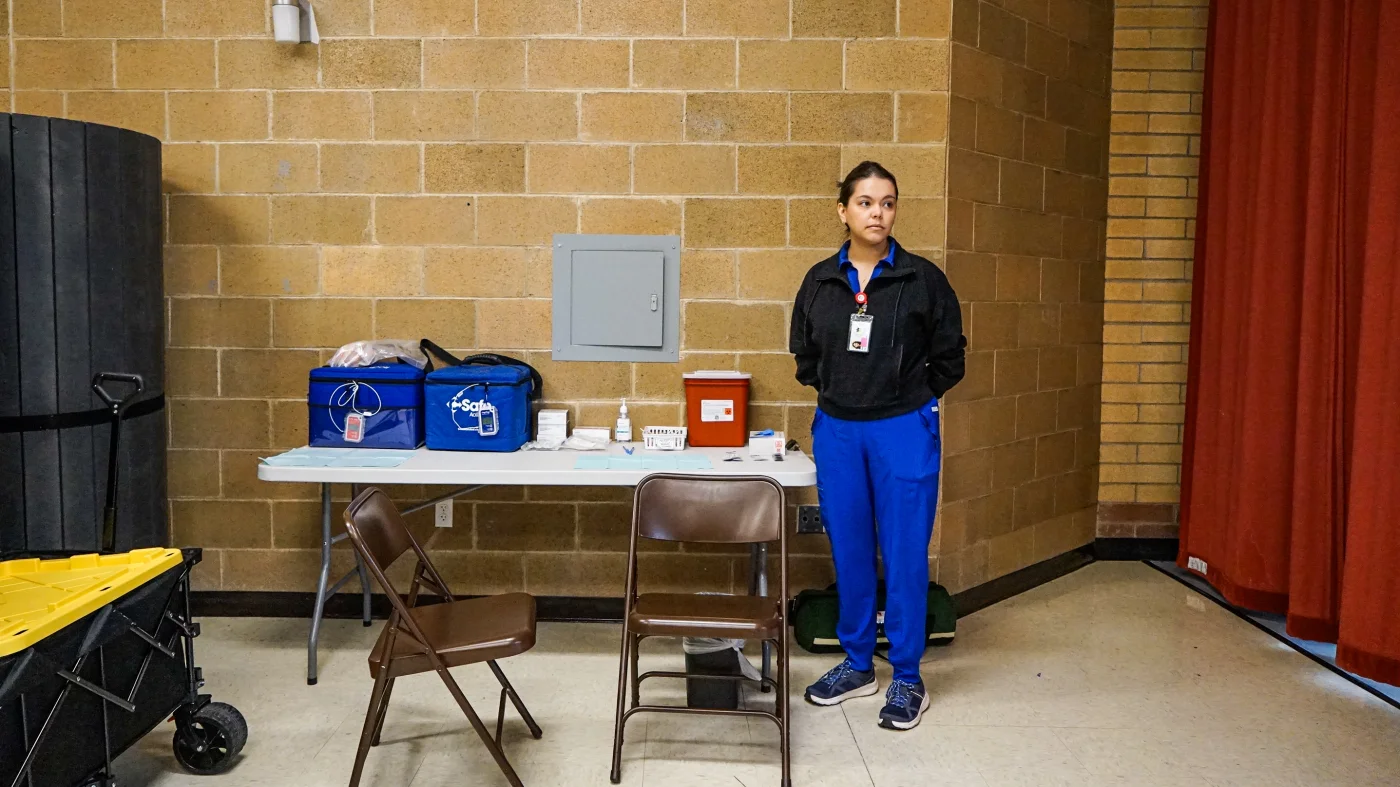
Federal Leaders Clash over Public Health Response
The crisis unfolded as federal leaders and public health officials clashed. A spokesperson for the Department of Health and Human Services, Hilliard, said that the suggestion of such suppression is false. Hilliard said that Kennedy and the CDC have provided approximately $100 million in additional funding to respond to outbreaks.
There is also growing concern regarding the impact of federal policy on vaccination rates. In 2025, nine states made it easier to opt out of childhood vaccination requirements, according to Gounder. Additionally, the rise of the anti-vaccine movement has coincided with changes in federal leadership at health agencies.
Governor Shapiro's unseemly rush to Lancaster County to convene a national press conference and his giddy delight in announcing two measles deaths was a morose commentary on the contemporary political dialogue. The performance was a replay of the Democrats' COVID playbook:… https://t.co/LvZf3br1dB
— Post by @SecKennedy on X
This includes an August order signed by President Donald Trump calling for the MMR vaccine to be split into three single-disease shots, a move for which there is no published evidence of benefit.
Despite the loss of the elimination designation, the CDC maintains that its operational approach will remain consistent. CDC Director Erica Schwartz stated that the agency will continue working with the states to address outbreaks, noting that the designation itself is not what protects Americans, but vaccination is.
The U. S. has officially lost its status as a country where #measles is eliminated 😔https://t.co/MHMEwYuEU5 via @KFFHealthNews with #MeaslesCollaborative Executive Director @InfectiousPS
— Post by @NFIDVaccines on X
Protecting the Vulnerable
Because the measles vaccine is not typically administered to infants until they are 12 to 15 months old, babies remain a high-risk group. Approximately 96% of measles cases in the U.S. this year have been in unvaccinated people or those with an unknown vaccination status.
Measles is highly contagious and can stay in the air for two hours after an infected person has left a room. It is also known to cause “immune amnesia,” where the virus erases parts of the immune system’s memory, leaving children susceptible to other infections.
https://t.co/oXQgjOmY8o. .@SecKennedy you should not be to proud of this! A country like USA should be free of every possible sickness and under your watch this one has come back….not a good look….@realDonaldTrump @GOP and @TheDemocrats should ben outrage….
— Post by @chefjoseandres on X
Dr. Katie Lockwood, a pediatrician at the Children’s Hospital of Philadelphia, said that while it remains unlikely for vaccinated children to catch the disease, the presence of outbreaks makes protecting newborns a critical priority.
Experts suggest that in outbreak areas, outdoor spaces may be safer than indoor spaces, and avoiding close contact with sick individuals is a protective measure. If an individual is exposed and not immune, the CDC states they may be able to spread the virus for up to 21 days after exposure.
“.. It’s a symbolic loss,” Jennifer Nuzzo, director of Brown University’s Pandemic Center, said in CIDRAP News. “It’s a loss of standing. It’s a loss of stature. It’s a loss of achievement.”@Forbes https://t.co/7Wt7v8eDHC pic.twitter.com/tvjRceOVEx
— Post by @carlquintanilla on X

Arsenal Star Max Dowman Makes History as Youngest England U21 Scorer
Arsenal winger Max Dowman became the youngest player to score for England's Under-21 side on Monday, netting a...

Cody Fajardo Leads Edmonton Elks to 113th Grey Cup Victory Over Montreal Alouettes
Quarterback Cody Fajardo secured his second Grey Cup title in four seasons on Sunday leading the Edmonton Elks...

Belgium’s Lukaku Retires From International Football – Yahoo Sports
In a Monday announcement covered by Yahoo Sports, Belgium forward Romelu Lukaku retired from international football after scoring...

RACE-CARS Trial Shows No Benefit, Study Finds
A five-year randomized controlled trial spanning 60 counties in North Carolina failed to improve overall survival rates or...