When Internal Inquiry Trumps Mandatory Reporting
For parents, the trust placed in a school is absolute. It is a quiet contract that assumes when a child speaks up, the adults in the room will act instantly to protect them. But in the case of Nicholas Ricciardi, a former teacher at the Solomon Schechter Day School of Greater Hartford, that contract fractured under the weight of internal protocols. NBC Connecticut Investigates has revealed a timeline that highlights the perilous gap between when a parent voices a concern and when that concern officially reaches the Connecticut Department of Children and Families (DCF).
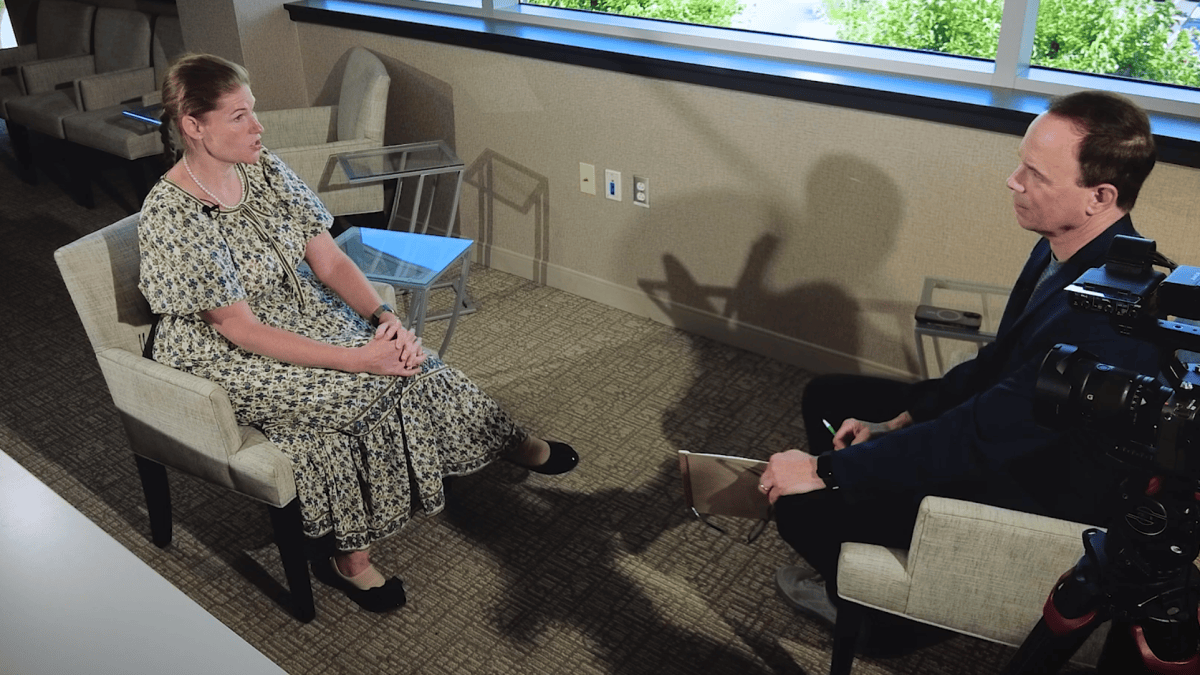
Samantha Mendolia, whose daughters attended the school, reported on November 24, 2024, that her six-year-old child had disclosed inappropriate tickling by the teacher. While she alerted school administration the following day, the school did not file a report with the state until December 2—eight days later.
Under Connecticut statute, certain professionals are required to report suspected abuse or neglect to the DCF within 12 hours. Sarah Eagan, executive director of the Center for Children’s Advocacy, noted that while a school might conduct a preliminary inquiry, that process should never be used as a substitute for the immediate notification required by law. Instead, the inquiry’s purpose is only to establish whether there is reasonable suspicion that necessitates state intervention.
The Cost of Administrative Hesitation
Head of School Rabbi Jonathan Berger informed parents that the school felt compelled to investigate before reporting to authorities. In a later communication, he suggested the school did not believe the conduct reached the threshold of a mandatory report, choosing instead to leave that determination to the DCF. When the school finally did report on December 2, the agency declined to launch an investigation.
The consequences for the families involved were profound. After the school’s initial inquiry, Mendolia was told her daughter could return to the classroom under supervision, provided there was no further tickling by the teacher. The school even proposed a restorative justice meeting where the teacher would apologize to the child—a suggestion that led Mendolia to realize her children could no longer remain at the institution. She is now suing Solomon Schechter Day School of Greater Hartford for negligence, alleging that the school failed to conduct a sufficiently thorough background check on Ricciardi before he was hired.
Patterns of Silence Across Institutions
The situation at Solomon Schechter was not an isolated incident. Jaclyn Scott, a mother whose daughter attended St. Gabriel School in Windsor, where Ricciardi worked the year prior, describes a similar lack of clarity. Her daughter reported that the teacher’s behavior had shifted from roughhousing to touch that caused pain. Despite Scott raising these concerns with multiple staff members and administrators, she found it difficult to secure answers or meaningful action.
The scope of the issue only became clear through a bureaucratic error. After Ricciardi was arrested in January 2025 for his conduct at the Solomon Schechter school, Mendolia received a DCF report containing a redacted paragraph. Due to a mistake at the agency, a portion of the report remained visible, revealing that the DCF had received a prior complaint regarding Ricciardi and Scott’s daughter at St. Gabriel School in 2023—a case the agency did not pursue at the time.
This revelation raises significant questions about how the DCF manages its case history and background checks. Currently, a standard check only indicates whether an individual is on the state’s child abuse and neglect registry, not every instance where a child’s safety was questioned. As the agency faces scrutiny, spokesperson Ken Mysogland stated that while the DCF cannot discuss specific cases, it is considered best practice to re-examine multiple investigations if a new fact pattern emerges.
The Legislative Path Forward
The human stakes are clear. Ricciardi has since pleaded guilty to charges related to his conduct with four different students, including three at Solomon Schechter and one at St. Gabriel. He has received probation and is no longer permitted to teach in the state of Connecticut. For parents like Mendolia, the fight has turned toward systemic reform, specifically advocating for laws that would force teaching candidates to disclose their full history with the Department of Children and Families to prospective employers.
Worth a look

Hartford Volleyball Beats Framingham State 3-1 on Senior Day
The Hartford volleyball team turned their final home appearance of the 2026 season into a statement performance, securing...

Award-Winning Securities Litigation and Business Law Expert
Lucas T. Ritchie, a partner at Wheeler Trigg O'Donnell LLP, maintains a multifaceted legal career characterized by extensive...

California Voters Defeat Prop 39 Strict Voter ID Measure
California Voters Reject Proposition 39 “California’s elections belong to the voters, and today the voters emphatically defended that...

Fenixa Breakfast & Sushi Rises From Geisha Restaurant Fire
A New Kitchen Rises on 41st Avenue When a fire partially destroyed the Geisha Japanese Restaurant last March,...