
“These results reflect the dedication of our scientists and conservation partners working to protect this extraordinary species,” Death Valley National Park Superintendent Mike Reynolds said in a statement on Friday, according to a report from the Las Vegas Review-Journal.
Biologists conducting a fall count in the Devils Hole area of Death Valley National Park recorded 137 Devils Hole pupfish. This figure is higher than the 77 fish counted last spring and the 69 observed last fall.
The species, which has long been considered one of the rarest fish in the world, is currently residing in a habitat located next to the Ash Meadows National Wildlife Refuge. While the population is growing, officials noted that the long-term survival of the species remains a primary focus for conservationists.
The history of the Devils Hole pupfish is tied directly to the management of water in the American West. The fish earned its official endangered listing under the federal Endangered Species Act in 1967. This designation was a response to the threat of groundwater drawdown caused by regional ranching and agricultural activities.
Legal battles eventually reached the highest level of the American judiciary to protect the habitat. In the 1976 Supreme Court decision Cappaert v. United States, the court upheld a ruling that prohibited ranchers from pumping groundwater at levels that would negatively impact Devils Hole or undermine federal conservation efforts at the site.

The current population surge is the result of several intensive management strategies. These include both direct habitat protection and active biological intervention.
Scientists have utilized a 100,000-gallon indoor tank that provides a 3-D recreation of the natural habitat to bolster the wild population. Between March 2025 and February 2026, researchers released 72 captive-bred pupfish into Devils Hole to aid recovery efforts.
Because these fish have a short lifespan of only 10 to 14 months, the recent count suggests a healthy cycle of reproduction. Most of the 137 fish observed during the fall survey likely hatched and matured within the hole itself.
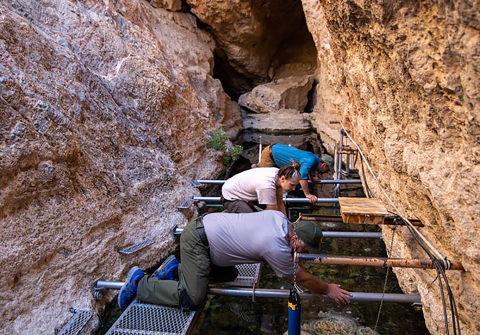
However, the environment remains unpredictable. The National Park Service and the U.S. Fish and Wildlife Service have been monitoring the species since 1972, noting that the depth of Devils Hole remains a mystery to scientists. The habitat is also susceptible to seismic activity.
The impact of earthquakes on the species was evident in 2025, when two seismic events contributed to a decline in the population. According to the Park Service, those movements disrupted the algae and other food sources essential to the fish’s survival.
| Time Period | Pupfish Count |
|---|---|
| Spring 2026 | 77 |
| Fall 2026 | 137 |
Recent geological activity has not had the same effect. When an earthquake in Panama shook the area in early October, the Park Service reported that scientists observed the populations remained stable.
“While Devils Hole pupfish populations naturally fluctuate, the latest count represents encouraging progress in efforts to protect one of the world’s rarest fish,” a news release stated. Officials maintain that continuous research and habitat management are still essential.
Worth a look
Eagles Fall to Giants 19-11 as Seven-Game Losing Streak Continues
The Eagles face a historic collapse after Giants win The Philadelphia Eagles have fallen into one of the...

Georgia Takes No. 1 Ranking After Miami and Ohio State Fall
Georgia takes No. 1 after Miami loss The Georgia Bulldogs are ranked number one in college football. Kirby...

Freeze Warning in Effect for Central Ohio Counties Until 10:00 Am
A Freeze Warning remains in effect until 10:00 AM for Franklin, Pickaway, Pike, and Ross counties, according to...

Albany to Borrow $10 Million to Cover Salaries and Expenses
Albany is preparing to borrow $10 million on Wall Street to cover employee salaries and basic operating expenses...