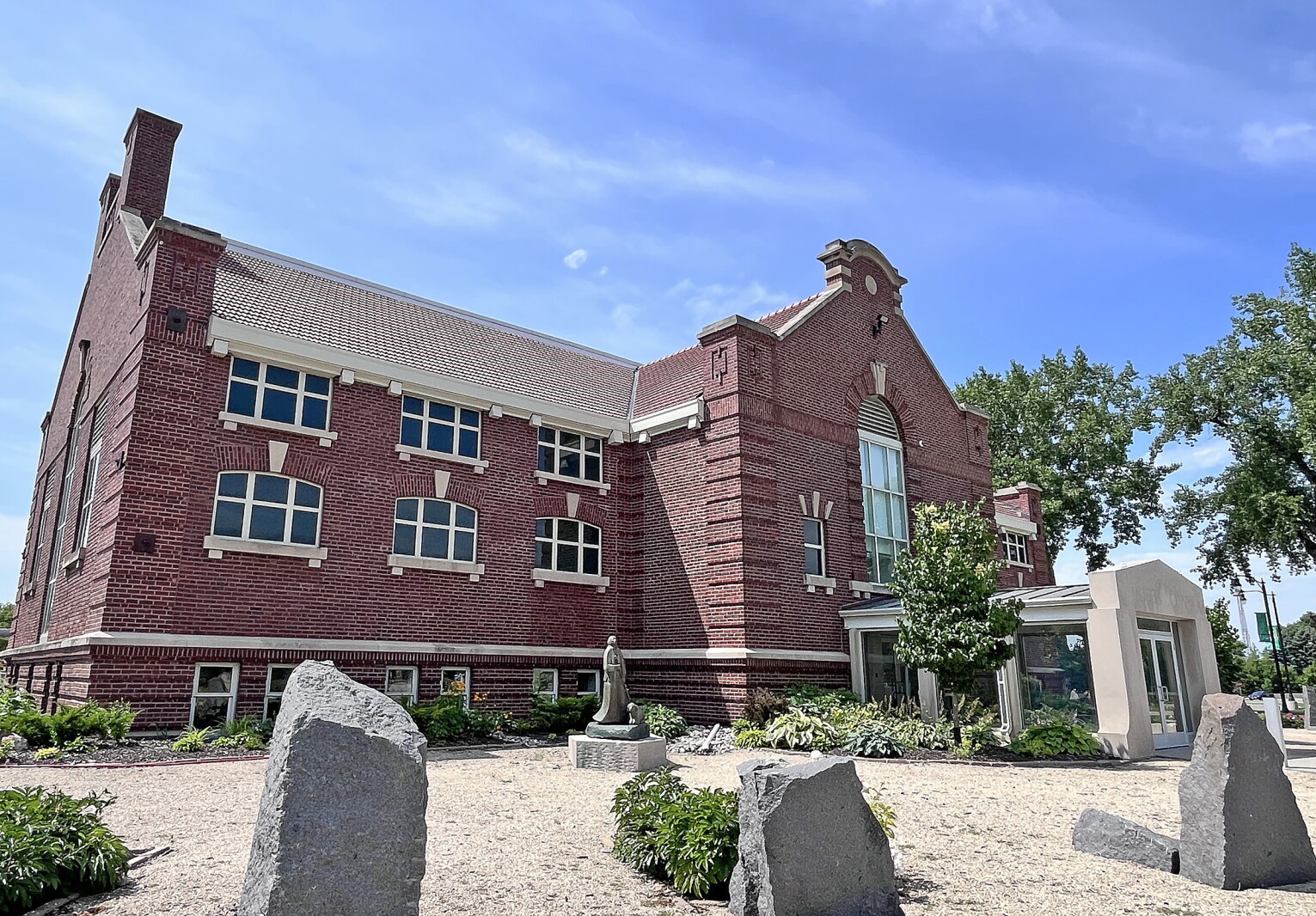
“The residency forces you to be alone, really alone, and alone with yourself and along with your thoughts and alone with the corn. … There’s a lot of corn,” said Christine Kirouac, a Winnipeg artist describing her time at the McCanna House.
That quiet stretch of western Grand Forks County landed on national television this week when PBS News Hour aired a six-minute “Canvas” segment titled “Great Art of the Great Plains,” putting the North Dakota Museum of Art in front of a national audience, Grand Forks Herald reported.
Filming took place months ago, but staff at the museum — housed on the University of North Dakota campus — learned the air date only hours before broadcast.
“We were all pleased with how it turned out,” said Matthew Wallace, the museum’s director. The segment opens with Kirouac walking her dog along a rural road bordered by cornfields, a visual shorthand for the isolation the residency promises.
Free from daily distractions, artists stay at McCanna House to concentrate on work and develop new techniques, a model the museum has refined to address what Kirouac called a “struggle” for regional visibility. “The representation of Manitoba or prairie artists can be lacking, in terms of exposure,” she said.
Jeffrey Brown, senior arts correspondent for News Hour, framed the museum’s mission as “bringing great art to the Great Plains and creating opportunities for artists in a region where gaining visibility and finding a market can be a challenge.” The piece notes the museum defines its service region broadly: the Dakotas, eastern Montana, western Minnesota and southern Manitoba.
The national spotlight arrived after News Hour producers spotted coverage of the museum’s “Material Abstractions” exhibition in a publication. “They were particularly interested in how the museum supports regional artists, so that opened up a number of possibilities,” Wallace said. That exhibition, highlighted in the segment, displayed works from South Africa, Los Angeles and points all over, illustrating the museum’s dual mandate: international reach with intentional regional service.
Micah Bloom, an art instructor at Minot State University who showed work in a solo exhibition through the museum's Art Makers series, stressed the importance of that exposure for emerging artists. The series celebrates early-career creators who might otherwise lack a platform.
Beyond the gallery walls, the segment documents the museum’s rural outreach program, which brings exhibits to communities with limited access. Wallace recalled installing artwork in an empty tire store, a Masonic temple and churches. “It’s about meeting people where they are,” he said, describing a logistics model built on adaptation rather than expectation.
The broadcast caps a period of growing recognition for an institution that has long operated below the national radar. For artists like Kirouac, the cornfields surrounding McCanna House are not just scenery — they are the condition that makes the work possible.
Worth a look

UNH Trails Vermont By Two Points at Harold Anderson Invitational
UNH swimmers approach Vermont for Harold Anderson Invitational on November 21. The University of New Hampshire swimming and...

Police Seek Suspect in Random Subway Attack on Senior Woman in Queens
A senior woman faced random assault near Astoria Boulevard station on November 20 at 10:01 a.m. This disturbing...
Coeur d’Alene Gains 67 Students as Idaho Enrollment Drops in 2026
“We are one of the largest districts with steady enrollment,” said Seth Deniston, Coeur d’Alene School District Deputy...

Western Kentucky Beats Richmond 82-68 in Greenbrier Tip-Off
Western Kentucky snapped a brief skid Friday night, outscoring Richmond 46–32 in the second half to claim an...