
“Regenerative agriculture is not something that can be advanced by one organization or one sector alone,” said Beth Gugino, associate dean for research operations and graduate education at Penn State.
Penn State is launching a new Penn State Regenerative Agriculture Center on 125 acres of college-managed property at Rockview in Centre County, Lancaster Farming reported.
Its mission is to develop and evaluate regenerative agriculture systems and practices, supporting interdisciplinary research, field-scale demonstrations, farmer education and outreach, and workforce development.
According to Penn State, the new facility fills a critical gap by providing a long-term, field-scale research platform. This setup allows researchers to evaluate regenerative agriculture systems under conditions that more closely mimic commercial farming operations, complementing smaller-plot experiments at other locations like the Russell E. Larson Agricultural Research Center at Rock Springs.
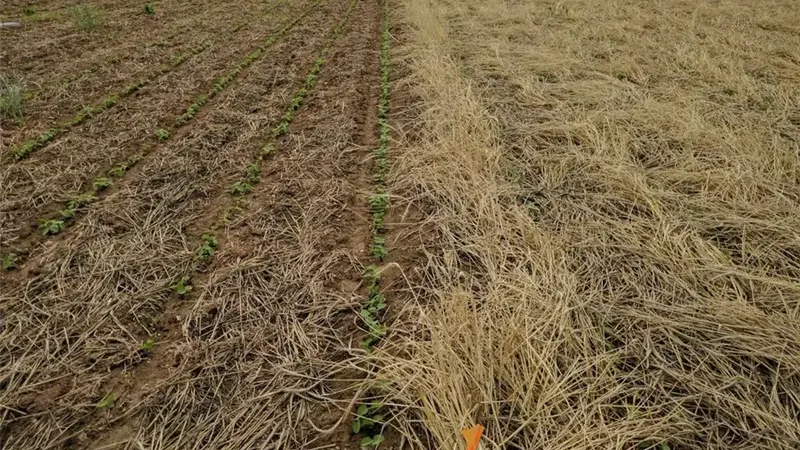
The event brought together more than 80 participants, including faculty, extension educators, producers, industry leaders, nonprofit organizations, government agencies, commodity groups and students, to help shape the center’s future direction.
Dean Troy Ott emphasized Penn State’s unique position to advance regenerative agriculture by combining its research, extension, and educational programs with the hands-on knowledge of farmers.
Associate Dean Beth Gugino said the effort is collaborative, noting that one sector alone cannot advance regenerative agriculture. The recent Regenerative Agriculture Summit, which she helped organize, brought together over 80 participants from academia, industry, government, and farming to share perspectives and help shape the center’s future direction.
As a living laboratory on 125 acres, the center will connect scientific research with practical on-farm application to improve soil health, environmental outcomes, and economic returns. Ott envisions the facility becoming “a national leader and convening hub for profitable and regenerative agriculture innovation,” aiming to ultimately enhance farm viability.
The center’s field-scale research platform is designed to evaluate regenerative systems under conditions that more closely mirror commercial farming operations, filling a critical gap in the college’s research portfolio.
The center aims to connect scientific research with practical on-farm application. It will partner with producers, industry, conservation organizations and public agencies to improve soil health, environmental outcomes and economic returns, with the ultimate goal of enhancing farm viability.
Dean Troy Ott stated that Penn State envisions the center becoming “a national leader and convening hub for profitable and regenerative agriculture innovation.”
Penn State’s land-grant mission, established in 1863 when it was designated the state’s sole land-grant college, positions it to lead the national regenerative agriculture center by leveraging its century-old agricultural research infrastructure.
The university operates the Russell E. Larson Agricultural Research Center at Rock Springs, a key facility where smaller-plot experiments are conducted, complementing the new 125-acre field-scale research platform at Rockview. This integrated approach, combining long-term, field-scale research with existing resources, allows Penn State to advance regenerative agriculture systems under conditions that closely mirror commercial farming operations.
While the college will initially fully support the center, it plans to seek philanthropic and foundation support in subsequent years to build an on-site facility that will further support its research and extension mission, according to the Penn State report.
Worth a look

NJ Appellate Court Upholds Firefighter PTSD Pension Denial Over Paperwork
A New Jersey appellate court on Nov. 20 upheld the denial of disability pension benefits for Atlantic City...
Omaha Firefighters Work Holidays Balancing Calls and Family Time
"We're here for someone else, not us," Omaha Fire Battalion Chief Kurt Theiler said. Omaha firefighters are working...

Louisville Father Held at Gunpoint with Daughter in Car
A Louisville man was held at gunpoint last week while his daughter waited in a nearby car, WLKY...

United Considers Recalling Obi as Willem II Loan Struggles
Manchester United are considering recalling Chido Obi from his loan with Willem II in January, as the young...