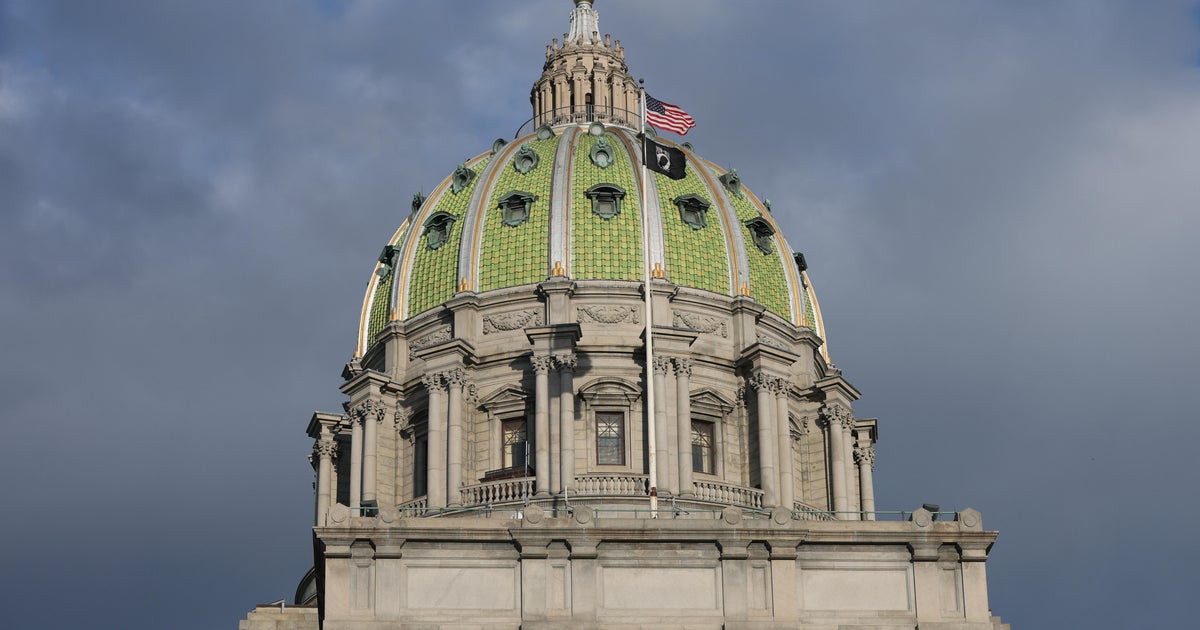
Pennsylvania Democrats preparing to work as a legislative trifecta believe they can accomplish their priorities without raising taxes, according to the top Democrat in the state Senate, CBS News reported.
Democrats plan to enact big changes in the coming two years thanks to the trifecta they won in this year’s election, securing control of the state House, Senate, and governor’s office. A western Pennsylvania state senator, Jay Costa, will play a key role in setting that agenda. Costa, who lives in Forest Hills, is poised to become president pro tempore, the Senate’s top officer.
He has spent the past 15 years as the Senate minority leader, accounting for half his time in the chamber. For that entire period, Democrats have been in the minority, but that changes in January.
“It was a great feeling, and we had worked so long for this.”
Costa told KDKA-TV in an interview.
He said the trifecta is extremely important because it allows the party to advance measures that have sat dormant in the Senate chamber and various committees. Asked what has been held up, Costa pointed to raising the minimum wage, addressing statutes of limitations for individual victims of sexual assault to have a window of opportunity, and enshrining reproductive rights in state statute.
Mass transit funding, employee misclassification, and public sector OSHA are also on the agenda, alongside guardrails around data center development and Pittsburgh Regional funding. Costa told CBS News that transit conversations will center on generating revenue from mass transit, roads, and bridge transportation infrastructure, while Allegheny County lawmakers explore local housing programs and municipal challenges.
Current Senate President Pro Tempore Kim Ward, based in Westmoreland County, reacted to the election results on X.
“There’s no question the results of this election will have significant consequences for our commonwealth in the form of higher taxes, increased electric rates, power grid challenges, stagnating our energy potential with net zero policies and government interfering in our personal lives.”
Ward wrote.
Costa called Ward’s post
“totally inappropriate and not accurate at all.”
He pushed back on her claims by telling CBS News,
“We will not be leading to tax increases. We’re going to make certain electric costs come down. That’s why we’re going to have guardrails through the grid program around data centers, and we’re not going to be interfering with personal, individual, personal rights because these are things we have already granted to us.”
When KDKA followed up about whether he is confident tax increases can be avoided given their agenda, Costa replied,
“I don’t believe that there’ll be tax increases. I think as we go forward, we’re going to be more thoughtful. We’re going to have revenue generation that we’re going to be able to put into place. Many of the things we’re talking about don’t necessarily need any additional revenue.”
Costa said new revenue could come from skill games or recreational marijuana, adding that raising the minimum wage will also have the effect of raising revenue.
Allegheny County is the second-most populous county in Pennsylvania, with a 2025 census estimate of 1,225,035 residents. It holds a distinct place in state history as the first county in Pennsylvania to be given a Native American name, derived from the Lenape word for the Allegheny River.
The region served as a strategic focal point during the eighteenth century, marked by the construction of Fort Pitt and competing colonial claims. Officially created on September 24, 1788, the county was the site of the Whiskey Rebellion in the 1790s after the federal government imposed a whiskey excise tax, leading to a confrontation between local farmers and federal troops.
The conversation with Costa came a week after the commonwealth’s independent fiscal office released a report warning that the state’s structural deficit will increase to $6.65 billion during the 2027-28 fiscal year.
“The independent fiscal office has been incorrect for many, many years.”
Costa said, adding that he believes the legislature will pass a balanced budget that is responsible, exercises restraint, and remains reasonable.
Related reading

Boise State Student Films Selected for Sun Valley Film Festival
Two short films produced by students at Boise State’s Film and Television Arts Program have earned a spot...

ECHL Issues Fines and Suspension for Trenton and Maine Players Following Third Period Incidents
Three ECHL players drew discipline from the league office following third-period infractions on November 18. The ECHL Department...
MCEDC Hosted March Panel and June Fireside Chat on County Growth
The Montgomery County Economic Development Corporation (MCEDC) launched structured programming in fiscal year 2026 that brings local business...

Guests at Virginia Beach KOA Holiday Report Mixed Experiences on Cleanliness and Safety
Guests at the Virginia Beach KOA Holiday have reported a stark divide in their experiences, ranging from praise...