
Pennsylvania now has the fourth-highest number of 287(g) agreements in the country, with 149 law enforcement agencies signing on to assist ICE since December 2024, according to data tracked by 287(g) Watch.
The partnerships, which allow local police to process detainees for ICE or enforce immigration law during routine duties, have expanded rapidly across north-central Pennsylvania. A dozen agencies in the 14-county region covered by Spotlight PA’s State College bureau have signed 287(g) agreements, according to information published on ICE’s website.
Why are rural departments signing up?
Most of the Pennsylvania agencies joining the program serve jurisdictions with fewer than 5,000 residents and operate on median police budgets of roughly $300,000, according to FWD.us, an immigration and criminal justice reform advocacy group.
The organization says federal funding has been made available to Pennsylvania agencies that sign 287(g) agreements. Rose warned that equipment purchased with those funds will continue to be available to these agencies long after this political moment is over.
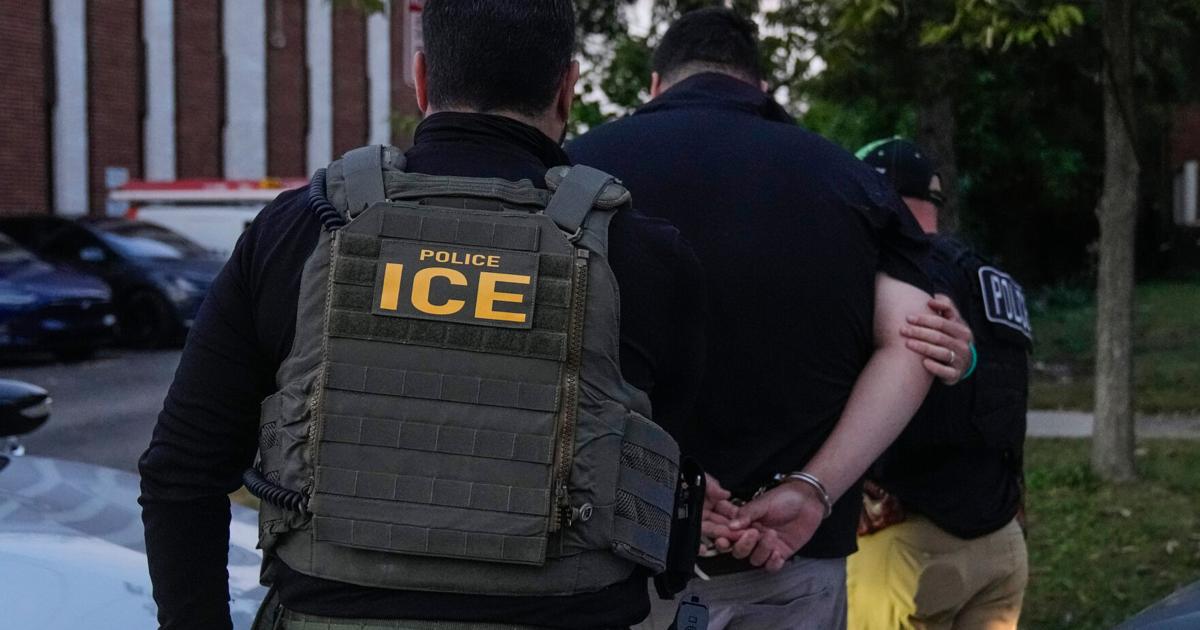
“That start-up money given to them is a huge windfall for these agencies, and we believe that's why so many of them are signing up,” Rose said.
What do the agreements actually allow?
There are three models. The task force model — the most common — authorizes local officers to enforce immigration laws during routine police work. The jail enforcement model lets jail staff process and hold people for ICE.
The warrant service officer model permits jail staff to serve administrative immigration warrants to people in custody. He never received training or payment. A Department of Homeland Security spokesperson did not respond to questions about why constables were excluded.
How are communities reacting?
Phoebe Wagner, a volunteer with Lycoming Rapid Response — a group formed in January 2025 that runs a 24-hour ICE activity hotline — said the four Lycoming County agencies that signed agreements this spring have heightened anxiety among immigrants who travel through those jurisdictions.
“When people won’t come out and say, ‘We, we understand why you’re afraid, and we want to do something to support you,’ then it just creates this general sense of anxiety and fear and mistrust,” Wagner told Spotlight PA.
“does a very damaging thing to our police officers,” Carol Taylor, president of Indivisible Blair County, saidrofiling.
In September 2025, the U.S. Supreme Court granted an emergency request in Vasquez Perdomo v. Noem allowing officers to question people based on appearance, language, and occupation.
Keep reading
- John James Audubon Bridge Has Longest Mississippi River Main Span at 1,583 Feet
- Bruins Activate James Hagens Off IR, Assign Mikey Eyssimont to Providence
- Inflation Since October 2024 Adds About $4,720 a Year to Household Costs (daybreakwire.com)
- Bitcoin records worst month since 2022 collapse amid massive leverage unwind (newsarchyuk.com)

John James Audubon Bridge Has Longest Mississippi River Main Span at 1,583 Feet
The John James Audubon Bridge carries the longest main span of any Mississippi River crossing at 1,583 feet....

Bruins Activate James Hagens Off IR, Assign Mikey Eyssimont to Providence
The Boston Bruins activated rookie forward James Hagens from injured reserve Sunday and assigned Mikey Eyssimont to Providence...
Aliento Founder Reyna Montoya Argues Arizona Must Match Gratitude With Responsibility to Immigrants
Aliento founder Reyna Montoya argues in a Republic column published November 29, 2026 that Arizona must match gratitude...

Hunters Find Human Remains on West Texas Ranch; ID Identifies Man from Campeche, Mexico
Remains lay on a West Texas ranch for two to three years before hunters found them Saturday, the...