
Prime Minister Carney blocks Russian participation in Alberta World Juniors
Prime Minister Mark Carney has confirmed that Russia will not be permitted to compete in the upcoming World Junior Championships in Alberta this December. Speaking from Antigua during the Commonwealth Summit, Carney stated that Russian and Belarusian athletes will be denied entry to Canada for the tournament as long as the war in Ukraine continues, TSN reported.
PM Carney says Russia won't compete at WJC in Alberta | Insider Trading WATCH: https://t.co/Mj1UMR5Zrl pic.twitter.com/kdEPGd7nXb
The federal government’s decision creates a direct confrontation with a recent ruling from the Court of Arbitration for Sport (CAS). On Friday, CAS ruled that Russia must be reinstated to international hockey competition, specifically citing the world junior tournament as a starting point for their return. While the international sporting body has ordered reinstatement, the Canadian government intends to use its immigration powers to prevent the arrival of Russian and Belarusian athletes and officials representing their national symbols.
Federal government invokes immigration powers to enforce boycott
The move shifts the conflict from the sporting boardroom to federal border policy. According to a statement released by the federal government on Tuesday, the measure is not a strike against the Russian or Belarusian people, but rather a tool to prevent those governments from using Canadian-hosted events as “platforms for state representation, political legitimacy and propaganda.”
The implementation of this policy will not be a blanket ban on all individuals of Russian or Belarusian nationality. The government clarified that entry will be assessed on an individual basis, noting that athletes who are permitted to compete as neutrals may still participate in international sporting events hosted within Canada. However, for the specific context of the World Juniors, Carney was explicit: “So if you’re asking specifically about the world juniors, the Russians will not be there.”
This stance follows intense pressure from various international and domestic groups. Ukrainian foreign minister Andrii Sybiha urged hockey powers to deny visas to Russian players, stating on X that if CAS lacks a moral compass, the hockey community must show its values by refusing to play them. Similarly, the Ukrainian Canadian Congress, through senior policy adviser Orest Zakydalsky, described the CAS ruling as “a disgrace and entirely unjustified.”
European federations signal potential tournament disruption
The Canadian government’s decision aligns with a growing movement among European hockey nations. Several federations, including those from Sweden, Finland, Czechia, and Latvia, have already indicated they will refuse to face Russia if they are permitted to play. Carney addressed these potential boycotts by stating, “We respect the decisions of the Finns, the Czechs, the Swedes, other nations, but this is a decision we take on our own.”
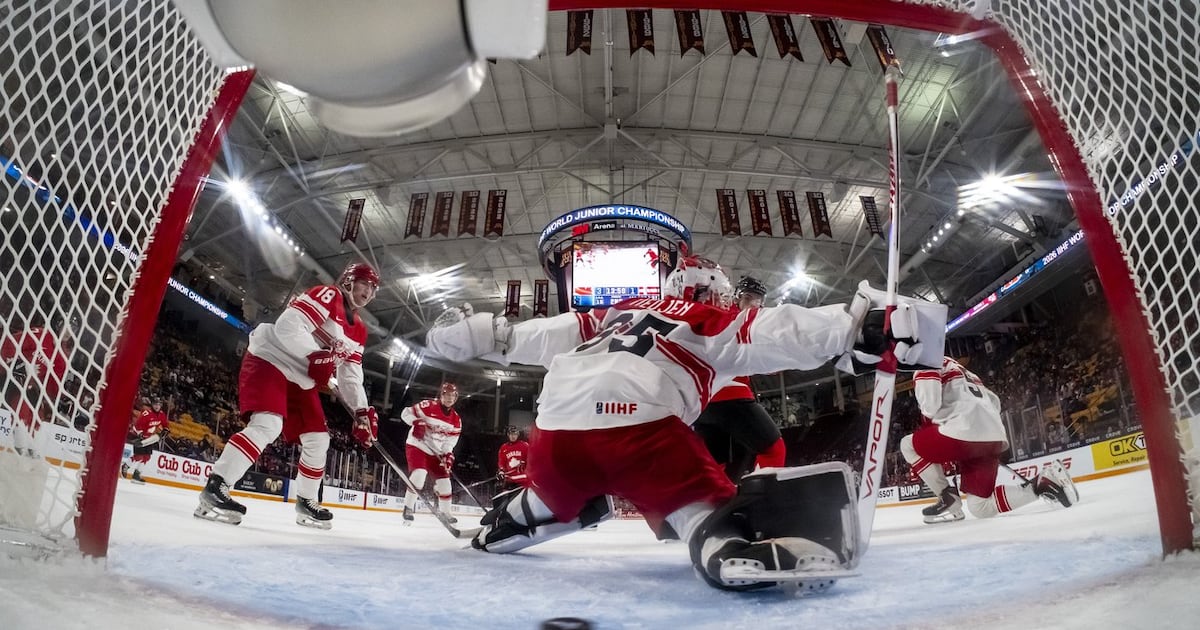
The logistical and competitive implications for the Alberta tournament are significant. Hockey Canada confirmed it is currently consulting with the International Ice Hockey Federation (IIHF) and other stakeholders to evaluate the potential impact of these exclusions on the championship structure. The tension between the CAS mandate for reinstatement and Canada’s refusal to grant visas creates a high-stakes standoff for the IIHF.
Russian officials have already signaled they will not concede the point. In an Oct. 30 statement, Russian sports minister Mikhail Degtyarev asserted that the CAS ruling is final and that Russia intends to work with the IIHF to secure its return to competition, beginning with the upcoming world junior tournament.
The tension between CAS rulings and sovereign border control
The standoff highlights a widening gap between international sports arbitration and national sovereignty. While the CAS provides a framework for athletic eligibility, the Canadian government’s control over visa issuance provides a secondary, non-sporting layer of enforcement that the CAS cannot easily override. This creates a complex environment for tournament organizers who must balance the legal requirements of the IIHF with the immigration realities of the host nation.
As the December tournament approaches, the primary uncertainty remains how the IIHF will react to a host nation effectively nullifying a CAS ruling through immigration policy. Whether the tournament proceeds with a modified field or faces a broader boycott from European nations remains the central question for hockey officials in the coming weeks.
Disclaimer: The analytical insights and data provided in this article are for informational and entertainment purposes only and do not constitute medical advice or sports betting recommendations.
Keep reading

Manchester United target City defender Rayan Ait-Nouri for January
Manchester United are exploring a potential transfer for Manchester City defender Rayan Ait-Nouri, according to reports from Sky...
FedExCup fall intensifies at World Wide Technology Championship
The FedExCup Fall Bubble Intensifies at El Cardonal at Diamante The race for full 2027 PGA Tour status...
Haas Drops Esteban Ocon for Remainder of Season; Rafael Camara to Debut in Brazil
Rafael Camara to Replace Esteban Ocon at Sao Paulo Grand Prix TGR Haas F1 Team has confirmed that...

Point Of Law Wins Melbourne Cup as Ciaron Maher Makes Historic Trifecta
Ciaron Maher secures historic Melbourne Cup trifecta with Point of Law victory Point Of Law, a three-year-old colt...