Illinois Gov. JB Pritzker demanded more public information Sunday night after the U.S. Army invoked emergency authority to proceed with a controlled detonation of unstable explosives in Iowa the day before Thanksgiving, overriding a court-ordered stay.
The Army announced at 7:45 p.m. Sunday that the blast at the Iowa Army Ammunition Plant in Middletown is now scheduled for Wednesday, Nov. 25, citing dropping temperatures that officials say increase the risk of an uncontrolled explosion.
An appeals court had halted the original plan Thursday after environmental groups challenged the permit, but government lawyers argued the Resource Conservation and Recovery Act does not require a permit for an immediate threat determined by a munitions specialist. NBC Chicago reported the Army has changed the detonation date three times since Friday.
Tonight I spoke with representatives from the U. S. Army, EPA, FEMA, and CDC regarding the planned detonation in Iowa. State agencies are on alert, and I am continuing to press for the release of more public information to help keep Illinoisans safe. I expect updates tomorrow.
“The controlled detonation at Iowa Army Ammunition Plant is now scheduled on Wednesday, November 25, 2026 to allow for optimal weather conditions and all mitigation measures to be emplaced,” the Army said in its Sunday statement, adding it has been “working around the clock to safeguard all Americans in the region.”
Emergency authority vs. judicial review
The explosives are several dozen barrels of degraded lead azide, a primary explosive used in munitions production, discovered in March. Crystallization has made the material unstable, according to Army experts, who concluded that moving or chemically neutralizing the drums would raise the probability of an accidental, fatal detonation.
Environmental groups — the Iowa Environmental Council, Sierra Club and Earthjustice — argued in court that alternatives were not fully considered and that the Army rushed to sidestep judicial process.
“The Army seemed more concerned over the weekend with finding a way to sidestep the judicial process than on meeting the public’s demands for greater transparency, notice to affected communities, and far stronger protection of people, property, and the environment from serious harm,” Earthjustice attorney Thien Chau said in a Sunday statement.
Government lawyers countered that the emergency provisions apply when an explosive or munitions emergency response specialist determines an immediate threat to health, safety or the environment. Officials said temperatures are expected to drop below 30 degrees Fahrenheit in the coming days, heightening the instability.
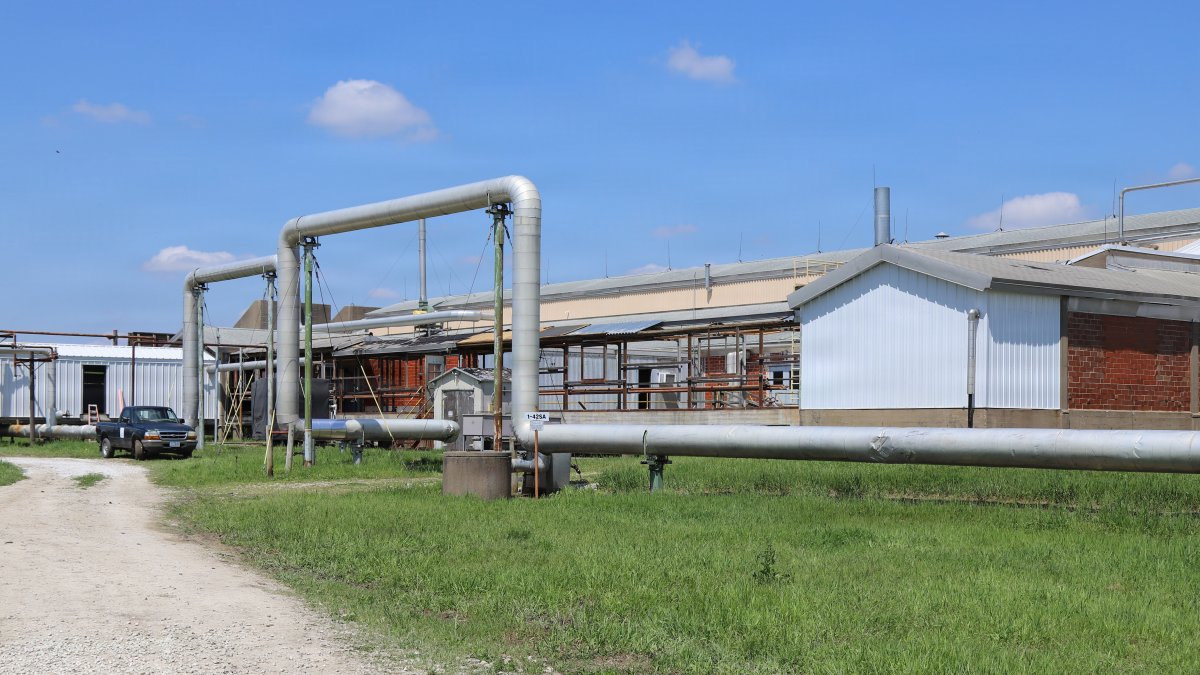
Army plans blasts; warns of lead plume
The Army plans two blasts. Vibrations could break windows in Middletown, a community of roughly 400 people about 10 miles from the Illinois border and 160 miles southeast of Des Moines. An advisory warns the detonation “will result in an air plume with some lead-containing particles which will disperse in the air and deposit on the ground,” noting lead is toxic to humans and animals.
Residents in the region have been told to stay indoors, close windows and doors, bring pets and livestock inside, and clean outdoor surfaces afterward. The Army held a public meeting in Middletown in October, but a public advisory last week was the first notice for communities up to 100 miles away, NBC Chicago reported.
Health concerns
Patrick O’Shaughnessy, a professor in the University of Iowa’s Department of Occupational and Environmental Health, said it remains unknown how much contamination will reach the atmosphere and surfaces.
Andrew Whelton, an environmental engineering professor at Purdue University who has helped communities recover from chemical disasters, said high doses over a short period can cause acute lead poisoning. Long-term exposure to low doses can impair neurological development, especially in young children, O’Shaughnessy added.
Wally Taylor, legal chair of the Iowa Chapter of the Sierra Club, warned of broader ecological effects: “The wildlife, the water quality. When this stuff is dispersed out in the air, it eventually falls on the ground, and we are right next to the Mississippi River. That could be contaminated.”
“Public safety is the Army’s top priority." The U. S. Army has postponed its planned detonation of degraded lead azide at the Iowa Army Ammunition Plant in Middletown until Monday, Nov. 23. https://t.co/ktJ7Lw00rX”
State response
About two hours after the Army’s announcement, Pritzker said he spoke with representatives from the Army, EPA, FEMA and the CDC. “State agencies are on alert, and I am continuing to press for the release of more public information to help keep Illinoisans safe,” Pritzker said in a statement posted to social media Sunday night. “I expect updates tomorrow.”
Worth a look
Workday to Report Q3 Earnings Tuesday; StockStory Reports 10.7% Revenue Growth Expected
Workday will report fiscal third-quarter results after the market closes on Tuesday, Nov. 24, with a conference call...

Genesee County Votes to Negotiate Nonprofit Entity for $175M-$200M Broadband Network
Genesee County officials voted in September to negotiate an agreement creating a nonprofit entity that would borrow $175...
Virginia Lost 6,700 Millionaires Since 2018; Locke Proposes 10% Tax for 2027
Virginia Sen. Mamie Locke has filed a bill for the 2027 General Assembly session that would raise the...

Idaho Considers Protecting Wolf Pups After State Paid Hunters $24,000 to Kill 12 at Dens
Idaho wildlife officials will consider new protections for wolf pups after hunters collected $24,000 in state-administered payments for...