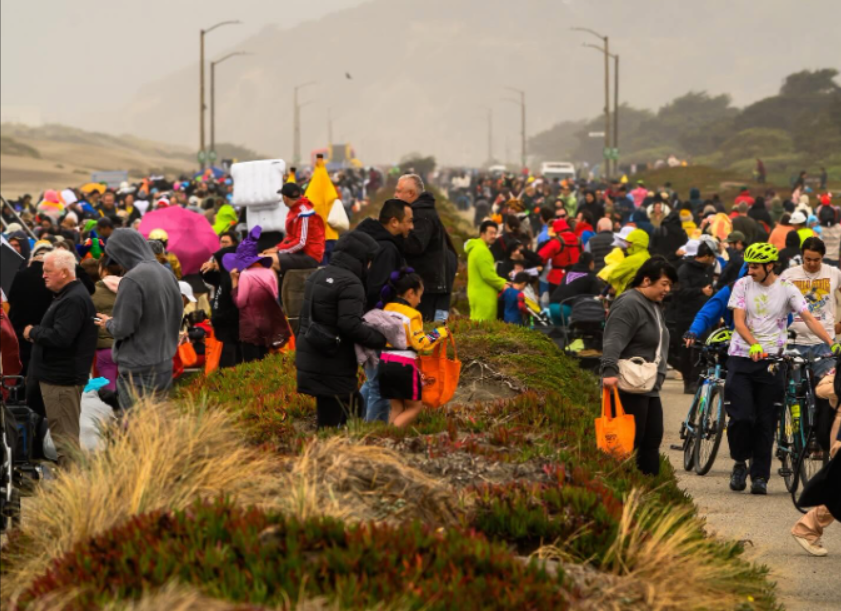
San Francisco voters have changed their stance on the city’s coastal infrastructure, as the recent defeat of Proposition G changes the future for the Sunset Dunes park.
In an election that saw the measure rejected across every district in the city, the most striking reversal occurred in the very neighborhoods that once stood in staunch opposition to the park’s creation.
Proposition G, which would have destroyed Sunset Dunes, was obliterated in last Tuesday’s election, Streetsblog San Francisco reported. The final tallies show nearly two-thirds of voters supported the park, a margin that ends the debate over whether local coastal land should be treated as a private concern for adjacent residents or a public asset for the entire city.
The political geography of this victory is particularly telling. Updated vote counts from the San Francisco Department of Elections confirm that a majority of voters in both District 4, covering the Sunset, and District 1, covering the Richmond, rejected the measure. This represents a stark departure from the trends of 2024, when approximately 64 percent of voters in those same districts opposed Proposition K, the measure that created Sunset Dunes.
The support for the park has grown strongest in the precincts closest to the project. For the advocates who campaigned to save the space, this result validates the park’s role as a neighborhood anchor rather than a point of contention.
“Since Sunset Dunes opened, the park has become a town square and community gathering space for Sunset and Richmond neighbors. We’re deeply honored that Sunset Dunes has gained the support of the west side, with nearly 60 percent of voters in precincts next to the park voting to keep it. The coast belongs to all of us, and we look forward to working with all of our neighbors to continue improving Sunset Dunes, regardless of how they voted on Prop G.”
That sentiment comes from Lucas Lux, President of Friends of Sunset Dunes. His organization now turns its focus toward long-term maintenance and integration, having secured a mandate from the very voters who were once the most skeptical of the project’s presence.
While San Francisco manages the aftermath of its electoral shift, the city of Oakland is facing a transition in its own transit leadership. Josh Rowan, the director of the Oakland Department of Transportation, is departing his post for unspecified reasons. The change was communicated to city staff via an internal email on Friday afternoon.
Worth a look

Will Toyota Dividends Affect Your Social Security Benefits? What Retirees Need to Know
For a 66-year-old retiree managing a portfolio of Toyota Motor Corp (NYSE:TM) shares, the recent announcement of an...

Usher And Chris Brown ‘Still Icy’ Days After Backstage Battle – TMZ
Usher and Chris Brown have not resolved their issues a week after a backstage argument at their Atlanta...

WV Childcare Bill Delays Threaten Providers and Stability
West Virginia childcare providers face mounting financial strain as the state Department of Human Services falls more than...

Uniform Advantage Maintains a Retail Storefront in West Allis
Healthcare workers hunting for reliable apparel in southeastern Wisconsin have a dedicated retail option situated right next to...