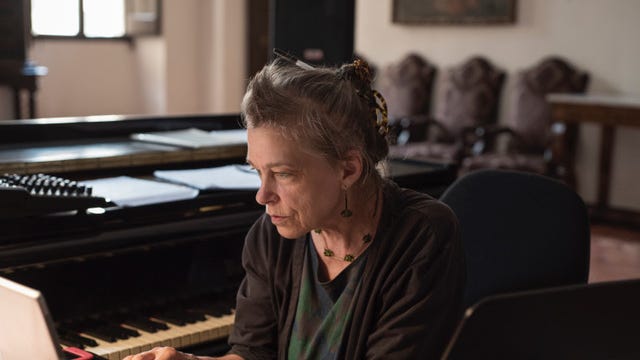
Composer Mary Jane Leach, a fixture in the experimental music scene for over four decades, is revisiting the foundational sounds of her career with the release of her latest LP, Pipe Dreams II / III.
The 2026 album features fresh recordings of a piece originally composed in 1989, serving as a bookend to a creative journey that began in the early 1980s. In a conversation with Joshua Minsoo Kim for Tone Glow on September 28, 2026, Leach detailed the transition from her upbringing in Vermont to the vibrant, often chaotic performance art world of New York City.
Leach’s work has long been defined by a fascination with acoustic phenomena and the resonance of instruments played in unison. Her latest release arrives as a culmination of years spent exploring how sound behaves within physical spaces. For listeners familiar with her earlier catalog—including Celestial Fires (1993) and Woodwind Multiples (2023)—this new project offers a window into the evolution of her technical process.
From Vermont Organs to New York Lofts
Growing up in Montpelier, Vermont, Leach’s early exposure to music was rooted in the church. Her mother, a church organist, provided a formative, if sometimes humorous, introduction to the craft. Leach recalled sneaking into the church to experiment with the organ’s pedals, often drawing the ire of those overseeing the instrument.
It was in these spaces that she first began to hunt for the “sweet spot” where sound resonated most effectively, a preoccupation that would eventually become the hallmark of her compositional style.
The move to New York City in her teens was motivated by a desire to escape the limitations of a small-town cultural scene. Upon her arrival, she found herself immersed in a world of theater and performance art, working off-Broadway in lighting design. She said that the abstract nature of lighting—where colors combine to create entirely new hues—shared a structural logic with her later musical experiments.

The Mechanics of Resonance
Leach’s shift toward pure composition was spurred by her time with the Downtown Ensemble and her interactions with contemporary composers. She described a period of intense, almost obsessive experimentation in the early 1980s, particularly when she began layering recordings of her own bass clarinet playing.
She discovered that by overlapping sustain notes, she could prevent the loss of sound phenomena, effectively creating a “continual higher pitch” that mimicked the ringing of bells.
This technical rigor was a reaction against the academic classical music scene of the era, which she found often prioritized cerebral theory over actual listening pleasure. While she interacted with figures like Milton Babbitt, she remained wary of the rigid, segmented nature of academic composition. “You have to find what differentiates your music from everyone else, in a way that still has integrity and interest,” she told Tone Glow.
Live Performances Present Logistical Hurdles for Acoustic Phenomena
Her career has not been without its logistical hurdles, particularly when translating studio-recorded acoustic phenomena to live settings. Large, resonant spaces like Philadelphia’s Memorial Hall—where her piece 4BC was performed during the 1987 New Music America festival—often presented difficulties, as high partials tend to dissipate in vast environments.
Leach highlighted the importance of precise microphone placement and the specific arrangement of performers, noting that even minor deviations by collaborators could fundamentally alter the intended sonic landscape.
Despite these challenges, her commitment to the nuance of sound remains unchanged. As she continues to revisit and refine works like those found on Pipe Dreams II / III, Leach maintains a focus on the necessity of overlapping sounds to preserve resonance. Her work serves as a reminder that the most compelling musical experiences often emerge from the intersection of rigorous technical preparation and the unpredictable nature of acoustic space.

CFP Committee Ranks Alabama at No. 3 and Drops Indiana to No. 9
The College Football Playoff selection committee has sparked intense debate by ranking two-loss Alabama at No. 3, while...

Will Toyota Dividends Affect Your Social Security Benefits? What Retirees Need to Know
For a 66-year-old retiree managing a portfolio of Toyota Motor Corp (NYSE:TM) shares, the recent announcement of an...

Usher And Chris Brown ‘Still Icy’ Days After Backstage Battle – TMZ
Usher and Chris Brown have not resolved their issues a week after a backstage argument at their Atlanta...

WV Childcare Bill Delays Threaten Providers and Stability
West Virginia childcare providers face mounting financial strain as the state Department of Human Services falls more than...