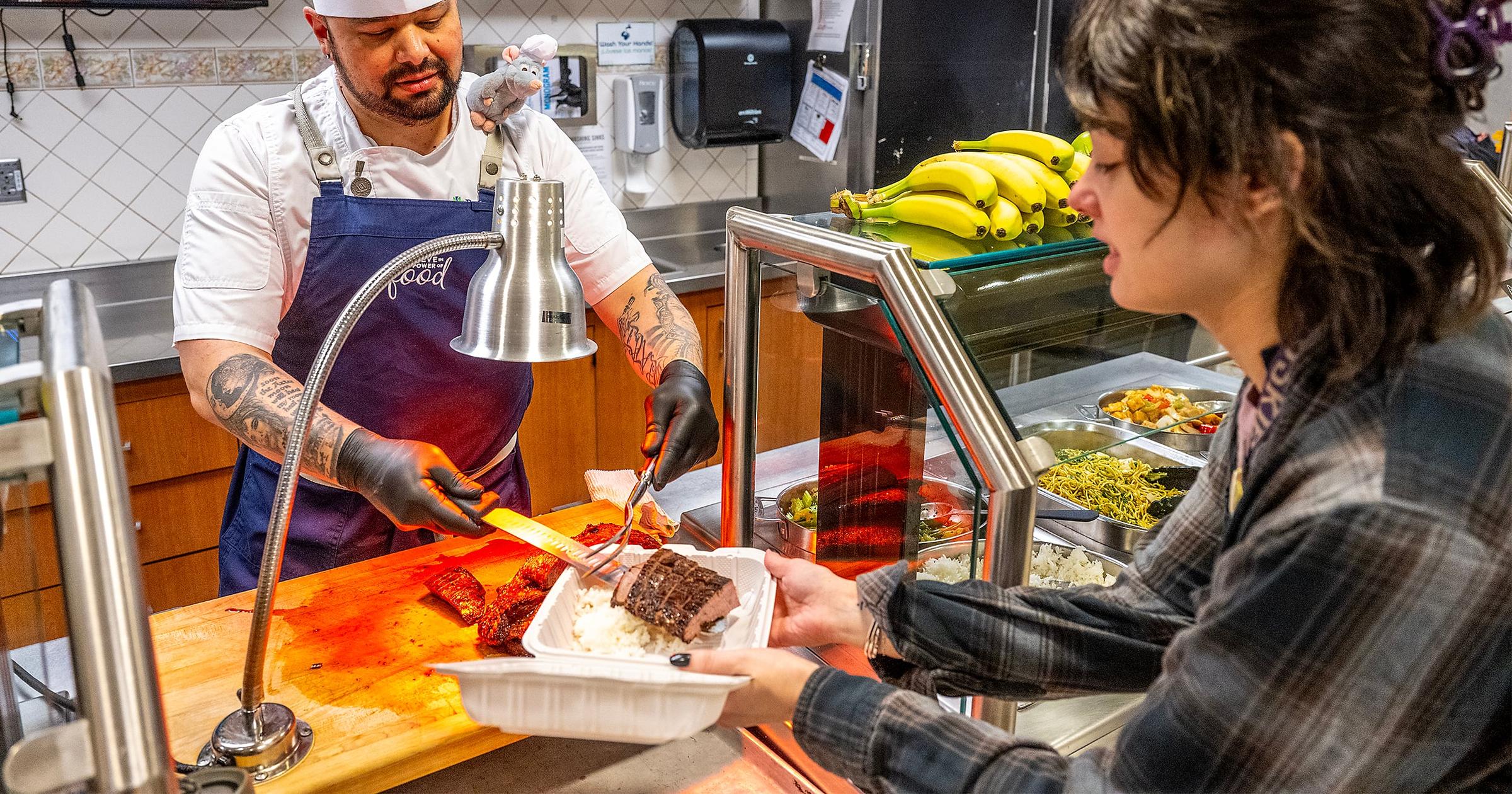
Providence Sacred Heart Medical Center is moving away from the “stodgy” reputation long associated with institutional food, shifting toward a chef-driven model that prioritizes flavor and restaurant-quality presentation.
This evolution, which has been unfolding over the last several years, recently culminated in a refreshed cafeteria experience that debuted earlier this month.
The change is not merely cosmetic. For the thousands of staff, visitors, and patients who pass through the hospital daily, the kitchen now functions more like a professional eatery than a clinical food service department. The initiative was strengthened by a systemwide push from Providence to improve both patient menus and cafeteria offerings while maintaining strict dietary guidelines.
“Hospital nutrition programs have been very stodgy over the years, and we didn’t make many changes because there are so many restrictions,” Danielle Halewijn, director of food and nutrition at Sacred Heart, said.
“The last menu change that Morrison encouraged, developed through the chef, is to change people’s mindset. There is power in food.”
The culinary transformation is led by executive chef Tommy Morisette, who joined the hospital three and a half years ago. Morisette, who previously spent 14 years as the district executive chef at Gonzaga University, brought a methodology focused on aromatics, proper searing, and high-quality ingredients.
His team spent approximately two years developing the new patient menu, which now includes items like butter chicken and breakfast burritos.
The impact of these changes is visible in the cafeteria, which serves between 3,800 and 4,800 meals daily. On a recent Thursday, nurse Anna Wilson was spotted filling a carton with Asian cuisine before praising the quality of the meal.
A focus on regional ingredients and speed
The cafeteria refresh, which has been in progress since May, emphasizes regional sourcing. The new grain bowl bar features seasonal vegetables and grains from local producers, while the kitchen utilizes beef from Double R Ranch and fish from the Columbia River, alongside regionally grown produce and spices from Spokane-based Spiceology.
The operational pace is intense. To meet the needs of caregivers who often have only 30 minutes for a meal, the kitchen staff has streamlined production. During peak times, the cafe prepares roughly 140 orders of smashburgers—totaling 280 patties—in a 90-minute window.

“Whatever kitchen you put me in, whether a grade school, a college, a food truck, I’m going to do the absolute best food I can,” said Tommy Morisette, Providence executive chef.
While the cafeteria caters to staff and visitors, the patient menu remains the primary focus of the clinical nutrition team. These meals must still adhere to specific medical requirements, such as renal restrictions or low-sodium needs. By using evidence-based recipes from organizations like the Mayo Clinic and applying refined cooking techniques, the team has managed to increase flavor without compromising safety.
The rollout has been large in scale. After the new patient menu was piloted at Sacred Heart—which serves roughly 2,000 patient meals a day—Morisette helped implement the changes across approximately 27 Providence sites in the Northwest throughout 2026.
Providence Sacred Heart Medical Center traces its history to 1886, when it was established as the region’s first hospital. Originally a 31-bed, wood-framed structure built along the Spokane River, the facility underwent significant expansion and relocation to its current site in 1910. Today, the medical center operates as a 648-bed general hospital that serves as a major hub for specialized care.
The human stake in hospital nutrition
As Halewijn noted, the goal is to provide a “great satisfier” that arrives three times a day, independent of medical interventions like needles or medication. For now, the project remains a work in progress.
Morisette indicated that further updates to the patient menu are likely as the culinary team continues to experiment with new recipes and cooking methodologies. The hospital continues to monitor feedback from staff and patients, with the cafe receiving notable attention on social media for its diverse, plant-forward options.
Keep reading

Cyberpunk TCG Launches First Edgerunner Open Regional in Chicago Dec 11-13 with 2,000-Player Main Event, Panels, Signings
From December 11 to 13, Cyberpunk TCG brings its first Edgerunner Open Regional event to McCormick Place in...

Concord High Students Bond Over Headphones and Shared Music Taste
Stepping inside a classroom at Concord High School, the chances of at least two students having their headphones...

Clinch Resources Plans to Reopen Two Mines in Southern WV
Clinch Resources plans to bring three former deep mines back into production across southern West Virginia in the...
Little Rock School Board Delays Vote on Separation From LRPD
The Little Rock School Board voted to postpone a final decision on whether to sever ties with the...