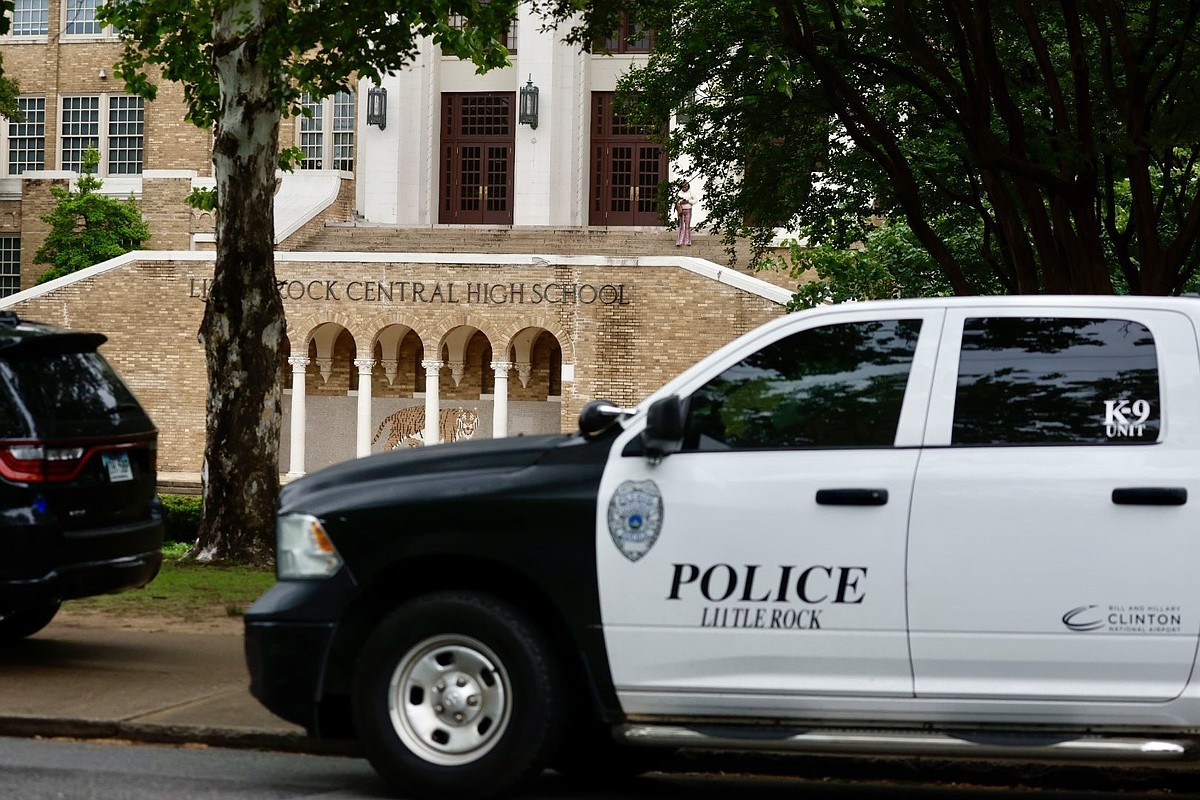
The Little Rock School Board voted to postpone a final decision on whether to sever ties with the Little Rock Police Department and establish an independent school district police force.
The motion to table the proposal provides board members additional time to assess the logistics of such a transition.
This delay follows a wave of public concern regarding the speed of the proposal. During the public comment session, several community members urged the board to slow the process, requesting more feedback and deliberation before finalizing a plan that would fundamentally change campus security.
While the board has not reached a final decision, the proposal has gained traction among some leadership.
Board members Bolly, Johnson, and Adams expressed support for the separation, citing a desire for the district to maintain direct control over its own law enforcement operations. Despite this support, the directors emphasized that they want to ensure all operational details are secured before moving forward.
The path toward an in-house force involves significant administrative and legal hurdles, a fact highlighted by district leadership. Director Eugene Krupitsky, who represents Zone 4, pointed specifically to the potential legal complexities that could arise from such a shift.
“There have been several emails we have received as board members with regards to the potential legal implications of having our own police force, and how that might impact some federal laws and regulations. So I think it behooves us to do the due diligence on that before we move forward with something like this.”
Krupitsky said.
Krupitsky suggested that the district should look to other Arkansas school systems for guidance. He specifically proposed meeting with representatives from Cabot Public Schools, which currently operates its own police department, to evaluate the practical pros and cons of an independent agency.
The proposal to create an in-house department reflects a broader ongoing conversation about how Little Rock schools manage security and student safety. By choosing to table the vote, the board is effectively prioritizing a period of fact-finding over immediate policy implementation.
The board will continue to discuss the proposal in future meetings before taking another vote. No specific date for the next vote was provided.
The Little Rock School Board governs a district established in 1869 that was known as the Special School District of Little Rock from 1886 until 1963. The district encompasses 97.60 square miles, serving most of the capital city and Cammack Village. In January 2015, the Arkansas State Board of Education voted 5–4 to take over the district, disbanding the elected board after six schools were classified in academic distress; the board was later reconstituted.

Protesters Rally Outside Sacramento Hotel Hosting ICE Agents
Eighty-three U.S. immigration detainments occurred across the Sacramento area during a single month, according to tracking data compiled...

1-in-100-Million White Lobster Joins UNE Genetic Research
A rare white lobster estimated to occur just 1 in 100 million times has arrived at the University...

No. 8 Iowa Women’s Basketball Overcomes 10-Point Deficit, Defeats Montana State 76-60
No. 8 Iowa women's basketball overcame a 10-point deficit and an 8-0 run after Montana State cut the...

Indiana Has Hundreds of Reported Measles Cases so Far This Year
Indiana has hundreds of reported measles cases so far this year, marking a sharp escalation from the 10...