
A five-year randomized controlled trial spanning 60 counties in North Carolina failed to improve overall survival rates or brain function outcomes for adults who experienced cardiac arrest outside of a hospital.
The RACE-CARS Trial Design Across 60 Counties
The study, known as the RACE-CARS trial, took place across a region home to approximately 8.5 million residents, representing nearly 80% of the state’s population. Researchers assigned 31 counties to receive an intensive educational intervention while 29 counties continued with standard practice. Data was collected using the Cardiac Arrest Registry to Enhance Survival, capturing records from 911 dispatch, emergency medical services, and participating hospitals.
During the five-year evaluation, 22,459 adult residents experienced out-of-hospital cardiac arrest, with 11,615 of those incidents occurring in counties assigned to intensive education and 10,844 occurring in communities that did not receive the intervention. Patients had a median age of 64, with women making up 37%, Black adults comprising 33%, and rural residents accounting for 29%. Arrests witnessed by paramedics or occurring inside healthcare facilities and nursing homes were excluded from the analysis.
Local leaders, including church leaders and county commissioners, were recruited to assist in promoting community initiatives. Surveys were completed every six months to track aspects of the educational rollout, such as community CPR classes and automated external defibrillator deployment.
Patient Survival Rates Showed No Significant Difference
Across the intervention counties, about 9% of patients survived to hospital discharge with favorable brain function, compared with 9.4% in the comparison counties, a difference that was not statistically significant.

The American Heart Association presented the findings at its Scientific Sessions in Chicago, with the results simultaneously published in The New England Journal of Medicine. The investigation received funding from the National Institutes of Health and the National Heart, Lung, and Blood Institute, a division of the National Institutes of Health.
Community partners organized 5,724 CPR training events that reached 201,586 individuals, representing roughly 4.8% of the population in the program counties. Implementation depth varied considerably, with four counties training more than 10% of residents and eight reaching fewer than 3%. The trial also distributed 405 automated external defibrillators across 31 program counties, of which 26 counties deployed the devices.
We performed an efficient, large, and high-quality trial engaging large segments of the community in emergency response, and in spite of this, survival remained low and unchanged.
Carolina Malta Hansen, the study’s lead author, and a cardiologist and clinical research associate professor at Herlev and Gentofte Hospital and Copenhagen EMS in Denmark
Bystander CPR Rates Increased During the Final Year
Although overall survival did not shift, an exploratory analysis revealed that bystander CPR increased during the final year of the study. Bystanders performed cardiopulmonary resuscitation in 44.8% of cardiac arrests in communities that received the educational intervention, compared to 42.3% in communities that did not.
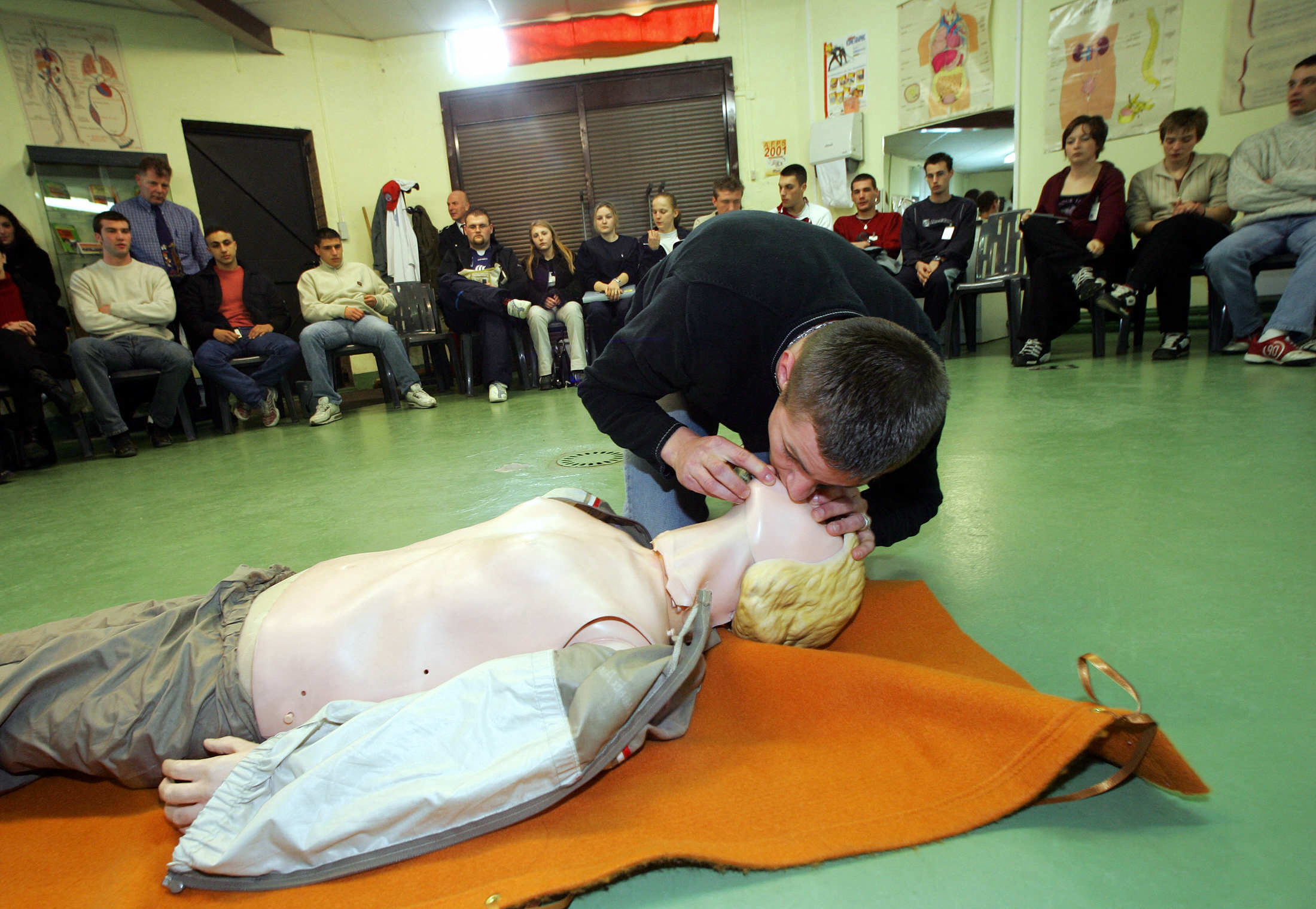
Residents who suffered a cardiac arrest in program communities during that final year experienced 33% higher odds of receiving bystander CPR than those in control communities. Defibrillation prior to the arrival of paramedics occurred less frequently in program counties, at 13.5%, than in comparison counties, at 15.3%.
The increase in bystander CPR toward the end of the study shows there was some effect and suggests that a sustained community outreach may be needed to show an improvement in survival.
Dr. Christopher Granger, the trial’s principal investigator and a cardiologist at Duke University
Researchers pointed to multiple challenges during the rollout, including staffing shortages and high staff turnover at 911 dispatch centers that hindered training and data collection. Experts said that transforming how an entire region responds to sudden cardiac arrest requires long-term commitment, comparing the effort to public health milestones in countries like Denmark, where broader training and higher defibrillation rates correlate with greater survival.
Amrish Deshmukh, a cardiac electrophysiologist who treats patients with heart rhythm disorders at the University of Michigan Health Frankel Cardiovascular Center, said that many post-arrest care and out-of-hospital interventions studied previously have similarly failed to demonstrate improved survival or neurological outcomes, calling the results disappointing yet unsurprising.
For guidance regarding heart health concerns or emergency response training, readers should consult qualified medical professionals or local health organizations.
Worth a look

Sir Jim Ratcliffe Wanted Antonio Conte to Replace Michael Carrick
Manchester United co-owner Sir Jim Ratcliffe pushed to hire Antonio Conte before ultimately securing Mauricio Pochettino to replace...

McDavid Ties Gretzky Milestone as Oilers Beat Flyers 5-2
Leon Draisaitl scored twice and Connor McDavid recorded a goal and two assists on Sunday night in Philadelphia,...

How to Buy Juventus vs Udinese Tickets and Match Details
Juventus host Udinese at the Allianz Stadium in Turin on Sunday, Desember 6, 2026, for a Serie A...

Wolfe Tones Secure Leinster Club SFC Semi-Final Spot After Late Scare Against An Tóchar
"We showed a lot of qualities in the first half," said Shane McCoy. The Wolfe Tones representative watched...