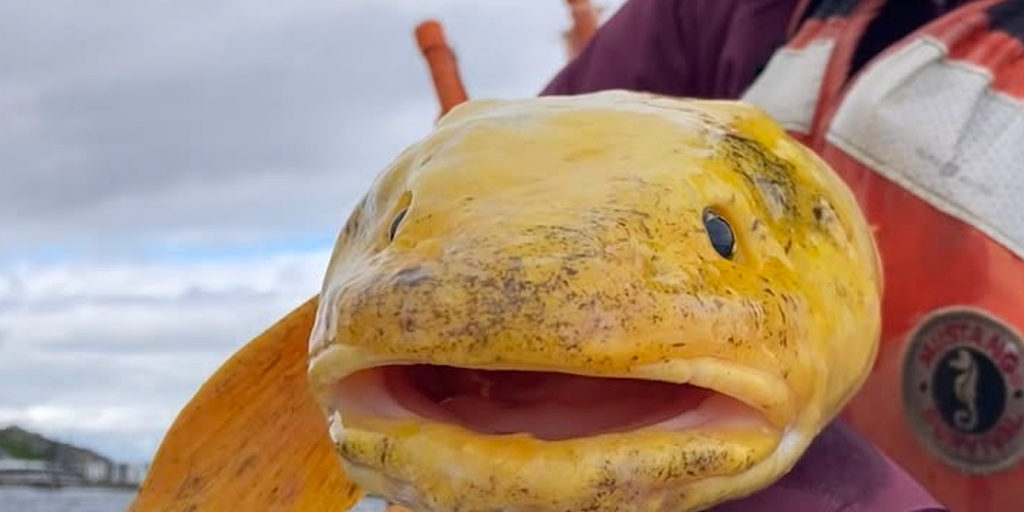
A bright yellow burbot was caught by biologists during a routine aquatic survey in Oswego Harbor, New York.
The fish, a native species, exhibited a rare biological condition known as xanthochromism, which suppresses normal pigmentation to create a saturated yellow-orange appearance. While burbots are typically shades of yellowish-brown, green, or brown, this specific specimen stood out as a striking anomaly, FOX Weather reported.
The discovery occurred while the U.S. Fish and Wildlife Service (USFWS) was conducting an Aquatic Invasive Species Survey in the lower Great Lakes. Beyond its unusual color, the find is significant because burbot populations in the area are already low, and the species usually prefers much deeper, cooler waters than the environment found in the harbor.

“Xanthochromism in wild fish is considerably less common than albinism or melanism, making this an especially unusual capture,” the Lower Great Lakes Fish and Wildlife Conservation Office said.
The survey team from the Lower Great Lakes Fish and Wildlife Conservation Office was primarily looking for invasive species, but this catch provided an unexpected look at local biodiversity. According to officials from the USFWS, the find represents the first documented detection of a burbot during a fisheries survey in Oswego Harbor, even though some anglers have reported catching them in the past.
The visual impact of the fish was immediate. Yahoo reported that the USFWS described the creature as something that “would make even the brightest fall foliage look pale in comparison.”
However, the rarity of the color was paired with a concerning physical state. While processing the specimen, U.S. Geological Survey (USGS) biologists said that the fish was emaciated and in poor health. This physical decline, combined with the lack of clarity regarding why burbot populations are being suppressed in the basin, has prompted further investigation.
A rare, brightly colored fish was found in Oswego Harbor during a routine survey last month, according to the U. S. Fish and Wildlife Service. More:https://t.co/qEwiOh0M0b
Because of the fish’s condition, it was sent to the Cornell University College of Veterinary Medicine for a comprehensive health analysis. Researchers hope to determine if the emaciation is linked to environmental factors or specific biological stressors affecting the species.
The presence of the burbot in shallower harbor waters, rather than its typical deep-water habitat, suggests changing ecosystem dynamics in the Great Lakes. Scientists are looking to see if this single, unusual capture can serve as a window into the broader health of the species across the entire basin.
The USFWS emphasized that while the primary mission of these surveys is tracking invasive threats, the unexpected results show why consistent monitoring is necessary. These programs allow scientists to document biodiversity and identify unusual biological occurrences that might otherwise go unnoticed.
“The discovery could turn out to be lucky for the burbot too; this exceptionally rare fish may provide valuable insight into the health of the species’ populations throughout the basin that can inform management actions,” the conservation office said.

WV Fraud and Diversion Task Force Holds First Meeting to Target Crime
Federal and state officials held their first meeting of the Mountain State Fraud and Diversion Task Force at...

Bodybuilding Champion Alix Small Dies at Age 26
Bodybuilding champion Alix Small has died at the age of 26, according to the Toronto Sun. Small, a...

Vermont Certifies Midterm Results Following Record Voter Turnout
Vermont voters turned out in record numbers for the recent midterm election, according to data released during the...

How to Watch Texas Tech vs. No. 3 Illinois on November 10
The No. 3 Illinois Fighting Illini visit the Texas Tech Red Raiders at United Supermarkets Arena in Lubbock,...