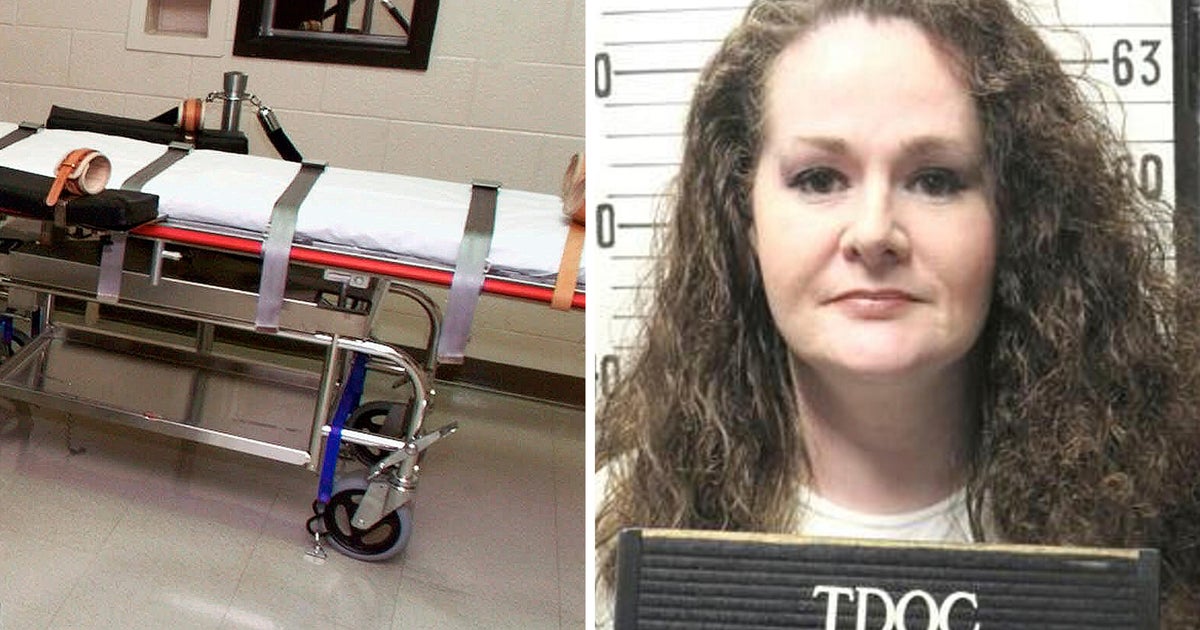
“Pike’s counsel and experts cannot be allowed to see, handle, or otherwise get the information on the leftover vials of pentobarbital from Pike’s attempted execution,” Tennessee Attorney General Jonathan Skrmetti wrote in a court filing.
The state is moving to block attorneys for Christa Pike from inspecting the lethal injection drug used during her failed execution in September, citing laws that protect the anonymity of drug suppliers. This legal maneuver follows a judge’s order to preserve evidence in a lawsuit filed by Pike’s legal team, highlighting the intense secrecy surrounding the procurement of execution drugs.
Pike, 50, is the only person known to have survived an execution attempt in the United States, according to the Death Penalty Information Center. Her September attempt involved two doses of pentobarbital that her attorneys say likely failed to enter her bloodstream, instead pooling in her arms and leaving them burned and blistered, CBS News reported.
The legal battle now centers on whether the defense can access leftover vials of the substance to determine if errors occurred during the process. While a judge previously ordered the preservation of evidence, the state is now asking to rescind the portion of that order that allows the legal team to inspect, collect, and test any remaining pentobarbital.
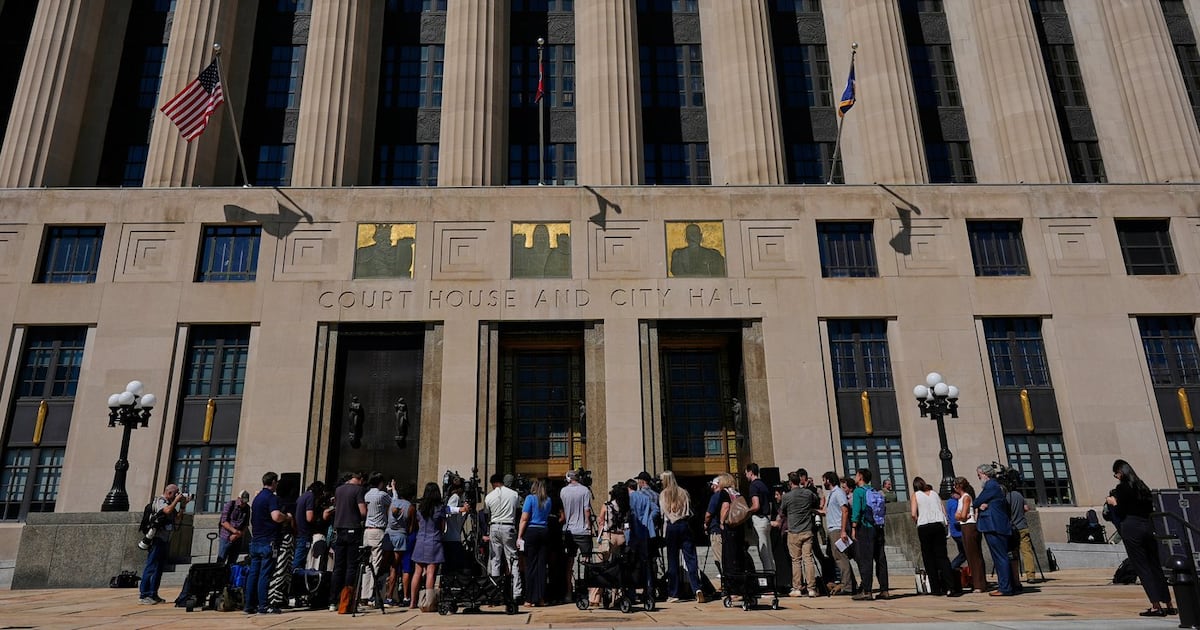
The state seeks to protect its supply chain
Tennessee officials argue that allowing the defense to handle the vials or review their labeling would expose the identity of the state’s drug supplier. An affidavit from a Tennessee Department of Correction employee, cited in the state’s filing, claims that even with redacted labels, the source would likely be identifiable through residue found in the vials.
The state’s concern is rooted in the difficulty of sourcing lethal drugs. According to the filing, another supplier stopped communicating with the department in 2024 after its identity was exposed. The state contends that losing its current provider would leave it unable to find alternative sources for the drug.
Luke Ihnen, a lawyer representing Pike, argued that identifying the supplier has never been the primary objective of the litigation, CTV News reported. He emphasized that the defense needs to understand the logistics of the drug to find answers to the failed procedure.
“We still don’t know exactly what happened that night. Those types of things are all valuable pieces of information about what went wrong,” Luke Ihnen said.
The defense maintains that inspecting the pentobarbital is the only way to determine if there were issues with how the drug was mixed, transported, or handled, or if the substance used was expired.
A history of changing protocols
The botched execution attempt has brought renewed scrutiny to Tennessee’s lethal injection methods. This marks the state’s second significant execution issue this year, following a May incident where officials spent over an hour unsuccessfully attempting to establish an IV line for inmate Tony Carruthers.
The complexity of these procedures has shifted significantly over the last two decades. Records show that Tennessee’s protocols were once highly detailed, spanning over 100 pages prior to 2025. However, the most recent version, released early last year, contains only 44 pages to guide execution teams.
The state’s approach to the drugs themselves has also evolved. After pausing executions in 2022 to investigate procedures, Tennessee resumed them in 2025 using a new cocktail consisting of a single drug, pentobarbital, rather than the three-drug combination used in the past.
| Era/Event | Protocol Detail | Drug Composition |
|---|---|---|
| Prior to 2025 | Over 100 pages | Three-drug combination |
| Post-2025 Resumption | 44 pages | Single drug (pentobarbital) |
| September 2026 Attempt | Current (Unspecified) | Pentobarbital |
Pike suffers physical and mental distress after failed execution
Pike’s survival has left her in a state of physical and mental distress. Following the attempt, she was hospitalized on a ventilator for several days and later reported suffering from pneumonia and a blood clot. Since returning to prison, she has stated she remains in constant pain.
“There hasn’t been a moment since that night when I haven’t been in pain. My body hurts. My arms hurt. My hands hurt. My throat hurts. I still struggle to speak,” Pike said in a statement dictated to her lawyers, as reported by CBS News.
The failure of the execution led to the resignation of the head of Tennessee’s Department of Correction, Frank Strada. Christopher Hansen has since been named as the interim commissioner.
As the legal proceedings continue, political leaders are weighing different paths forward. U.S. Senator Marsha Blackburn, the state’s governor-elect, has called for the exploration of alternative methods, including the electric chair. Meanwhile, Pike’s attorneys are seeking to have her death sentence commuted to life in prison.
“The least that could happen now is that we at least take death off the table and start looking for what the future could be for her,” Steve Ferrell, one of Pike’s attorneys, told CBS Mornings.
Related reading

Cardinals Retain Key Defensive Stars to Support Carson Beck
The Arizona Cardinals reached the NFL trade deadline on Tuesday with a roster defined by injury and frustration,...

Jack Sabato Charged in East Anchorage Fatal Hit-and-Run
A 32-year-old man faces felony charges after allegedly striking and killing a pedestrian in East Anchorage before fleeing...

Michael Bloomberg and Diana Taylor Marry in Private NYC Ceremony
Michael Bloomberg and Diana Taylor tied the knot on Monday in a private ceremony held at their Upper...

2026 Wyoming High School All-State Volleyball Honors Announced
High school volleyball coaches across Wyoming have selected the 2026 all-state honors, recognizing the top performers from the...