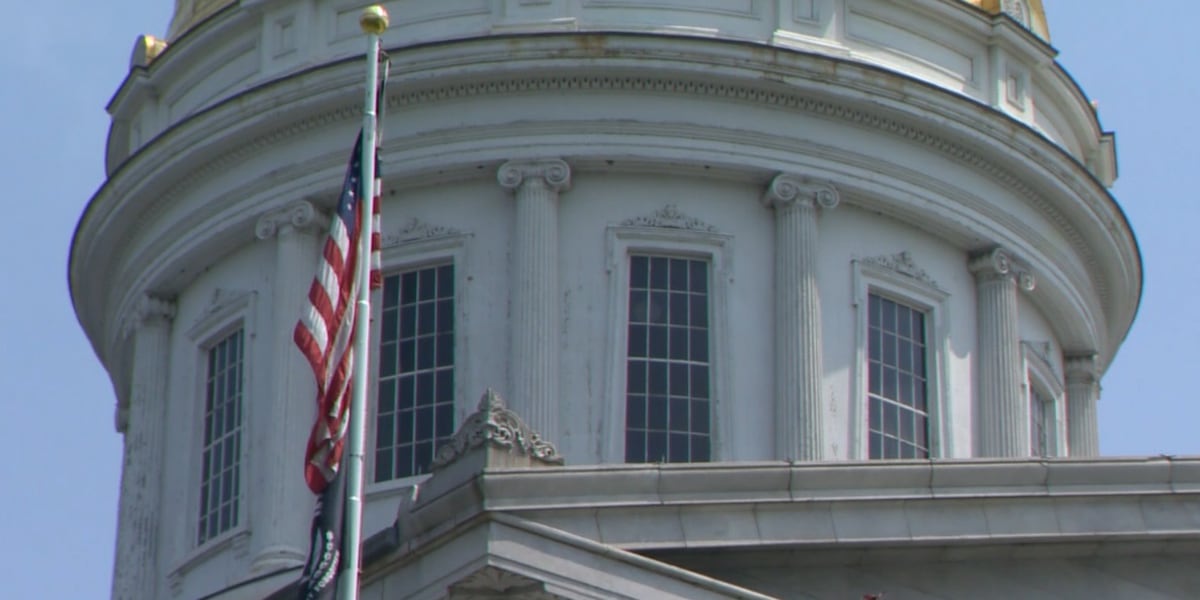
On Wednesday, dozens of newly elected representatives and senators gathered at the Vermont Statehouse in Montpelier for an orientation session that laid bare a historic political shift.
Record legislative turnover has brought 56 new representatives into the House and seven new members into the Senate, setting up a steep learning curve as lawmakers prepare to tackle property taxes, education reform, and state affordability.
The numbers surpass the heavy legislative turnover seen in recent cycles, including 50 House members and nine senators in 2024, alongside 50 representatives and 10 senators in 2022, WCAX reported. While modern chambers rarely experience an influx of this scale, former Governor Jim Douglas said that deep institutional shifts have historical precedent. “There were a couple of sessions in the 1910s when the entire state Senate was new,” Douglas told WCAX.
In the opening months of any legislative biennium, new lawmakers inevitably spend their time learning the intricate mechanics of state government, listening to industry trade groups, and parsing the demands of various advocates. Former Democratic House Speaker Shap Smith warned that this dynamic will likely slow down early momentum.

“I think things are going to move relatively slowly at first as people get acclimated to the situation,” Smith said. He says the incoming crop of lawmakers will be eager to deliver on campaign promises of housing, affordability, and more, but that it will take time for the issues to play out in committee rooms.
“There’s a rural-urban dynamic, there’s a liberal moderate dynamic. Getting everyone to row in the same direction will be difficult.”
For Vermont residents and local business owners, this legislative delay means critical policy decisions regarding property tax relief and ongoing school district consolidation will take longer to materialize in committee rooms. The state remains locked in complex, bipartisan efforts to overhaul its education funding system to curb escalating school costs.
At the same time, the partisan balance of power ensures that the incoming Democratic and Progressive supermajority can unilaterally override vetoes issued by Republican Governor Phil Scott. Yet Douglas suspects that both the executive branch and legislative leadership will find incentives to bridge the political divide.
“He’ll have to work hard to reach across the aisle to develop relationships with the new legislative leaders and find that elusive common ground,” Douglas told WCAX.
Lawmakers are scheduled to take the oath of office when the new session convenes on Jan. 6.
Keep reading
- Rams Enter Bye Week 4-0: Health Returns, Pass Rush Surges, Run Game Leads
- Arkansas Supreme Court Revives Child Sex Abuse Lawsuits, Rules Legislature Can Extend Filing Deadlines
- Credit Card Debt Hits Record $1.29 Trillion but Trails 2008 After Inflation (daybreakwire.com)
- Anthropic prices IPO at $83 a share to raise record $81.3 billion (newsarchyuk.com)

Rams Enter Bye Week 4-0: Health Returns, Pass Rush Surges, Run Game Leads
The Rams enter their bye week 4-0 as health returns, the pass rush surges and the run game...

Arkansas Supreme Court Revives Child Sex Abuse Lawsuits, Rules Legislature Can Extend Filing Deadlines
The Arkansas Supreme Court overturned longstanding legal precedent on Thursday, Nov. 5, ruling that state lawmakers possess the...

Suns vs. Kings: Experts Highlight Kennard, Acuff Jr. Props & Kings +6.5 Spread
Experts highlight Kennard and Acuff Jr. props and the Kings +6.5 spread despite Phoenix winning five of seven...

Faulkner University Opens New Simulation Center to Expand Alabama Healthcare, First Responder Training
Faulkner University opened a new healthcare and first responder simulation center in Montgomery, Alabama, expanding regional access to...